Expat Life

New book unveils the mystery behind the US invasion against Iraq

Prolific author Dr. Leonard H. Le Blanc III brings forth another revealing read that many would never have thought happened or that it’s still even ongoing. With an honest and an unrelenting mission to expose a glimmer of truth, “The Perfect US “Deep State” Operation reveals the real reason the US invaded Iraq during Gulf War II. This is the first part of the “Knew or should have known!” series.

It is the largest theft in American history. It is the largest cover up in American history. It is the biggest scandal and cover up in US Marine Corps history, the assassination of a stalwart Colonel who investigated the titanic thievery. It is the largest group of Americans to simultaneously betray their country since at least the US Civil War. It is also the biggest unsolved mystery in US history: Why did the US invade Iraq during Gulf War II? It is the greatest example of a perfect US “Deep State” operation that is still ongoing.

This book is available online and can be purchased at online bookstores.

About the Author

Dr. Leonard H. Le Blanc III is the Dean, Vice-President for Institutional Advancement and Professor of Social Sciences and Human Security at the American University of Sovereign Nations, a new online, US based university and also General Manager of SEATE Services. Additionally, he is a Contributing Editor of Expat Life in Thailand magazine. He has written and been a story contributor for TIME Magazine, Literary Editor for the Pattaya Trader magazine and authored four books on Amazon. He has also edited numerous books for the White Lotus Press. He holds nine academic degrees, has travelled extensively and lived all around the world and a retired US Naval Reserve officer. He currently lives in Bangkok, Thailand with his wife Lena, daughter L.J. and son J.L.

The Perfect U.S. “Deep State” Operation by Leonard H. Le Blanc III

0 comment
0 FacebookTwitterPinterestEmail

International Schools – UK Universities – Year Abroad in Beijing – First Job in Bangkok

by Alice Osborne


Hi there, my name is Alice! I’m twenty -two years old and currently based in Bangkok. Not one for stereotypes, but definitely fit your perceived mould of a third culture kid – born in the UK but relocated to South East Asia at the age of two. I graduated from the University of Manchester in the summer of 2020 and now find myself starting a career in Bangkok with a blockchain company called SDLT. Exciting times!

To date, I have lived in a total of five countries: Singapore, Thailand, Vietnam, China, and England. What I don’t tend to tell people upon first meeting them is that I’ve moved between these countries eleven times over the last twenty -two years and can’t even begin to recall the number of times I’ve relocated to a new house… my intuitive guess would be to treble that eleven! How many times people have asked whether my parents are in the military or are diplomats – of which they are neither – I have also lost count of.

People can think what they like, but my parents didn’t come out to Asia twenty years ago as CEO’s or GM’s. They came as a loved -up, middle -aged British couple attracted to the region’s sensational potential. It was actually mum who drove dad to ‘go for it’ and pursue a career out here because ‘nothing ventured, nothing gained’. Had she not then my story would be quite a bit different! People can think what they like but I come from a conscientious family that have given me opportunity not money. Forever grateful to my mum and dad for providing this extraordinary start in life, which I have worked incredibly hard to maximise.

Just sharing with you how life can be

The article you’re reading today has no intention of being perfect, it’s about how I feel today and my journey. I’m not a journalist or a publicistpublished author, just sharing with you how life can be. My hope is that students, young professionals, and parents can read it and get some value about how they live their life going forward. If you’re a parent, that could be something as simple as loving your children andor letting them grow into who they want to be.

This piece explores my recent experiences with university in the UK, a year studying in China, working life in Bangkok, and also reflects broadly on my fifteen years in international education.


Feeling like a stranger in my country of birth

Education is the most defining aspect of my life so far, having been immersed in it since starting out at Singapore’s Brighton Montessori at the age of three. Nineteen of my twenty -two years have been shaped by the schools and university that I’ve attended. People say that third culture kids are the citisenscitizens of everywhere and nowhere. It wasn’t until I went to the UK for university that I understood what was meant by the latter…

Despite having spent the majority of my life in Asia, the feeling of being a stranger in my birth country was still surprising. It was the little things such as when native Brits would assume that I knew the staple TV show/musician/local pub they were referring to or casually used unfamiliar slang words. There were Western customs and normal ways of doing things that felt more unfamiliar to me than those in the foreign countries I had relocated to in the past. I preferred green tea to English breakfast for one.

You learn to understand people from different backgrounds, adapt to situations, remove expectations, embrace new things. Fast forward four years and now the deep connection to Manchester and the feeling of longing to return is what surprises me! The down-to-earth people, vibrant city, and independent coffee shops are among the things I miss most. It was difficult to have this chapter cut short so abruptly when the COVID-19 pandemic began. Hope to go back when it’s safe so I can see my wonderful boyfriend who I miss A LOTa lot.

The proudest moment of my time in education was graduating (virtually) with a degree in Business Management and& Mandarin, with first class honours and distinction in spoken Chinese. The icing on the cake to end this chapter was receiving the university’s most prestigious extracurricular accolade, the Stellify Award. Receiving my certificates was still brilliant, regardless of the fact a DHL mailman handed it to me instead of the School Directorthe Head of School.

Sure, I had a fair share of culture shocks when returning to the UK. Even more so when moving to China on my own – more about that to follow. But as any of us international students appreciate; the feeling is only temporary. We know it won’t be too long until that familiar sense of belonging greets us like an old friend, making a new place feel like a second/third/fourth/fifth (you get the picture) home.


A phenomenal year studying in Beijing

The most demanding but inspiring experience to date was the year spent studying abroad in China. Going to Beijing was the first major personal decision and challenge to face completely solo. It has to be said that I thought my spoken Mandarin would be good having studied it for almost 6 years… But upon landing in Beijing Capital International Airport quickly realised that I could not speak Mandarin in a way intelligible to locals, nor could I understand their native accents.

I enrolled on the 720 hour ‘Intensive Chinese Language Programme’ at Tsinghua University in Beijing, often referred to as the Oxford or Cambridge of Asia. The first month felt like it lasted a year. An unparalleled learning curve from a cultural and linguistic perspective. By the end of the two semesters, my command of the language had progressed substantially, and I was proud to pass level 5 of the HSK Chinese Proficiency test with a score of 261/300! There are 6 levels in total.

At Tsinghua, the access to insightful panels, lectures and speeches given by highly esteemed professors and experts from around the world was phenomenal. In my second semester I sought an internship at the Global Communications Office to write articles about these current affairs lectures taking place on campus. It was a personal first, writing for enjoyment rather than for an educational requirement. I developed an attachment to accurately representing the opinions/arguments of the speaker, as well as a fondness for adjusting the style of writing and selecting appropriate content in order make the article accessible for a wider audience.

Overall, my time in China was incredible beyond expectation. Personal highlights include camping on the Great Wall, strolls around the Summer Palace, boating across Longqing Gorge, karaoke in Pingyao Ancient City, and pitstops to eat dumplings at 2am on the cycle back to campus. Even the daily 8am Chinese classes hold a special place in my heart! Especially when followed by Hainan chicken rice for lunch in the canteen and a yummy bubble tea. Not such fond feelings towards the minus 20 -degree extreme winter weather… The memory of renting bicycles for my parents to tour the campus on a minus 10 -degree freezing cold day does make me smile though.

It’s incredible to be able to make friends and have contacts across the globe. The opportunity to continuously learn and explore through new people, places, and cultures is something I truly cherish. With age have I’ve definitely realised how central language is to understand and communicate with people on a deeper level. Now that I plan to work in Bangkok for a while, the Thai lessons have begun!


Starting a career in Bangkok with my first full-time job

When COVID-19 spiked in March, I hopped on a plane back to Bangkok to be with my parents and finish university remotely. Made it just in time before the borders shut! Considering the turmoil plaguing the world and seeing the majority of my fellow graduates in the UK firmly unemployed, I feltfelt extremely fortunate to find a job in Asia. The timing was ideal as the business had just begun rapid expansion. The company is called SDLT and specialises in distributed ledger technology a.k.a. blockchain.

Back in August at the start of the job as ‘Creative Media Publicist’, my technical knowledge wasn’t amazing. Six months down the line and I am becoming increasingly passionate about blockchain through regular research and related copywriting. Seems that I am realising its huge potential as leading businesses in of the post-COVID environment do so too! As creative lead at SDLT, I have been responsible for writing original technical articles, developing company branding and marketing materials, designing graphic and digital media about distributed ledger technology. Now that the domestic and international markets are ready for cutting -edge blockchain, work has been especially exciting with various press releases and networking events.

It’s been great to work in a dynamic, start -up environment within a team that is energetic and driven to the max. Flexible working habits which have become commonplace since COVID also mean I’m able to strike a great balance between professional and personal life. Many of my morning Tteams meetings on Teams have been happily spent at Luka Moto with an oat milk matcha latte in hand! Please reach out if anything I have’ve said strikes a chord with you, I’m always happy to meet for a matcha and a chat.

It’s already been such an outstanding journey to get to this point where my life as a working professional begins…!

Looking back on the academic rigour of international education

Reflecting on my time at school in Asia, the biggest lesson learnt thing I’ve learnt is that being academically strong does not make you immune to the educational rigour systemically embedded in international schools.

In Singapore, I loved attending Tanglin and progressed to get excellent IGCSE grades during my eight years there. Teachers suggested that I would be suitable for the rigorous International Baccalaureate (IB) for post -secondary education rather than A -levels, the route initially in mind. Last minute my family decided to move us to Thailand, where IB was the only option at Bangkok Patana School. Although being an all -rounder with strong IGCSE grades (6 A*’s, 4 A’s), I found the academic transition very demanding. The support of outstanding parents, teachers, and friends made all the difference!

The IB came with its own challenges, heightened by being the new girl again for my last two years of school. I struggled with maths and physics, two subjects that I had previously excelled at. On reflection, I could hav’vee been smarter with subject choices; higher level physics, economics, and business with standard level maths’ maths, mandarin, and literature was quite the killer combination. Not only for Uuniversity applications but also my energy levels!

Regardless of academic prowess, the IB taught me the importance of playing to your strengths and making balanced choices to avoid burnout. This has greatly benefitted my approach to university and work. During the two -year programme my brain held the largest quantity and diversity of information it has experienced to date, even university didn ’nott compare. The personal growth I experience throughout my time in education also went beyond intellectual development and academic success. I cCan’t believe I’m about to quote the ‘IB Learner Profile’, but it’s true. We do become inquirers, knowledgeable, thinkers, communicators, principled, open -minded, caring, risk-takers, balanced, and reflective.

Upon review it’s interesting to note that after leaving school, the greatest challenges I faced at university where not to do with the academics at all. Rather, they concerned cultural aspects of adjusting to independent life in the UK and studying abroad in China.

Throughout my education journey, I never knew what profession I would like to go into in the future. All I knew was that my heart was in Asia, so wanted to specialise in Mandarin instead of choosing a specific career path as a lawyer, doctor, or urban planner. I had also loved studying business at school. The University of Manchester offered the course best suited to these requirements, and I went with it despite unconditional offers from higher -ranking institutions like Kings College London, whose programmes didn’t have the Mandarin component. I did seriously consider abandoning the Chinese portion of the degree to go to a more prestigious university but am so glad my parents advised me to stick with it!

Now it’s down to me!

It’s refreshing to look back and realise that the writing skills I have developed from a steady stream of academic essays can now be applied in my career.

Reflecting on the work so far with SDLT, I have written good copy that includes two of their entire websites, original blockchain insights, press releases, social media marketing posts, and materials for clients. This has prompted several realisations that 1. mMy writing skills extend beyond academic writing, 2. I enjoy writing, and 3. Wwould really like to see where a career in this could go.

So here I am writing my first personal perspective piece for Expat Life in Thailand! It’s not something I have done before and take my hat off to all the writers out there who use first person more than third. There’s considerable demand here in Thailand for quality English copy, whether that be magazine articles, blog posts, press releases, website content, social media posts, marketing brochures, you name it.

So, my plans for 2021 are to explore the freelance potential in this arena, keep learning about blockchain, dabble in an online coding course, rent my own place in Bangkok, start a food blog, and perhaps train for a half marathon. I’m also working on honing my written Mandarin so I can incorporate it into upcoming writing endeavours as there’s no doubt China will feature heavily in my future.

It’s been a challenging time as of late. I feel so fortunate to be close to my family, have stimulating work and great friends to explore the bustling city of Bangkok with.

0 comment
1 FacebookTwitterPinterestEmail

BANGKOK: Thailand Ministers ponder the next steps to re-start it’s massive tourism industry, initially set for July 1, 2021 in Phuket. The plan may need to be overhauled as Phuket struggles to immunise the whole island in the wake of the third wave of hotspots. Phuket, prior to the third wave had already secured more than 100,000 doses and planned to receive an additional 930,000 doses by June. This would be enough for 70% of the population - the target needed to achieve herd immunity. The spike in Covid-19 cases has interrupted this plan, as vaccines must also be allocated to other provinces urgently to help fight the latest outbreaks.

Not deterred, the Tourism and Sports Minister Pipat Ratchakitprakarn said he plans to meet next week with all relevant agencies to discuss the reopening plan, previously set for July this year. Eighteen provinces have now been declared red zones, with a partial lockdown and stay at home order. The alert warning was also raised across the rest of the country to orange, in all the remaining 59 provinces many of which had previously been green and considered safe.

Deciding to ignore expert warnings, the government allowed the Songkran holidays to go ahead, even adding an extra day. However no mass gatherings or water splashing were allowed.

(Songkran is the Thai New Year celebration which typically lasts 3-4 days, leading to a mass exodus of cities like Bangkok).

Last year, due to Covid-19, the holiday was cancelled. As a result of the holiday this year, a few outbreaks in Bangkok allowed the virus to spread widely. The Bangkok outbreaks centred on entertainment places; restaurant-pubs and nightclubs around the Thonglor area, plus a high-society wedding at a new riverside hotel, whose guest list included a number of government Ministers and prominent business leaders. The Covid virus from these few hotspots were quickly spread throughout the whole country, as people returned to their homes for the holidays. Unfortunately this was a perfect storm for spreading the virus. Up until this point, since the beginning of the pandemic, Thailand had only recorded 28,889 cases and 94 deaths as at April 1, 2021. Eighteen days later this has risen to 43,742 cases and 104 deaths. An increase in cases of 51 per cent.

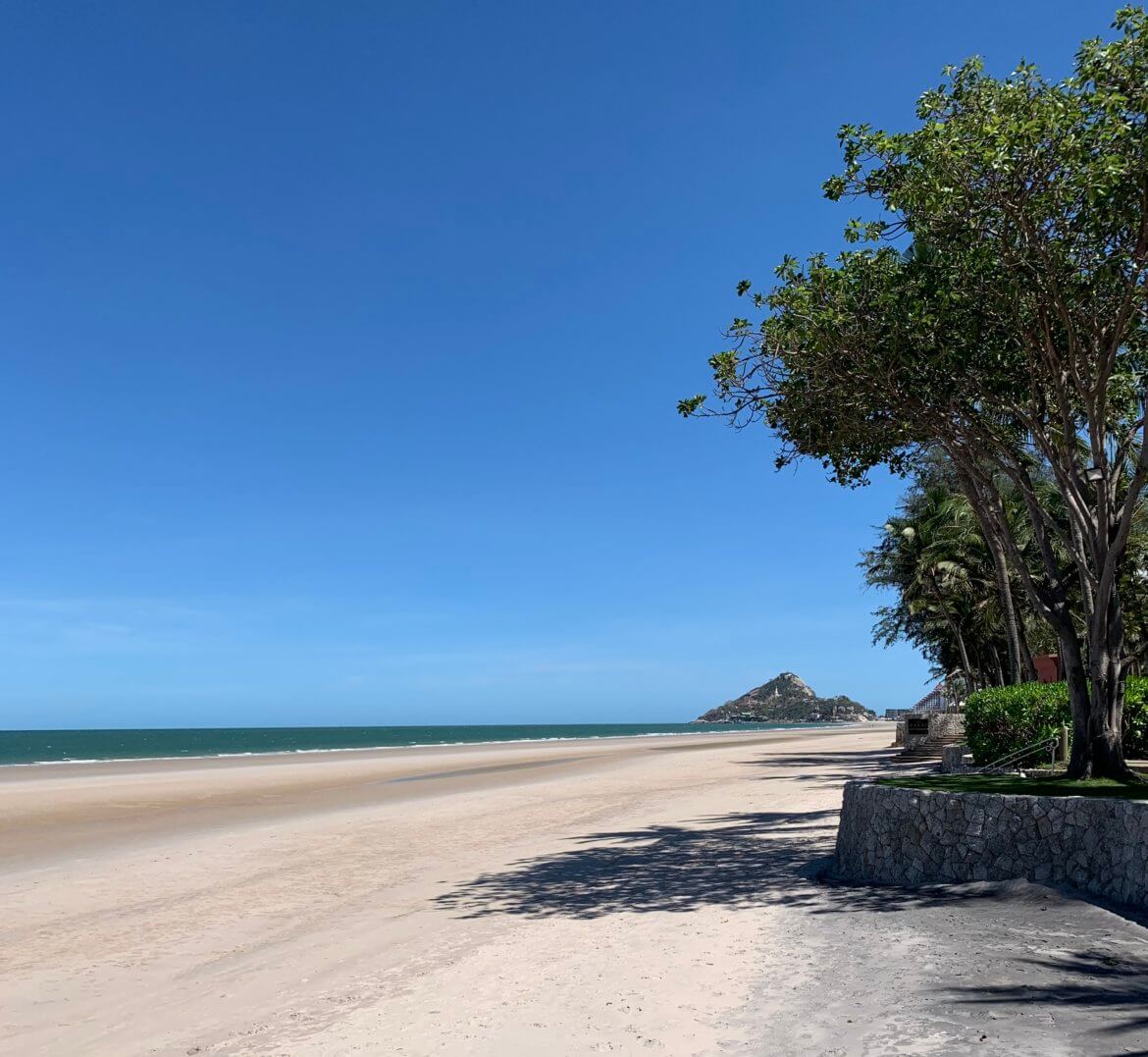
During my recent visit to Hua Hin, empty beaches were very much in evidence already with the third wave leading to mass cancellations. Some resorts, previously 70-80 per cent occupied, saw domestic arrivals decimated. Already hurting from a lack of international visitors, this latest outbreak was a most unwelcome guest.

The question of re-opening Thailand to Tourism, starting with Phuket, has obviously taken a knock backwards. The Tourism and Sports Minster said, “The key determinant is insufficient vaccines, we are concerned about the re-opening timeline. We still need to discuss the vaccine administration plan. If the herd immunity goal cannot be achieved, we may have to consider opening only certain areas in Phuket,” he said.

However, to continue with the same plan, even with restricted zones, will not be easy as long as the country still has increasing new daily infections, said Minister Pipat.

“Most importantly, we still have to hear from other countries that we already started travel bubble negotiations with about their confidence regarding the same timeline,” he said.

Like Hua Hin, hotels in the North reported cancellations of more than 70 per cent with Chiang Mai a cause for concern and currently experiencing increased coronavirus cases. Prior to the pandemic, the province was a popular destination to celebrate Thai New Year.

Regrettably Minister Pipat is in self-quarantine after being in close contact with Transport Minister Saksayam Chidchob, who was diagnosed with Covid-19. The Minster fortunately has already received his first vaccination jab last month (AstraZeneca) and will remain in isolation until next week when all tests are complete (3 swab tests).

0 comment
1 FacebookTwitterPinterestEmail

Just do it, reach out

by Expat Life

by Alice Osborne

Now is the best time to build social and professional circles

When visiting family in Bangkok last March for what I thought might be a slightly longer Easter break than normal, little could I have imagined finishing university remotely and still being here over a year on. As a 22-year-old setting up my career and social circle in Bangkok from pretty much zero, with a pandemic thrown into the mix just to add to the challenge, have definitely learnt a lot about building my networks.

Over the last year I’ve chatted (physically and online) with school students, graduates, parents, teachers, alumni, entrepreneurs, SME owners and corporate CEOs. Still seems crazy to me that I have 1. Gained the confidence to go out and do that and 2. Had people be so receptive to meet with me! I’ve thoroughly enjoyed reconnecting with the old, maintaining existing, and creating new relationships.

Reconnecting with old friends and making new ones

With an abundance of time on everyone’s hands it was so fulfilling to bolster current and rekindle past relationships during lockdown. But upon easing of the restrictions in Thailand came the realisation that I actually had no friends based in Thailand anymore from the Bangkok Patana school days.

A dinner with four alumni one evening quickly turned into a reunion for more than twenty! Going into this network with no expectations, I was taken aback by how easy it was to get on with so many likeminded people. The speed of building strong friendships has been so rapid, especially since we are all super excited to be able to interact with people outside our immediate households.

Through this practice of contacting people, I had vaguely known at school or never met before but were friends of friends, I have found a solid base of besties to navigate young professional life within Bangkok.

Approaching those that are lesser known

After the challenge of making new friends, came that of finding a job. Graduating from university and coming into the daunting reality of mass youth unemployment, with recent grads vying for a much reduced number of vacancies, made it extra difficult to know where to start the job hunt…

So, I reached out to existing and new contacts on LinkedIn, asking for advice not a job. I quickly realised it was about not focusing on the easy networks. The biggest surprises came from mobilising my weakest ties with people I either didn’t see very often, didn’t know well or even at all. Then coupling the input from my parents and friends who understand me, in contrast with these new connections who didn’t, enabled creative and realistic thinking about my future.

Discomfort and Unfamiliarity are great teachers

Talking with people I had never thought possible to approach or connect with in the pre-Covid world has stimulated conversation about career opportunities that were never on my previous radar. Starting my first ever job working in the unfamiliar concentration of blockchain technology, with undefined responsibilities as is the nature of a start-up, led me to discover an unexpected affinity for content writing. By doing new and different work with new and different people, I am learning a lot about what brings out the best in me. It’s been such a rewarding experience to have unexpected doors open and contribute to the success of my connections in return.

Following up for unexpected opportunities

Following up with new connections has driven several fruitful opportunities so far, including this writing gig for Expat Life in Thailand! Even in the new normal of social distancing and virtual meetings, I’ve still been able to expand my network and develop solid professional relationships. Recently connected with a newsletter author for example, just because I liked an article they wrote. Now am in the process of exploring an exciting opportunity for me to engage with China – which is close to my heart having lived there and speaking Chinese – through translating local news not featured in mainstream Western media.


Who doesn’t love a casual chat over coffee?

Over this last year of craziness, feel that I’ve met some of my biggest cheerleaders both personally and professionally. Everyone is clearly attaching a whole new level of importance to social interaction and relationships so there is no better time to reconnect with old acquaintances or reach out to form new bonds. People may not have money right now, but they do have time and are eager to meet! Especially in Thailand, where the pandemic is fortunately under control, it is a great time to invite someone you wouldn’t previously have dreamed accessible for a coffee. Odds are they have the time that they may not have again when the world fully reopens.


0 comment
0 FacebookTwitterPinterestEmail

“The corona virus is here to stay,” said the Professor Ooi Eng Eong in the recent zoom webinar on “Covid-19 Vaccinations and Coping with Anxiety” organized by the Singapore Global Network. This was an expected but unwelcomed statement, a reality that most of us find it hard to swallow.

In any case, life since the COVID 19 pandemic has not been totally bad. We, as humans, have learned to cope, one way or another. Some good things have also come out of this pandemic.

I, for one, found out more about my neighborhood in Nonthaburi, a place that I have lived in for over 15 years but never had the chance to explore due to work and social commitments in Bangkok area. When the Thai government imposed a lockdown in April 2020, my husband and I started taking morning walks in our housing estate for exercise. At first, I would take a stick to ward off unfriendly dogs but we eventually figured out which sois to avoid. The anxiety of catching the virus made me lose some weight initially, to my great glee, but a few months later, my craving for good food surmounted to my desire to be thin. But not matter, I got into the groove of exercising and was in better health as a consequence.

For American-born Rose Marie Wanchupela, the proprietor of Rose Marie Academy who has made Thailand her home for the past 50 years, being stuck at home enabled her to relax and enjoy the ambiance of her cozy home and bountiful garden.

“After the initial lockdown ended and schools reopened and then closed down again, I was anxious about how our students would be affected,” said the former Peace Corps Volunteer who has been running the school for over 25 years. “Fortunately, they adjusted very well to online learning under the guidance of their teachers who all rose to the occasion. I am now confident that our students will succeed in learning regardless of circumstances such as what we we have just passed through.”

“Finally, I would say that it has been a struggle to fathom the millions of deaths and the destruction this pandemic has wrought upon us,” concluded Rose Marie. “To be empathetic and to carry on a normal life at the same time is a dilemma and a real challenge I face. Knowing we are all in this together is fortifying and reassuring.”

For Chinese-American Michele Chan Grover who lived in Thailand before moving to Canada, she and her Canadian husband, Paul, stayed home for most of the part since Covid-19 restrictions were stricter in Canada than Thailand.

Nonetheless, exercise was something they never neglected. Bike riding, walks and runs continued to be part of their daily lives in the summer and fall. And when winter came, skiing and walks were their regular routine.

When gatherings with family and friends came to a halt, they started Zoom calls with family and friends instead of having people come over for dinner. Zoom calls were something they had not done before, but this activity quickly caught on and became a superb and crucial technique to keep in touch to family and friends.

“When indoor gatherings were not allowed, we had outdoor dinners on our porch (just among the family) and we still kept 6 ft apart from each other,”said Michele. “We also had friends, just one couple at a time and sat in the garden, often around the fire pit, in the evenings in the summer.”

House cleaning and getting rid of unused stuff also become another routine activity.
“At the beginning of the pandemic, we went through our storage area and got rid of a lot of things — old textbooks, notes and photos,” expounded Michele. “We also did a bunch of home maintenance stuff, painting, chopping wood, going through old books, uncluttering.”

Husband Paul also found the time and inclination to learn to play the guitar which opened up a whole new world for him.

“It was something he had always been interested but never made the time,” said Michele. “He found a great website which is free and learned from a young instructor who is so good at his job that now Paul is always serenading me.”

“I myself started a drawing programme through a book which I have had for 30 years, but like Paul’s guitar, never finding the time…”

“Paul and I realized quite early on how lucky we were in spite of the pandemic,” added Michele. “We don’t have young kids and have to worry about their schooling,” Michele concluded. “We don’t have to worry about losing a job. We have a nice place to live, friends and family to zoom, have the ability to go out and exercise and be outdoors to socialize, and enough resources to keep us from getting depressed. We have learned to be super grateful.”

Danai Chandrangam, General Manager of GT Auto Co., Ltd., had this to say about his Covid experience.

“The pandemic taught me to be happy with what we have,” said the Netherland-born Thai-Dutch who made Thailand his permanent home when he moved here to work after he graduated from university. “I have come to appreciate the thoughtfulness and support I received from my loved ones during these stressful times. Life would have been a lot more difficult without their understanding and encouragement.”

“On a general scale, it was wonderful to see that the Thai people abided by the Covid-19 prevention rules enforced by the Thai government strictly and without resentment,” commented Danai. “Whether they agreed with it or not, people cooperated for the benefit of everyone around them.”

For someone who led a socially active life, Covid 19 caused a marked change in Danai’s lifestyle.

“My wife and I started staying home more. We cooked and ate at home and found that I actually enjoyed staying home and felt more relaxed. After the rules were eased, we had small gatherings with friends and family members and we came realize how important the time spent with these people are to us and we came to cherish these times more than before.”

“I became more health conscious to minimize the possibility of getting the virus infection and as a result, became heathier and did not get sick at all during the past 12 months,” added Danai.

“Workwise, it was tough,” Danai acknowledged. “I had to make many unpleasant decisions. Thankfully, most of our staff were supportive. It was a great team effort where many executives rose to the occasion and worked tirelessly to achieve their targets.”

“Another blessing in disguise was the Bangkok traffic,” said Danai with a big smile. “With people staying home more, the traffic got lighter, to the delight of many of us.”

“One regret that I have though is that my parents who live in Holland could not visit us last year.”

Danai’s Thai father and Dutch mother usually visit Thailand once or twice a year, spending a few months in the country during each visit.

“It is sad that we were also not able to fly over to see them. Of course, we stay in touch with WhatsApp and so on, but nothing beats face-to-face contact. I hope this issue will be solved by the end of this year.”

“All in all, people are more resilient that we give them credit for. Many found creative ways to make a living. They don’t give up but move on with enthusiasm, courage and hope.”

Similar to Danai, New York-born Dar Lim Chakrabandhu who has lived in Thailand for more than 30 years, said that not being able to travel overseas during that pandemic was one thing she really missed.

“But I’m basically a home body so it’s been fine for me,” said the owner of The Vintage Shop and Very Vintage Jewelry. “I have started reading daily which I used to do but didn’t have the time. I have also tried out new recipes and some gardening techniques that would not have gotten my attention before the pandemic.”

“I think it has brought me closer to friends and relatives living far away. Previously, I did not correspond with as often as I should have,” Dar Lim added. “Covid 19 sure has made me value my relationships so much more,”

“I also got around my local neighborhood and discovered some nice little gems I may not have checked out before,” said Dar Lim, who spends most of her time in Chiang Rai where her family’s Katiliya Mountain Resort and Spa is located. “We found some new businesses and cafes and restaurants that are now regular stops for us.”

As far as advice for young people regarding jobs, Dar Lim recommends that now is the time for soul searching, especially for those who are out of a job.

“One needs to decide what work would bring you joy through all of the madness going on around us. It may be necessary to learn something new or return to university for further studies.”

“During tough times there are always new opportunities if you keep your eyes and ears open,” she continued. “Right now, anything having to do with the medical field, pharmaceuticals or research offers endless possibilities. As well as work in the field of energy and products and services that have climate change in mind. Many new businesses started during this pandemic will be around for years to come.”

“No matter what the circumstances are around us, life goes on,” Dar Lim added practically. “Some couples may choose not to have children given the state of the world and that’s OK. For those who want to start a family, now may not be the time if you are having financial stress. Or if you are affected by the news each day, that would only add undue worry while pregnant. If you are anxious to start a family and are financially secure and in good health, then go for it. But remain vigilant avoiding any risks while Covid-19 is still with us.”

“I think that Covid-19 will not end but be with us forever like the flu. But we will be able to manage it through vaccines and revised inoculations as time goes on. It will be a few more years before we start to really understand this disease and have enough research to truly be confident about making predictions.”

Covid-19 has taught us to stop, step back, and look deeply into our own lives to figure out where we go from here. It also taught us to appreciate the simple things in life, be it a pleasant cool breeze that brushed our faces during our early morning walk or a nice hot cup of coffee that tasted so good because we did not rush to finish it to beat the traffic to get to work. And stay optimistic and be confident that the answers to our dilemmas will come to we when we calmly think things through.


About the author.

Netra Ruthaiyanont is currently the Marketing Director of GT Auto Co., Ltd., authorized Volvo Car Retailer. The former member of the print media enjoys writing stories about travel, education and the challenging lives of women.

0 comment
0 FacebookTwitterPinterestEmail

by Alice Osborne,

From overwhelming uncertainty to embarking on an unexpectedly exciting path

Starting a career has personally been a messy journey of exploration, but it would be silly to expect a perfectly linear process. By doing new and different work with new and different people, I am learning a lot about what brings the best out in me, my preferences and aversions. Here’s what I’ve discovered about career planning during Covid, which could’ve easily taken up 5 pages and 5000 words but sometimes you realise one page and 750 words is enough…

Just want to start by saying (however cheesy) that whether you’re reading this as a student, graduate, young professional or otherwise, take this unprecedented time to experiment, test, and learn. Perhaps, like myself, you’ll find value in the possibility of pursuing a diversity of options as opposed to sticking wholeheartedly to one. Follow ideas regardless of whether they lie in the domain of your desired career and take the road less travelled. You may make surprising discoveries indeed!

Nothing in the pipeline

Prior to the pandemic, I had been attending all of the university career fairs and workshops, searching for a prospective role and employer in preparation for summer graduation. Applications to the big competitive grad schemes in the UK were underway, with a few rejections already received. I quickly realised the job search was extremely time consuming and didn’t want to compromise getting a first class degree classification, so chose to focus on final year work.

When Covid spiked around this time last year, I didn’t have much in the pipeline with regard to prospective employment. The only interview I had been invited to at that stage was for a mis-advertised position as a ‘marketing manager’, later discovered to be a ‘direct marketer’ position as a door-to-door salesman…

Finding my career post-Covid

Prior to the pandemic had envisaged that now I would be working for one of the big four consultancies. In China. It took some time to accept that I was not going to be able to pursue my potential plans work wise and socially, for the rest of the year at the very least. As someone who loves to have a good plan and options, the uncertainty was overwhelming. So I turned my attention proactively to what could be done to put myself in a better place for when the world reopens. Embarking on a very different career path here in Bangkok as the creative lead for a blockchain start up, thought I was just changing current plans to ultimately reach that same long term goal.

Corporate cog turns entrepreneur

For the past six months, I’ve thrown myself into developing technical knowledge about a cutting edge technology, whilst gaining practical knowledge from diverse responsibilities including website design, company branding, case research, original article writing, and social media management. All in the hopes of putting myself in good stead for future endeavours.

One year on with the door to the big four and China still closed, I have gained a completely different perspective of life, employment and working for myself. Where I initially came into my first job viewing it as a placeholder to gain experience to then go onto do those things later, now I find myself doing it the other way round, wanting to be an entrepreneur and explore the digital nomad lifestyle.

Making change my best friend

Since I’ve adapted and embraced the Covid led remote way of working, new doors are popping open left right and centre. With the changing nature of work, I’ve noticed that it’s feasible (and acceptable) not to put all of my eggs in one basket. Through the support of people in my professional network here in Bangkok and abroad, I’ve been able to start exploring my newfound passion for professional writing to help startups craft their narrative and voice. This way of working as a freelance copywriter in my free time certainly wasn’t on my radar prior to these unplanned career experiences.

Never would have thought of pursuing this avenue had I gone into a corporate setting as initially planned. Situations can of course change overnight so will keep my mind open to opportunity. I take comfort in knowing that change is my friend and look forward to continuing on my career path with no set expectations, whilst sat working at a favourite café with a matcha in hand.


Taking the road less travelled

Covid-19 jolted everyone out of their comfort zones, turned well established habitual routines upside down and led us to think deeply about what matters/what is worth pursuing. No matter what stage in life, many people have had to change their career plans. But I hope the topsy turvy journey to start my career in Thailand, amidst a pandemic of all things, shows you there is always opportunity to be found.

0 comment
0 FacebookTwitterPinterestEmail

On the face of it, a global pandemic should be perfect for a writer. It requires society to keep itself at arms length, maintain a respectable social distance, visit nowhere, apart perhaps from the pharmacist or the greengrocer. It should be a boon for a writer. There is a perceived wisdom; all a writer needs is an idea, a pen and lashings of solitude – right? Well, only partly right. Let me explain.

I was last in my beloved Thailand, a year ago. It was there, as I prepared for a brief visit to Europe, an expat friend questioned my judgement.

‘Flying back to London, Frank? Are you sure? This Covid thing looks worse there than here. I’d stay put if I were you.’

This was March 2020, and the early days of the plague. Thailand had been one of the first countries, after China, to report cases and some were holding their breath, waiting for the disease to grip. In England, people were only just beginning to look over their shoulders; still telling themselves it was someone else’s problem.

‘I have to get back; I have some banking to sort out.’ I replied indifferently.

All true; I was in the middle of buying an apartment and needed to sort out the finance. Something also told me I might be better off in England though; for a while anyway. Europe would handle the crisis better and once the dust had settled, I’d be back. A few short months should do it. How wrong I was; particularly because the apartment in question was in Chiang Mai…

Back in the watery sunshine of a Sussex Spring, I quickly sorted out my funding and sat down to scope out the new novel. It was to be set in nineteenth century Siam – a political and espionage thriller, with a cast of vibrant English and Siamese characters. I was excited. Then, as my thoughts started to come together, the Thai travel restrictions were announced. I convinced myself that by August all would be well, so with plot ideas rumbling around in my head, and an assortment of scribblings, I settled down to write the first chapters in England.

One of the challenges of writing a historical novel, set in a faraway country, is to deliver authenticity. I pride myself on realism, and I relish the chance to research the terrain. To be honest, the exploration is usually the best part of creating a story – that, and the sense of total immersion. When writing my earlier novels, I’d spent extended periods in some of the remoter parts of Thai border country, meeting folk who treated ‘farangs as amusing novelties. I trudged up mountain trails, through dense, bird filled forests, to descend to sparkling river valleys. I always wanted a chance to experience what my characters might have felt. But now, here I was, marooned in a flat just outside Brighton, and worse, I was stuck in a cramped loft space with a view over Tesco’s carpark, with strict orders to stay put.

I reverted to the internet for company, but informative as it was, the feel, the atmosphere, the essence of the place I aspired to write about was somehow missing. I tried to imagine myself back; I yearned for the solitary veranda in Baan Nam Suaay, with its view over emerald green rice fields, the smell of lemongrass, the shack I’d rented above the western reaches of the Mekong River, the spice market in Nong Khai; I could go on. After a month of wrestling with the wrong words, I gave up on ancient Siam – nothing worked. To write about Thailand, I needed to be there. The internet and the guide books were no substitute for serendipity and boots on the ground.

Instead, I turned my hand to writing a thriller, set in Victorian London. Suddenly, Brighton’s Covid lockdown seemed to be an advantage. It was easier to imagine the cold cobblestones of foggy London streets than the grand majesty of Wat Arun at dawn. Simpler in my mind’s eye to visualise a shrouded hansom cab against a lamp lit Thames embankment than a rickshaw bumping down a track by a bustling Chao Phraya river. But there were still distractions. I developed a new and morbid fascination for the Coronavirus statistics of death – the growing pandemic was providing plenty of those. The figures now read like a lopsided and gruesome tally from a Somme battlefield. The United Kingdom 110,000 – The Kingdom of Thailand 79. Goodness!

But, by this time, my forced isolation had started to focus my mind. Gone were the invented diversions; the unnecessary shopping trips and car rides to country pubs. I had no visitors, and when I turned my phone off, I had no calls. I became absorbed in the London of Jack the Ripper.

But then, just as my new project was beginning to show some promise, officialdom struck, and the whole equilibrium of my imprisoned existence would take a nasty jolt. I thought I had become immune to the many and sometimes charming quirks of Thai bureaucracy, but this experience left me scratching my head. The saga began shortly before I’d left Thailand a few months earlier. I had a tax bill to pay; it was connected to the Chiang Mai apartment that I was buying. The Land Office, quite rightly, wanted their money. So, I took myself to my local bank, and from my savings account, I withdrew a cashier’s cheque to cover the new demand.

At this point, almost before the ink had dried, Thailand’s Covid defences started to manifest themselves. Police barriers went up on the beach road, and there was talk of quarantine. Abruptly, the Land Office closed its doors to all comers, including me. Three weeks passed before they opened for business once more, but by that time I’d returned to England and had already started to despise the view of my Sussex supermarket. On presentation, the Land Office advised that the cashier’s cheque was no longer valid – it was past its sell by date – literally. Another would be required. No worries, I thought; irritating perhaps, but not insoluble. I contacted my branch by phone from England, a kind lady banker took on board my request and without hesitation she issued a brand new cheque on my behalf. The Land Office duly accepted it, and my tax debt was paid – everyone was happy. There was just one thing required; to tie up the loose ends. I had to cancel the original cheque, and get the sum repaid into my account. I called them once more. But this time, the transaction would not prove to be so easy.

I would need a power of attorney, the bank said. It would have to be prepared in Thai and English and signed by me (in blue ink). Then, in the following order, a notary lawyer in UK, The British Foreign Office, The Royal Thai Embassy in London and finally, once returned to Thailand, the Ministry of Foreign Affairs in Bangkok would have to add its moniker and stamp to it. The power of attorney would have to be accompanied by a signed copy of my passport photograph page, a signed copy of the relevant visa page, a signed copy of my bank book, and a signed copy of my appointed agent’s Thai ID card. The last signature, from the bank itself, would finally enable them to return my money. With a sigh of surrender, and realising that there was no point in remonstrating, I set myself up, square jawed, to tackle the task. Unfortunately, the Victorian novel stalled as a result, as I became obsessed with this new challenge.

Eventually the great day arrived; I had obtained all the required signatures. I shipped the papers back. But when presented with the wad of signed and stamped documents, the Ministry of Foreign Affairs decided that in order to process the application, I would need a second power of attorney; this to authorise my appointed agent to apply to them to legalise the first power of attorney…

I’ve tried to remain calm… but one question keeps repeating itself; it was vaguely teasing at first, gently reproachful perhaps, but with each asking, it has become ever more strident, ever more accusatory.

‘Frank! Why the hell did you abscond from Thailand in the first place? Now look what’s happened. Your tour de force Siamese novel has been put on ice, your half baked Victorian thriller is less than three chapters old, the destiny of your money is in the hands of overseas officialdom, the only people you see are hooded shapes pushing shopping trolleys, and despite your appalling isolation, you are closer to contracting Covid than ever before. What were you thinking about, man?’

There is absolutely no doubt. The glitches of local officialdom may have been mind-bendingly frustrating. But more than ever, I am missing Thailand horribly, painfully. The smell of lemongrass, the Indochine spice market in Nong Khai, the sound of bamboo on a windy day, the taste of Khaw Khaw Hmu, the borrowed shed on the banks of the brown Mekong, my battered motorbike, and even the screech of the damn cockerel that used to wake me most mornings to mark the sun rise of another Isaan day. A year has passed since my banishment, and it looks like it will be many more months before this terrible scourge is conquered. Life must go on – I will survive.

I just wish I was surviving in Buriram, not Brighton.

Frank Hurst is an English author who writes crime and adventure novels about Thailand

Website: Frankhurst.com

0 comment
0 FacebookTwitterPinterestEmail

The most famous American expat in Thai history is “Jim” Thompson, who singlehandedly revived Thailand’s silk industry after WWII. Thompson remains a real legendary figure in Thailand, and throughout all of Asia, even to this day. He continues to inspire the imaginations of those who want to make it big here through hard work and perseverance.

James (“Jim”) Harrison Wilson Thompson (21 March 1906 - 26 March 26 1967, the date he disappeared) was born in Greenville, Delaware. He was the son of a wealthy textile manufacturer. Thompson graduated from Princeton University and did some graduate studies at the University of Pennsylvania School of Architecture.

Thompson moved to New York City in 1931 and worked as an architect design homes until 1940. In 1941, before the start of WWII, Thompson enlisted in the Delaware Army National Guard. He was soon encouraged to join the U.S. Office of Strategic Services (OSS), forerunner of the Central Intelligence Agency (CIA).

After his first OSS assignment in North Africa, Thompson was sent to Sri Lanka in May 1945 to work with the “Seri Thai (or Free Thai” Movement). This underground organisation was dedicated to ending the Japanese occupation of Thailand by clandestine means. The group also had the support of Pridi Panomyong, the regent to King Ananda Mahidol (King Rama VIII) and Seni Pramoj, Thai ambassador to the United States. Thompson arrived in Bangkok shortly WWII ended in August 1945.

In early 1946, Thompson started working as the U.S. Embassy’s military attaché. Also working at the Embassy was Kenneth Landon, an American missionary. His wife, Margaret Landon, was the best selling author of “Anna and the King of Siam”. Her book was made into a movie of the same name in 1946. This was later retitled and filmed in 1956 as “The King and I”. In 1946, Thompson joined a group of investors to buy The Oriental Hotel that was in dire need of restoration, but soon disposed of his shares due to a dispute with the other investors. He then concentrated on the locally woven silk that had caught his attention. Thompson instantly fell in love with the texture, colours and vibrancy of the scintillating silk material. He also found the whole industry was on the brink of extinction and vowed to revive it.

Along with George Barrie, they founded the Thai Silk Company Limited in 1948. They each had eighteen percent of the shares. The remaining 64% were shared by Thai and foreign investors. The company caught a huge break in 1951 when the costume designer for the hugely successful Rogers and Hammerstein’s Broadway musical play, “The King and I”, used Thompson’s silk fabrics for the cast members. Soon top fashion designers in New York also started using Thai silks in their designs. The company’s sales quickly started soaring.

Thompson was directly responsible for not only saving the entire Thai silk industry, that was in danger of disappearing, but he lifted thousands of Thais out of extreme poverty. He kept the company cottage based, so women composed the bulk of the workforce. By working on their wooden looms at home, they kept their homemaker positions and became the family breadwinners.

In 1958, Thompson put himself on the country’s architectural map by constructing a new home. This innovative structure is still unique in Thailand. The large building was composed of traditional Thai houses to display his many ‘objets d’art’. Thompson bought six old houses from upcountry then had them all dismantled and transported by river from Ayutthaya to his new property plot in Pathumwan District. On their arrival, they were offloaded and reassembled to a plan Thompson had drawn up. There were several changes from the traditional Thai house architecture. For example, Thompson’s new home had a central indoor staircase as opposed to the traditional outdoor staircase. He also had all the wall panels reversed, so the outside wall decorations now faced inside so they could be more easily seen.

Once finished in 1959, he filled his new unique mansion with hundreds of items he had collected from all his journeys. These art objects included Benjarong dinnerware, an old window from a pawn shop, Cambodian carvings, blue-and-white Ming porcelain pieces, and Thai and Burmese stone statues. It is now called the Jim Thompson House museum.

Thompson disappeared from a trip to the Malaysian Cameron Highlands on 26 March 26 1967. His disappearance generated one of the largest manhunts in SE Asian history.

0 comment
0 FacebookTwitterPinterestEmail

Exactly like the British pound sterling in ancient times, the Thai baht (Thai: บาท) was originally used as a unit of weight or mass. Specifically, 1 baht was equal in value to 15 grammes of silver. The baht is still used today as a unit or measure of weight for other precious metals, like gold. The baht is based on the decimal system with 1 baht equaling 100 satang. Originally known to foreigners as the tical, this was the term written on banknotes until 1925 and then discontinued.

It is interesting to note that the Thai baht is considered one of the oldest currencies still in circulation. It was Sukhothai (1250-1419) that first used a baht based currency. Numismatists (coin experts) have stated that the term baht first appeared in 1384 on Thai inscriptions in describing a unit of weight. The word itself is derived from the Khmer weight system. As all coins are based on a standardised grading system using simple fractions and multiples, the baht is no exception. Originally it used 1, 2, 4, 8, 16, etc., and 1/2, 1/4, 1/8, 1/16, 1/32, 1/64, etc., as a denomination system in previous times. In the beginning, all baht coins were composed of solid silver at some designated value. The original weight of the baht was determined to be = 768 rice grains.

Originally coins from Sukhothai and Ayutthaya were shaped like heavy bracelets. These were called “pot duang”. They consisted of heavy silver bars that were thicker in the middle and then bent inwards on the smaller tapered ends to meet to form a ring shape; then identifying marks were stamped on them to show denomination. “Pot duang” also came in smaller denominations or smaller sizes. When the first Europeans arrived in Ayutthaya they called them as “bullet money” as the coinage looked exactly like a western folded bullet or ball from a musket.

Thailand was chronically short of coinage for centuries until coin minting was started in 1860. When westerners started coming to Thailand in greater numbers in the early 19th century they brought their own money and coins along. In order to increase the coinage in circulation, the Thai government counter stamped certain large foreign trade coins to certify their validity so they could be used as legal tender in the kingdom between 1858-1860. Many types of metal, glass and porcelain gambling tokens of all sizes were also used as small coins due to their ease of manufacture.

King Rama III (1824-1851) was the first to consider using flat coins. Among other coins and tokens that were used as currency in the kingdom, cowrie shells were also a form of money from ancient times for the smallest monetary units. Before 1860, no coins were manufactured by modern methods. But the King wanted to replace cowrie shells. Not due to their great inconvenience; i.e.; many hundreds or even thousands of them had to be counted to do any business exchange or trade, but he was disturbed that that the little creatures living inside were killed to get their shells. In 1835, the King heard flat copper coins being used in Singapore. He had a Scottish trader make two prototypes. But both designs were rejected. Interestingly enough, the name of the country listed on the coins was “Muang Thai” and not Siam. In 1857, the silver bullet coin, or “pot duang,” finally ended production.

The first royal mint was established in 1860 inside the Grand Palace when a coin minting press arrived from the UK. The first modern coins were struck that year under the direction of King Mongkut (King Rama IV). In 1875, because of a lack of space and a larger demand for coins the mint was moved elsewhere. One gold baht was approximately worth 16 silver baht. Copper, silver and gold baht coins were introduced in various denominations. Smaller coins in fractions or denominations of the baht were called by different names like att, solot and fuang. In 1897, the decimal system was introduced where 100 satang equaled 1 baht. This system was devised and introduced by Prince Jayanta Mongkol, a half brother of King Chulalongkorn (King Rama V). The first coins denominated in baht were issue that same year in 2½, 5, 10 and 20 satang valuations. Other fractional coins of different names were slowly discontinued.

The baht was fixed at a rate of 1 baht = 15 grammes of pure silver until 27 November 1902. Then the Thai government started to increase the value of the baht. It allowed all increases in the value of silver against gold but did not reduce it when silver prices fell. The Thai government first valued 21.75 baht = 1 British pound sterling. It steadily rose in value until 1908 when the baht was pegged or fix at 13 baht = 1 British pound sterling. This was adjusted down to 12 baht in 1919 after World War I ended and again in 1923 to 11 baht after post-war financial instability. The exchange rate range over a period of approximately 20 years fluctuated between 11 baht and 22 equaled 1 British pound.

In 1941, a series of silver coins were introduced that included 5, 10 and 20 satang denominations. This was due to a great shortage of nickel caused by World War II. On 22 April 1942, the baht was fixed at 1 baht equaled 1Japanese yen during WWII. Also in 1942, tin coins were introduced for the 1, 5 and 10 satang denominations. In 1945, a new tin 20 satang coin was introduced followed by new tin 25 and 50 satang coins in 1946. In 1950, a new series of aluminium bronze coins were issued in the 5, 10, 25 and 50 satang denominations. A bronze 5 and 10 satang coins were introduced in 1957 along with a highly unusual 1 baht coin composed of a copper, nickel, silver and zinc alloy.

In an unusual move, to save money on expensive new coin dies, several Thai coins continued to be issued for many years without date changes. For example, the tin 1 satang coin of 1942 and the 5 and 10 aluminium bronze coins of 1950 were struck every year until 1973. The tin 25 satang coin of 1946 continued to be struck until 1964; the tin 50 satang coin was issued until 1957. The 1957 aluminium bronze series of the 5, 10, 25 and 50 satang coins were minted with the same original date into the 1970s. Cupro-nickel 1 baht coins were introduced in 1962, but they remained without a date change until 1982 while being minted every year.

For many years, 1, 5 and 10 baht paper currency notes were issued. These were slowly phased out and replaced by coins since they lasted much longer in circulation than paper bills. In 1972, a cupro-nickel 5 baht coin was introduced. This was changed to a cupro-nickel-clad coin in 1977. During the period 1986-1988, a new coin series was introduced as Thailand modernised their coinage. There were aluminium 1,5 and 10 satang coins, an aluminium-bronze 25 and 50 satang coins, a cupro-nickel 1 baht coins, a copper core, cupro-nickel-clad 5 baht coin and a bi-metallic 10 baht. In 2005, a steel core, cupro-nickel-clad 2 baht coins was introduced.

In 2009, several design changes were made, and new coins were issued. This was to reduce production costs and update the portrait of King Rama IX on the observe (or front) to a more recent likeness. The 2 baht coin, which was very similar in size and colour to the 1 baht coin and was very confusing to consumers and merchants, was changed in colour and size from a carbon steel nickel clad coin to an aluminium bronze coin that was gold colour. It was released on 3rd February 2009. A new 50 satang coin was released that April, a new 5 baht coin was released that May, a new 10 baht coin was released that June and a new 1 baht coin was released that same July.

From 1956 until 1973, the baht was pegged to the U.S. dollar at a steady or set exchange rate of 20.8 baht equaled 1 U.S. dollar. That changed in 1973 when the baht was valued at 20 baht equaled 1 U.S. dollar and lasted until 1978. The baht was revalued at 25 baht equaled 1 U.S. dollar from 1984 to 02 July 1997 when the Asian financial forcefully struck and Thailand’s economy badly faltered. The Thai government was forced to uncouple the fixed exchange rate allowed the baht to float freely. It reached a high point of 56 baht equaled 1 U.S. dollar in January 1998. Since then, the baht has slowly regained its strength and has recovered to about 31 baht equaled 1 U.S. dollar in April 2021.

It is most probable that eventually electronic payment systems will supersede coins and currency in Thailand, but the baht will definitely continue

0 comment
0 FacebookTwitterPinterestEmail

There is no better pool brunch party on offer in Phuket at the moment, why not make a weekend of it like we did and throw in a weekend staycation?

Up a nondescript little lane at the end of Kata Beach is an easy to miss driveway up a hill past Mama’s Seafood and SKA bar. Take this road to the oceanfront resort called Kata Rocks. Once there, your buggy awaits to transport you down to the rocks and into a world of infinite luxury.

Here you will find a resort and residences of 34 villas beyond your wildest dreams in this tranquil corner of Phuket. Unless of course, you’re here for a monthly Brunch Pool Party, or for the Ladies Hangout each Wednesday, when cools sounds, and a party vibe attracts.

Kata Rocks is as stylish and as hip and happening as you can get. How would we fit in? Don’t forget I came for Christmas and stayed on when the Thai Government said cancel all non-essential travel. We followed instructions and never returned to Bangkok!

By this stage, I’m looking like a shaggy Covid puppy that needs to go to the groomers. As to what to wear, well forget that! I tell anyone that will listen, that when we arrived, him-who-plays-golf took up half the baggage allowance with a set of golf clubs!

Let’s just say thank goodness Kata Rocks were either so very keen to get a full house, or they have to be the nicest, most inclusive, most welcoming place to stay that I have ever been too

I know it’s the later, as the Brunch Pool Party turned into a sellout event. Remember at this time Bangkok has gone back into tighter restrictions, schools are closed, offices requested to restart home working where possible, alcohol sales are off, and all bars are closed. My family in the UK and in Australia are in even tighter lockdowns.

There never was a truer feeling of living in a bubble, nor a more appreciative ready to party crowd, than those that turned up at the end of January 2021 to fill those empty tables ready to brunch!

The fact that the Kata Rocks Brunch Pool Party was a sellout event when Phuket is oh so quiet says a lot. Phuket ‘peeps’ know the best brunch on the island when it’s offered! The chance to unwind and enjoy the party by the iconic infinity pool overlooking the Andaman Sea at the Oceanfront Clubhouse well, who’s going to miss out on this invitation? Not I!

Won’t you take a wander with me to see our highlights from succulent cuisine to the best cocktails on the island? My favourite drink was rather aptly named The New Splash (Rum, Creme de Cassis and mixed berries).

There is a stylish, friendly vibe amongst the guests, but it was also nicely chill and I’m not just talking my Italian Rose… We were soon chatting to the tables around us as if we were lifelong friends. Well, in some ways we were.

Would you believe I used to ride my pony through Nick on the next door table’s farm in England? Or that when Richard the Kata Rocks Founder and CEO stopped by to say hello, I was born in the same town he was from?! I’m a firm believer that if you talk long enough you will always find a connection. Here in Phuket, the connections came as easily as the free flow wines.

All eyes were on the fashion show and the captivating clothes from Endless Summer. I especially loved seeing a couple of models my age who looked fabulous. Go ladies you rock!

With an endless summer of free flow alcohol, the party was kicking off. It didn’t take long for the first guests to be needing a quick cooling off dip, beer and wine in hand. The music by Armenia the DJ was spot on. It was just the best decadent fun I’d had…. all year.

Ha! Only kidding! This is brunch my style!

“Brunch is an opportunity to be a little naughty — or a lot extravagant — at the table.”— Kit Wohl

We just had the chance to strip off ourselves for a quick dip. I mean it had to be done didn’t it? A cocktail in the pool? To view these and more photos check out the Kata Rocks Facebook Page

Come the evening we returned after our wellness treat at the Infinite Luxury Spa (amazing do not miss!) to find the party was still going strong and a singalong happening!

Come to Brunch and stay a while

Welcome to our one bed loft pool villa.

It would be remiss of me to tell you of the joys of a weekend staycation at Kata Rocks without giving you a tour of the villa. I am not surprised Kata Rocks has won over 50 international awards and accolades including ‘Best apartment in the world.’

Starting at the front door don’t do what I did and report your key not working when you’ve pressed the high tech key fob on the wrong panel! It’s a taster of what is ahead. But forgive me for not exactly being on the ball. When we arrived, I was so wowed by the whole stunningly gorgeous apartment that maybe I was a tad distracted…

Our villa was on two levels from everywhere is that view. The one that makes you feel a million dollars. Not to mention the Rock Star service. Whilst you are at Kata Rocks you have the personal service of the team, cutely called Rock Stars. Oh, the lifestyles of the rich and famous. Who wants some of this?

Your own private indoor/outdoor area greets you. How tempting is it, I just want to jump straight into that infinity pool. The shaded outdoor terrace and padded loungers are perfect to appreciate the beauty of a Rocks sunset. Be warned it’s hard to leave.

The villa has everything and more. If you just wanted to bunker down and escape from the world, this would be the place to do it. You can come for a night and stay for a month. You could so do WFH here (Working from hotel there is a big work desk if needed) Anyone interested?

The clean, fresh, light, airy space adds to an incredible ambience. I feel so happy here and love the design and artwork.

There is a high-tech experience as I mentioned. The interactive entertainment system for me was the fun of putting the blinds down at night! There is even a TV set into the roof above your bed. That view from the bed is wonderful!

The bathroom is just my sort of place. I’m a bit of a bathroom snob, and I love a bath wow! This was a stunning bathroom with its open ended design to encompass the views.

At breakfast the next day the wow factor continued. We loved our breakfast by the Clubhouse pool and as we did, we savoured the moment reflecting that Kata Rocks really does offer it all.

You have all the seclusion of your own one private villa, and at the Clubhouse, you’ll find a conviviality where you can mix with others if you want.

A couple of things to be mentioned. Kata Rocks dining overlooks the pool, this is what some of us, ok Mr Wren called a posing pool. You’re not exactly going to be best buds with your neighbours if you demonstrate your athletic butterfly strokes here. Equally well, if you don’t want everyone looking at you whilst having their lunch, swim in your villa pool!

Kata Rocks is built on a hillside. You can order a buggy service to take you up to reception or back to your room wherever you are situated. It’s a good fitness workout for the hardy who chose the demanding walk from the clubhouse to the hotel entrance and it’s guaranteed to get your heart rate up. And finally, there is no beach on site. My favourite beach in Phuket, Kata beach is at the bottom of the hill a two minute buggy ride away.

The story of my stay at Kata Rocks has to finish as it started out on the rocks with the very essence, the soul and the heartbeat of this 5 star luxury resort. When you are not partying, I want to share with you the peace, the connection to this world, and to drown in both the wonder of sunrise and the glory of a sunset at Kata Rocks.

Just you, me and a few fishermen who gather on this small cape between Kata and Kata Noi for their catch of the day. Thanks to Magda the wonderful yoga instructor for my Sunset Purification Meditation.

Look closely at these photos, close your eyes and imagine the warm sun on your face, and the energy from this planet, listen to the sounds of the waves crashing on the rocks with the ebb and flow of the tides. Picture the glimmering Andaman Sea in Phuket, the paddle boarders gliding past, a yacht moored off the jetty.

Take in that healing light of the Thai sunshine and imagine you are here with me on the rocks or by the pool watching the sunset.

Or better still pick up the phone and make a booking.

The thing about Kata Rocks is the very foundation of the place has energy, that even in today’s quiet and tourist bare Phuket warms the soul. You come for the day, the night, the week, or more, you will find there is infinitely more on offer than you thought, and your memories of the epic times will last forever.

The pool brunch will return on 27 March 2021

Further details at www.katarocks.com

Disclaimer: Little Wandering Wren stayed as a guest at Kata Rocks.

Little Wandering Wren is a Bangkok Blogger happily stranded in Thailand for the duration. In the past 12 months this Staycation Queen has completed over 100 nights in hotels across Thailand. She knows a good place to rest her weary head when she finds it. More can be found at www.littlewanderingwren.com

0 comment
0 FacebookTwitterPinterestEmail