Author

Kathleen Pokrud

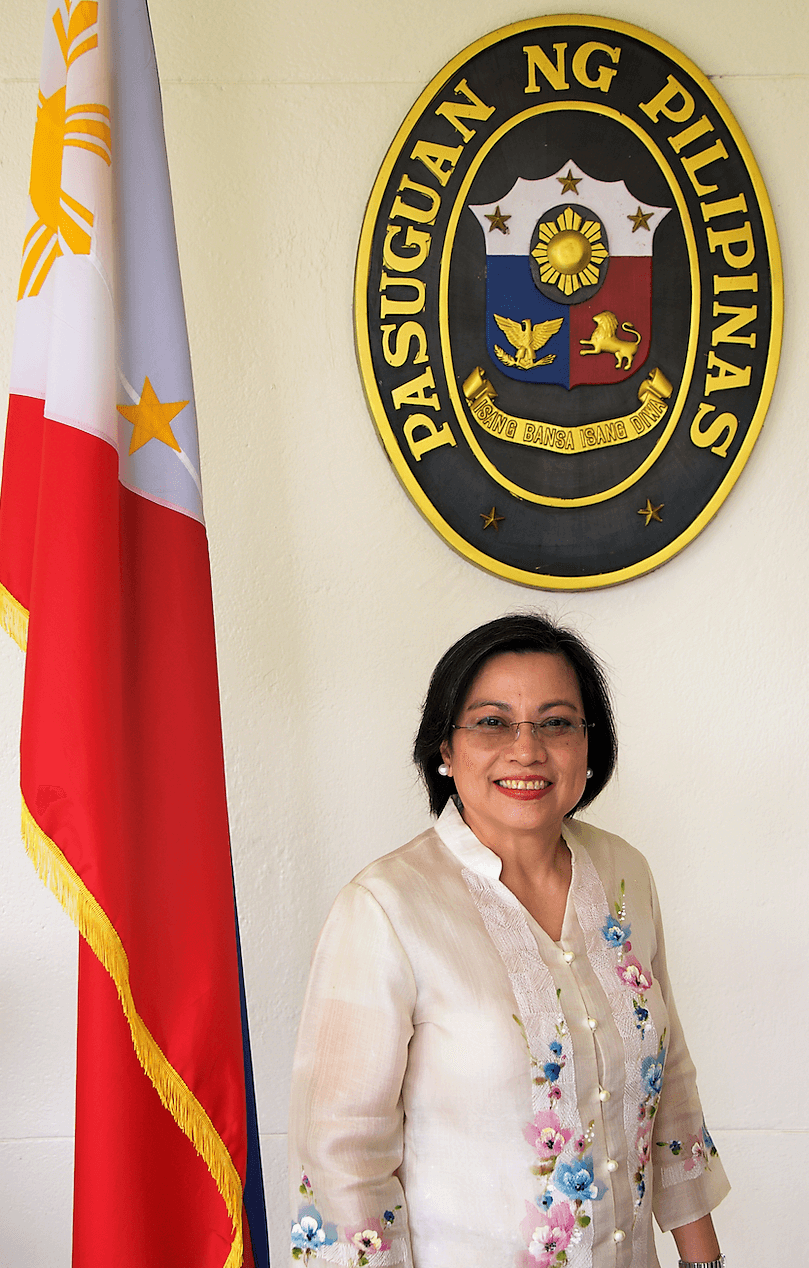
In November of 2020, H.E. Mrs. Millicent Cruz Paredes, Ambassador of the Republic of Philippines to the Kingdom of Thailand and Permanent Representative to UNESCAP, arrived in Bangkok. Ambassador Paredes received her credentials from the King Maha Vajiralongkorn Phra Vajiraklaochaoyuhua in April 2021. At the spacious embassy office, Expat Life sat down with Ambassador Paredes to learn about her perspective on Thailand and discussed the bilateral relations between the two countries.

Arriving in the midst of the second wave of Covid infections, Ambassador Paredes recalled, “I came directly from the Philippines with my 12 year old daughter and we were the only two passengers on the plane. The PCR test that we went through was administered by the Philippine Red Cross in the middle of a typhoon in Manila. I started to conduct virtual meetings and managed the embassy affairs during the 14 days quarantine in Bangkok.’’

Thailand is the second overseas posting of Ambassador Paredes. Her first and last posting prior to Thailand was in New York for six years. For the past 12 years, she served at the Home Office in Manila, in various capacities including Director of the U.S. Division, and head of Fiscal Management Office with responsibility for finances of the Foreign Service. She gained experience as Deputy to the Senior Official in the APEC office to handle the Philippine Chairmanship of APEC in 2015. Ambassador Paredes was also Assistant Secretary for the international economic office, Asian and Pacific affairs, internal audit in the Home Office, and then the Chief Coordinator of the Office of the Secretary before her assignment in Bangkok.

Ambassador Paredes was born and raised in Manila. She recalled, “My father was a professor while my mother was a medical doctor. I did not grow up wanting to be a diplomat. After my graduation in the University of Philippines, my first job was in the Philippines Congress. Followed by the recommendation from a family friend, I took the Foreign Service entrance examination and was admitted in 1995. It was fortunate that the following year, the Philippines held the APEC chairmanship for the first time in 1996, and there I got an intensive on-the-job training. I learned tremendously and was exposed to the values and guidance that have been instilled in me until now.”

On Thailand in the ASEAN context, she views that, “The Philippines and Thailand are among the founding fathers of ASEAN, we share many similarities, we have common values. Thailand is highly regarded in many international organisations. Bangkok is well positioned in terms of geography and the values of the people. I am very honoured that Thailand is my first ambassador posting.”

Ambassador Paredes further elaborated, “Being both in the Southeast Asian region, many would agree the similarities between our two countries are very close, such as family values, hospitality to foreigners, even cultural aspects in terms of magnificent churches and temples. Thailand has the national symbol “tuk tuk” while the Philippines possesses the “jeepney.” Both Thais and Filipinos are creative, artistic, spiritual. Even the happy and welcoming outlooks of both populations are very evident.”

Ambassador Paredes is a working mother of three, “My youngest daughter, 12 years old, is with me in Bangkok, while my husband is in Manila with my two other children. My eldest daughter is 22 and graduating from medical studies in the next school year. My 17 year old son is about to enter university. I feel very fortunate with the education that I obtained from my government, being a product of the University of Philippines from kindergarten to bachelor’s degree. I feel duty bound to give back and serve my country and people.”

Now that business sentiments are easing back to normal as Thailand is emerging from the lockdown, Ambassador Parades has started to become busy again, receiving a stream of visitors from the Philippines. She pointed out, “The Philippines opened our country a few months ahead of Thailand. We are fully open to vaccinated travellers and there are no requirements for PCR tests or insurance coverage. I am confident that the government will be able to continue managing daily infection rate with the people’s cooperation.’’

The Philippines and Thailand established diplomatic ties in 1949, and will mark the 75th Anniversary of the PH-TH bilateral relations in 2024. Ambassador Paredes highlighted, “We are already in the preparation mode as we work towards further enhancing the political, economic and cultural ties, especially during this post-pandemic era. I believe that everyone needs to accept more adjustments so we have a better opportunity to collectively gain from the growth of our bilateral relations.”

“In 1963, H.M. King Bhumibol Adulyadej visited the Philippines. Former President of the Philippines Ferdinand Marcos Sr. visited Thailand in 1968. These two were the significant high level state visits between our two countries. I think it is high time for another possible visit at that level. In 2023, our embassy intends to work closely with Thailand to lay the foundations for a meaningful commemoration of the 75th Anniversary of Philippines-Thailand diplomatic relations in 2024.”

June 12 is Independence Day in the Philippines. June 14 marks the establishment of the PH-TH diplomatic relations. Ambassador Paredes shared, “June 14 is also the World Blood Donor Day declared by the World Health Organisation. As Thailand was under lockdown last year, our embassy heeded the call and organised a drive for blood donation from Filipinos to the Red Cross. We have made this activity a tradition and will continue this as our annual charity drive.”

Since her arrival, Ambassador Paredes has travelled to a few provinces in Thailand such as Chiang Mai, Phuket, Khon Kaen, Surat Thani, Krabi, Phang Nga, Udon Thani, Ayutthaya, Hua Hin. She candidly admitted, “I hope to visit as many places in Thailand during my years here. Over my days off, I enjoy exploring Bangkok with my daughter. We enjoy swimming and table tennis together.”

According to Thai official statistics, Ambassador Paredes stated that there are around 30,000 Filipinos residing in Thailand. Many are teaching professionals and working in the hospitality industries. She believes that Thailand is a favored destination for Filipinos, as adjustments are easier due to the similarities between our two cultures.

Recalling the fun moments since arriving in Thailand, “I had a memorable tour with an adventurous parasailing in Phuket; running a beach marathon in Krabi; beach cleaning and releasing turtles in Phang Nga; watching fireflies from a boat in Surat Thani; being brought back in time among the ruins of Ayutthaya; horseback riding on Hua Hin beach. Perhaps the highlight was my recent participation in the Thai Silk Exhibition.”

Now that the lockdown is no longer in place, Ambassador Paredes is looking forward to meeting more of her Filipino residents through consular outreach all over Thailand, and raising the engagement with Thai officials and business people.

As our interview drew to a close, Ambassador Paredes invited visitors to her beautiful country, “The Philippines has over 7,000 islands that each have different offerings, culture and geographical features that present unique experiences. There are mountains, beaches, volcanoes, caves and many adventure options. Our happy and friendly people are waiting to welcome all of you. As our tourism tagline says - It is more fun in the Philippines!”
0 comment
0 FacebookTwitterPinterestEmail

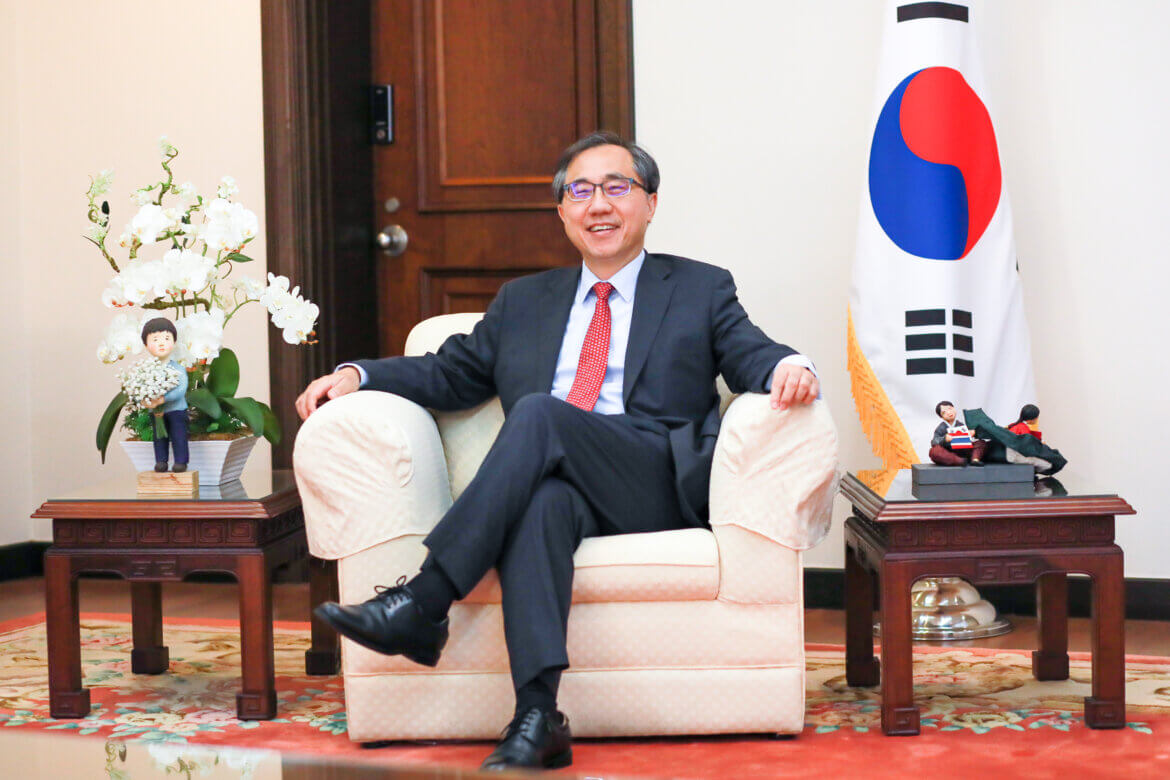
In December last year, H.E. Mr. Moon Seoung-hyun, Ambassador of the Embassy of the Republic of Korea to the Kingdom of Thailand arrived in Bangkok. Ambassador Moon came directly from Washington where he was Deputy Chief of Mission. Expat Life sat down with Ambassador Moon to learn about his perspective on Thailand and discuss the bilateral relations between the two countries. 

Career diplomat 

Ambassador Moon has served in the Foreign Service for 34 years. Thailand is his second posting as Ambassador, where his first ambassadorship was in the Czech Republic from 2016-2019. Other overseas postings included the USA (Washington three times and New York once), Nigeria and Iraq. 

Recalling his days in Iraq, Ambassador Moon shared, “I was there in 2005-2007 for 15 months. Korea sent 3,000 troops stationed in the northern part of Iraq to assist the Kurdish Regional Government for reconstruction efforts. Fighting was going on in other parts of the country with the Allied forces. We experienced occasional bombings and were provided with added security. Our troops assisted in the construction of schools and hospitals as part of the humanitarian contribution.”

Ambassador Moon was born in Busan, the second largest city of Korea. Coming from a medical family where his father was a doctor and mother was a pharmacist, he is the first diplomat in the clan. “When I was in my 6th grade, I dreamt of becoming a diplomat as I loved to find compromise between different parties. I chose to study international politics in university.”

Views on Thailand

On the subject of Thailand in ASEAN context, Ambassador Moon commented, “Thailand is the second largest economy after Indonesia. Together with the middle income status, Thailand is a leading force in ASEAN and Mekong region. As one of the founding members, we hope to see Thailand plays a major role in settling the situation in Myanmar and enhance further cooperation in the Mekong development.”

In terms of similarities between Thailand and Korea, Ambassador Moon sees both countries are successful in exercising soft power. “In terms of cultural influence, we have our K-pop and Thailand also has their culture, art and cuisine.”

Goals for enhancing bilateral relations

Since arriving in Thailand, Ambassador Moon has been running a busy schedule on a daily basis. Typically, he scheduled three to four important appointments. Apart from meeting government officials from the Foreign Ministry, economic and business communities, Ambassador Moon meets up with the Korean community once a month. It is estimated that there are around 20,000 Koreans living in Thailand. He initiated, “I hope to broaden my connection with Thailand by meeting more civic or environmental groups, intellectuals and activists in various fields.”

On the success story of Korea, Ambassador Moon elaborated, “Korea’s success is based on 3E’s - economic, education and entertainment success. During my term in Thailand, I hope to apply these 3Es in enhancing our two countries bilateral relations. One good example is every year, 50 or so Korean language teachers are sent to Thailand to teach Thai students. It is reported that Korean has now become the second largest foreign language to be selected for the entrance exam to the universities, a jump from our previous fourth place. Apart from Korean government students’ scholarships for Master and Doctorate degrees, many private Korean universities also support the initiatives.”

Although residing in Bangkok for only six months, Ambassador Moon has visited Chiang Mai, Chiang Raí, Esan, Phuket, and Pattaya. He plans to visit as many provinces in Thailand as he can during his term here.

Ambassador Moon is staying in Bangkok with his spouse, Madame Myungi-ji Suh. Their son, a lawyer, and daughter, a doctor are both working in the US. During the recent visit of her daughter, Ambassador Moon took a tour of “Hidden places of Bangkok” and was very impressed.

In concluding our interview, Ambassador Moon candidly said, “I am looking forward to more fun moments like this in Thailand.”

0 comment
0 FacebookTwitterPinterestEmail

Israel is world renowned as being the “start-up nation” and is the world leader for number of start-ups per capita - with 2,000 startups founded in the past decade, another 3,000 small and medium-sized startup and high-tech companies.

The book “Thou Shalt Innovate” by Avi Jorisch, profiles wondrous Israeli innovations that are collectively changing the lives of billions of people around the world and explores why Israeli innovators of all faiths feel compelled to make the world better. This is the story of how Israelis are helping to feed the hungry, cure the sick, protect the defenseless, and make the desert bloom. Israel is playing a disproportionate role in helping solve some of the world’s biggest challenges by tapping into the nation’s soul: the spirit of tikkun olam – the Jewish concept of repairing the world. The Israeli author recently visited Bangkok and Expat Life was fortunate to sit down with the seasoned entrepreneur to learn about Israel as a hub of innovation and the aspirations in writing this book.

How innovative do you see Israel as a nation?

Israel has achieved remarkable, exponential growth over the last 72 years, and that is a testament to the country’s grit, determination and chutzpah. Entire industries and countries are looking to Israel to help them solve their challenges: Israel has over 300 research and development centers owned by multinational companies in various fields, including Apple, Amazon, Facebook, Google, Intel and Microsoft. China, India and the United States now look to Israel to help solve their emerging water needs. Universities around the world are forging strong partnerships and creating joint innovation centres with Israel’s best and brightest institutions so as to work together in fields including engineering, biology, physics and chemistry. The country is a beacon of hope, and its citizens are ready to help solve local and global challenges.

Israel does not have a monopoly on good ideas or proper execution. All countries, including Thailand, would benefit from tapping into their own cultures in order to apply their own lessons to the industries and professions they have excelled in for centuries.

Why do you think Israel is the hub of innovation?

My book reveals the underlying secrets of how Israel has managed to produce more startups than Canada, India, Japan, Korea, and the United Kingdom combined. And the reasons why Israel has the largest number of companies listed on the NASDAQ exchange, with the exception of the US and China. Despite the fact that 60% of Israel is a desert, it is the world’s only self-declared water superpower. Israel’s innovative success stems from a number of factors, including benefiting from a religious culture that encourages questioning and challenging authority, and defying the obvious. The country embraces its ethnic, political and religious diversity, and has a culture that strongly values secular institutions. This concept of tikkun olam (a Hebrew term that means “repair of the world”) has helped to shape the pursuit of a greater purpose in Jewish culture.

What do you hope to achieve with the writing of the book “Thou Shall Innovate”?

I was born into a family of Holocaust survivors and raised primarily in New York City. But I also lived in Israel for long stretches of my childhood, through my teenage years and into adulthood, because of my family’s cultural, historical, and religious ties there. My interest in Israeli technology was kindled during the summer of 2014, when my family and I lived through Operation Protective Edge, in large part going in and out of bomb shelters. My family, like the rest of Israel, found comfort in the Iron Dome. I marvelled at this invention. It kept Israel from descending into the chaos and carnage that was engulfing the rest of the Middle East.

Like many others, I was aware of Israel’s incredible record of innovation. But what I hadn’t realised was the extent to which Israel’s innovative spirit was having an impact far beyond Israel, addressing some of the world’s most pressing social problems. It quickly became clear to me that Israel was much more than the start-up nation. I felt compelled to write this book in order to share these stories with people around the world – I hope readers will be inspired to take action in order to positively improve the world around us, and view Israel is a different light.

What are your criteria in selecting which innovations to present in the book? Do you find it difficult during the selection process?

In my book I focus on 15 examples of Israeli innovations that are impacting billions of people, and I also list another 50 in the back of the book to round out the picture. It was incredibly challenging to choose only 15 innovations – there were so many to choose from. Each of the innovations I chose had to: 1) be extraordinarily innovative; 2) have already had an outsized impact on making the world a better place, and in particular play an important role in curing the sick, feeding the hungry and helping the needy; and 3) inspired me deep in my core as a human.

You are the author of five books on different topics, in your latest book, you mention that Israel is playing a disproportionate role in helping solve some of the world’s biggest challenges by tapping into the nation’s soul: the spirit of “tikkun olam” – the Jewish concept of repairing the world. Can you explain in more details?

Israel’s desire to repair the world is part of a host of Jewish values. Since the Middle Ages and possibly before, Jews have recited the aleinu prayer three times a day, which instructs us to repair the world. Pirkei Avot, or Chapters of the Fathers, a collection of ethical teachings compiled by rabbis around the second and third centuries CE, encourages people to help others. Israel’s founding fathers, chief among them David Ben-Gurion, the country’s first prime minister, were inspired by these religious teachings. Today, that idea is taught in schools and is woven into the fabric of Israeli society, affecting everyone from Yemeni Jews who have returned to their ancestral homeland to Christians from Nazareth or Muslims from the Golan Heights.

In the last 70 years, Israel has sent international aid missions around the world, to Africa, Armenia, Argentina, Kyrgyzstan, Mexico, Rwanda, Turkey and more. The reasons for these missions have varied, with some pragmatic and others idealistic. But the desire for tikkun olam, repairing the world, and bringing more light into the world informs them all. Many of Israel’s founders experienced the horrors of the pogroms and the Holocaust, and as Israeli parliamentarian Isaac Herzog put it, because Jews felt the “world’s silence” during the Holocaust, they “cannot remain indifferent.”

Israelis of all faiths see it as their duty to improve the lives of other people across the globe. The country is not just a “startup nation,” but a place where people of all religions and ethnicities—even as the surrounding region undergoes a seemingly intractable war—strive to make the world a better place for everyone.

Thailand is a developing country in SE Asia, can the successful Israeli startups as a practical model to follow or become a purely theoretical source of inspiration?

We are living in exciting and tumultuous times. I hope that readers will be inspired by the Thai language version of Thou Shalt Innovate: How Israeli Ingenuity Repairs the World. This book not only includes heartwarming stories that underscore the ancient roots of Israel’s innovative spirit, but also shows that we are all capable of making the world a better place on both a small and a massive scale. This book strives to provide a blueprint so that entrepreneurs, business leaders, policymakers and government officials can understand both the DNA of innovation and how to put it into practice. The technologies featured in this book are proof positive that we can leverage humanity’s greatest assets to improve the lives of billions of people: we can feed the hungry, we can cure the sick, and yes, we can help the needy.

The ideas covered in Thou Shalt Innovate will enable Thai entrepreneurs to open their minds to endless possibilities to help solve some of the most pressing issues our country faces today. Each of the innovations in this book could immediately improve the lives of a great many Thai, and I deeply hope it will inspire readers to drive social change in Thailand and globally.

Any further comments you like to tell our expat and local readers in Thailand?

I am really interested in how technology can play a role in curing the sick, feeding the hungry and helping the needy. In my next book, which will come out in a few months, I write to about a �?history of the future,’ forthcoming trends, coupled with the personal stories of innovators from around the world that are moving the dial on problems impacting all of humanity. I do a deep dive on grand global challenges and provide one innovation or venture that is impacting a billion people. My hope is that this type of book will give readers around the world, including Thailand, hope that with enough creativity and determination humanity can solve massive challenges . “No problem can be solved from the same level of consciousness that created it,” said Albert Einstein.

My hope is to write a new book that will raise readers’ consciousness.
0 comment
0 FacebookTwitterPinterestEmail

Thailand Real Estate Outlook for Wellness Living, Tourism & MICE 

by Kathleen Pokrud

On June 30, 2022, The Belgian-Luxembourg/Thai Chamber of Commerce recently presented a Multi-Chamber panel discussion: Thailand real estate outlook for wellness living, tourism and MICE at The Peninsula Bangkok.

The panelists included Mr. Stephan Vanden Auweele, Chief Hospitality Group Officer of Asset World Corporation PLC and Director of BeLuThai; Ms. Ittaya Sirivasukarn, Chief Executive Officer of Miskawaan Health and Mr. Sumate Sudasna na Ayuthaya, President of Thailand Incentive and Convention Association. The discussion was moderated by Mr. Arnaud Derbaudrenghien, Managing Director of Katoen Natie (Thailand) Co. Ltd. who also sits on the board of directors with BeLuThai.

All panelists agreed on a bright outlook of MICE visitors and are bright for Thailand in the near future. After the Panel Discussion, BeLuThai hosted the Multi-Chamber Social Networking as a business matching event at Jesters, The Peninsula Bangkok. VIP attendees included H.E. Mrs. Sibille de Cartier d’Yves, The Ambassador of the Embassy of Belgium in Thailand, Ms. Siriporn Wuthilaohaphan – The BeLuthai President, BeLuThai Board Members, Ms. Vibeke Lyssand Leirvag – The Chairwoman of The Joint Foreign Chambers of Commerce in Thailand (JFCCT), the Panelists from the Panel Discussion, and representatives from the event sponsors – Thailand Convention and Exhibition Bureau (TCEB) and WHA Industrial Development Public Company Limited.

The event went amazingly well as the attendees well-connected with each other through talks and drinks. With the stylish environment and the warm and friendly vibe, all the guests enjoyed the delicious food and free flow of drinks. Everyone enjoyed the connection talk and business opportunities during this event.

Introduction of BeLuThai

The Belgian-Luxembourg/Thai Chamber of Commerce (BeLuThai) is a small but very dynamic chamber comprising of over 90 corporate and individual members

The Chamber was established in November 1992 and succeeded the Thai-Belgium Business Association which had been operational since September 1990. Economic relations between Belgium/Luxembourg and Thailand have existed for centuries. During the last decades, the number of business contacts between these countries has grown considerably.

The aim of BeLuThai is to further support market access to and investments in Thailand for Belgian and Luxembourg companies. It provides information and services to members concerning commerce, industry, finance and investment, and we organize network events and activities relevant to Belgian, Luxembourg and Thai businesses. BeLuThai also serves as a channel to voice views and interests of Belgian and Luxembourg businesses towards the government of Thailand, as well as to other business organizations in Thailand.

For more information on BeLuThai, please contact [email protected]

0 comment
0 FacebookTwitterPinterestEmail

With Bangkok’s vibrant expatriate communities, many international ladies groups from various countries have been established in the city for decades. On a regular basis, these non-profit organisations support each other for friendship and to support and raise funds for the local charities that each club sponsors. 

After over two years’ pandemic lockdown, Hong Kong Ladies’ Group hosted the Inter-Club meeting at Hyatt Regency Sukhumvit Bangkok on Soi 13. The International ladies groups touched base, presented each group’s latest update and charities projects. Networking was followed by an sumptuous luncheon. 

Those in attendance included American Women’s Club, Australia New Zealand Women’s Group, Bangkok Community Theatre, Brazilian Association in Thailand-BTCC Social, British Women’s Group, Golden Years, Hong Kong Ladies’ Group, Ikebana International Bangkok Chapter 177, Indian Women’s Club, International Women’s Club of Thailand, National Museum Volunteers, Soroptimist International of Bangkok, Soroptimist International Dusit and the United Nations Women’s Club.

0 comment
1 FacebookTwitterPinterestEmail

Written by Kathleen Pokrud

A Pandemic within a Pandemic

Indicators of a range of data sources in many countries have shown that incidences of aggravated gender-based and domestic abuse have surged during the Covid-19 pandemic worldwide. Stay at homes order, schools closed, workers laid-off or told to work from home. When people are confined to homes with limited personal movement, in addition to the decline in household income due to the pandemic, and often abuse of alcohol consumption have heightened the problem.

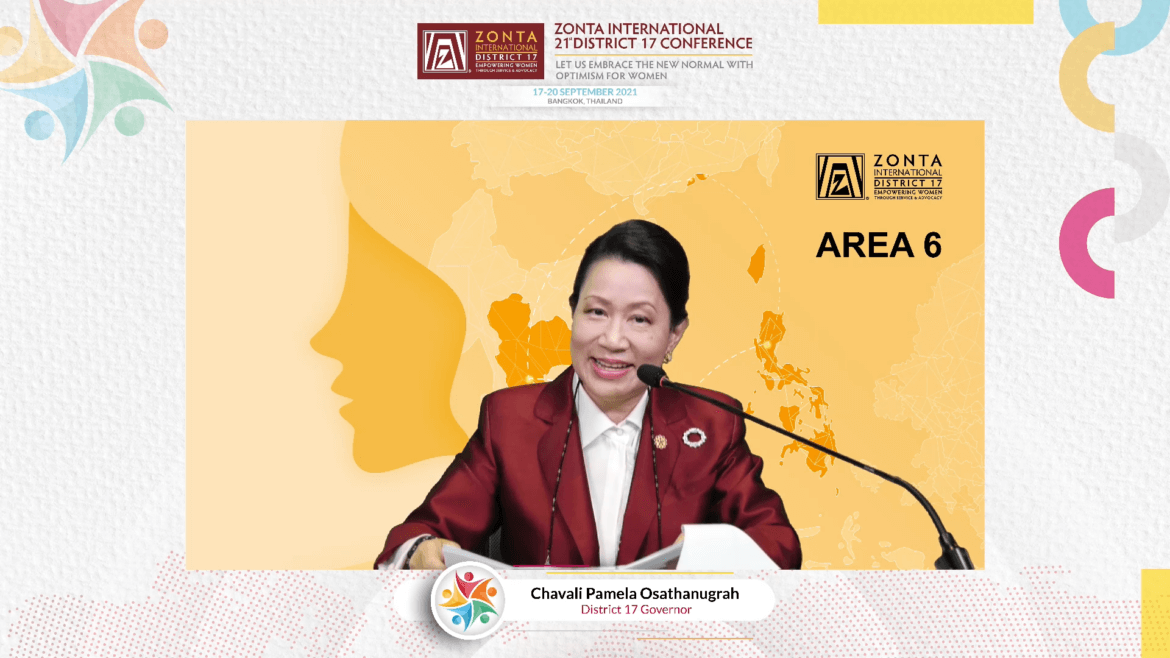
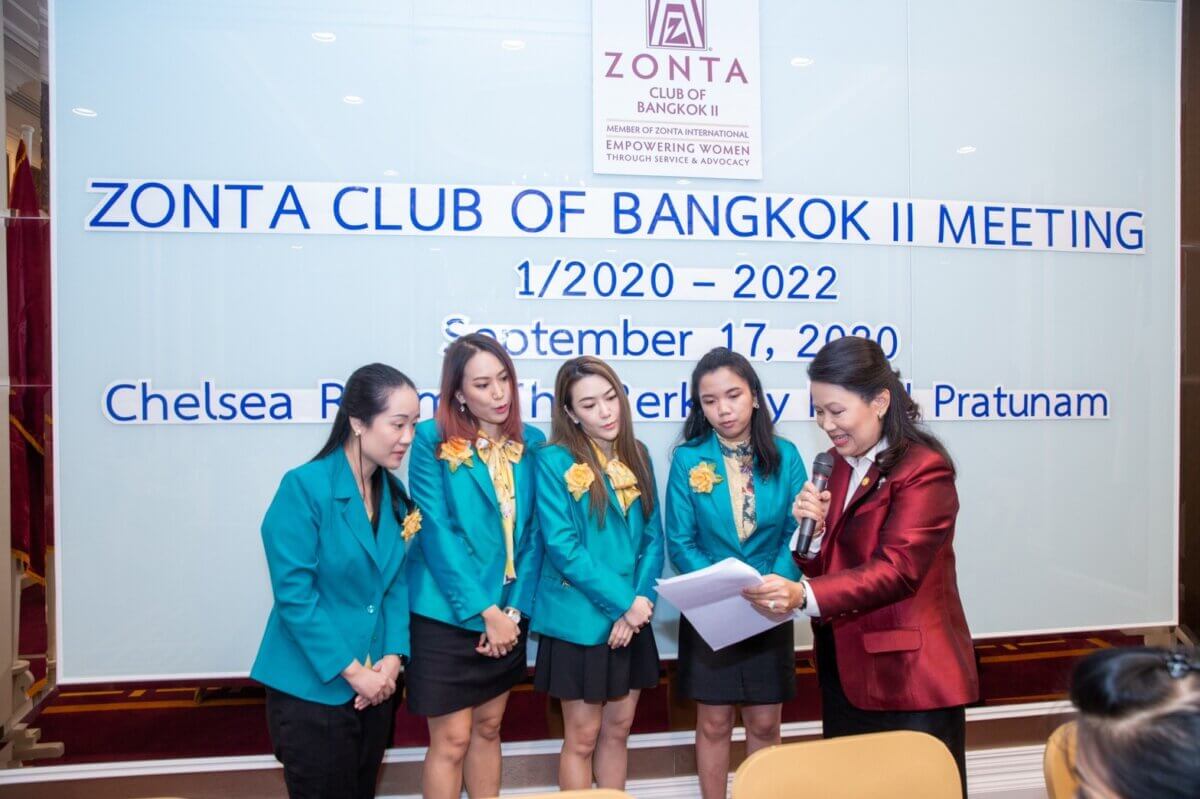
One of the women’s international organisations that have tirelessly worked on the issues of gender equality, gender-based and domestic violence, early marriage and teenage pregnancy is Zonta International. The organization stands for women’s rights, advocate for gender equality, education for girls, an end to child marriage and teenage pregnancy and gender-based violence. Expat Life magazine sat down with Zontian Chavali Pamela Osathanugrah, the Zonta International District 17 Governor in 2020-2022 Biennium. Zontian Pamela oversees 6 Areas namely the Philippines, Singapore, Hong Kong, Macau, Malaysia and Thailand with 2,600 members and 87 Clubs. Aside being the fastest growing District in the world, District 17 is also the largest District in the world in terms of the number of members and clubs.

Zonta Representation

Gender equality is a basic human right and its achievement has immense socioeconomic implications. Yet, gender inequalities are deeply rooted in every society. Sustainable Development Goal No. 5 is to achieve gender equality and empower all women and girls. While progress has been made, since the 1995 Fourth World Conference on Women, the Beijing Declaration and Platform for Action, no country in the world has achieved gender equality.

Zonta International is a non-governmental organization with General Consultative Status to the United Nations Economic and Social Council (ECOSOC) and participatory status to the Council of Europe. Zonta is also a member of coalitions like the Coalition to End Violence Against Women and Girls Globally, the ERA Coalition and others. Through these relationships and partnerships, Zonta is able to issue its own statements and collaborate with other like-minded organizations to make joint statements and advocate for policies to promote and protect the rights of women and girls.

History of Zonta

Zonta International’s story is woven from a rich fabric of empowerment and progressive change. In 1919, the Confederation of Zonta Clubs was formed. Mary E. Jenkins, a newspaper publisher and civic leader, was elected the first President of the Confederation of Zonta Clubs. The name Zonta is derived from the Native American Sioux dialect and signifies �?honest and trustworthy’. �?Zonta International’ became known in 1931 with the charter of the first club in Europe, the Zonta Club of Vienna, Austria, followed by the Zonta Club of Hamburg, Germany. From 1930 through the 1950’s Zonta International continued to grow in Europe and to Latin America and to Asia. The first club in Asia, founded in 1952 is the Zonta Club of Manila, Philippines, now known as Zonta Club of Manila l. It was February 1969 that the first club in Thailand was chartered and the first President was Thanpuying Poonsapaya Navawongs (Noppawong) na Ayudhya, then the first woman Dean and founder of Chulalongkorn University’s Faculty of Education.  Zonta District Governor Pamela disclosed, “Today, Zonta International is a global organization of more than 27,000 women and men in 1,129 Zonta clubs in 31 Districts and one Region South America in 63 countries. In 2019, we celebrated our 100th anniversary and the milestones that made us the organization we are today.” On 8 November 2019, Zonta International marked a century of commitment to empowering women worldwide through service and advocacy.

Mission and Vision

On the mission of Zonta, Mrs Pamela explained, “Zonta International is a leading global organization of professionals empowering women worldwide through service and advocacy.” I asked her about what is the vision in the Zontians’ world, “Zonta International envisions a world in which women’s rights are recognized as human rights and every woman is able to achieve her full potential. In such a world, women have access to all resources and are represented in decision- making positions on an equal basis with men. In such a world, no woman lives in fear of violence.”

Zonta International Programmes 

Our International Programmes through the United Nations agencies are funded through the Zonta International Foundation, now known as Zonta Foundation for Women. Mrs. Pamela reiterated, “Education is vital to girls and young women, and we encourage it immensely.” There are Education Programmes to young women funded by the Zonta Foundation for Women.


  1. Amelia Earhart Fellowship in honor of famed pilot and Zontian Amelia Earhart since 1938   awarded to women pursuing Ph.D. /doctoral degrees in aerospace engineering and sciences;
    2. Young Women in Public Affairs Award established in 1990;
    3. Jane M. Klausman Women in Business Scholarship established in 1998;
    4. Women in Technology Scholarship is now in its pilot stage, which began in the last Biennium in 2018-2020.

Our services to the community

Zonta International is passionate about providing life-changing opportunities for women and girls through international service projects. The following lists International Service Projects in the 2020-2022 Biennium:

  1. Global Programme to End Child Marriage
  2. Adolescent Girls’ Health and Protection in Peru 
  3. Strengthening Capacities of National Health Sector to Deliver Survivor-Centered Response to Gender-Based Violence in Papua New Guinea and Timor Leste
  4. Let Us Learn Madagascar

District Governor Pamela expressed, “By partnering with United Nations agencies such as Unicef USA, UNFPA and UN Women, and other recognized non-governmental organizations, Zonta has improved women’s health, provided better economic opportunities and prevented gender-based violence in over 60 countries. Since our first service project, Zonta has contributed more than US$32.7 million to our international service projects.” 

Mrs. Pamela further elaborated, “The Zonta International 2020-2022 Biennium Theme is �?Transitions, Changes and New Opportunities’. The Zonta International District 17 Biennium Tagline is �?The Link to the Future is NOW. Let us “Embrace the New Normal with Optimism for Women” through the 3 R’s: Recovery, Rebuild and Rehabilitate, through strong Teamwork.

In April 2022 the Zonta District 17 Leaders’ Institute (two years in the making) was finally launched,  incorporating Training sessions for potential club leaders and new members to ensure a smooth transition from one biennium to the next. 

In May 2022 District 17, together with two other Districts, has been awarded the �?Zonta Service Recognition Award 2022’. 

In May 2022 the first District 17 Treasurer’s and Club Treasurer’s Manual has been prepared by the Biennium 2020-2022 Finance Committee,  and ready to be launched. 

Covid-19 pandemic

On 20 February 2021, The World Day of Social Justice is a time to recognize the need to promote social justice, which includes efforts to tackle issues such as gender equity, exclusion, human rights and social protections. The theme for 2021 of Zonta was “A Call for Social Justice in the Digital Economy.” This year 2022, Zonta International is prioritising “Achieving gender equality and the empowerment of all women and girls in the context of climate change, environmental and disaster risk reduction policies and programs. In addition, emphasis is on women’s economic empowerment in the changing world of work.”

Since early 2020, the Covid-19 pandemic has caused many to work remotely, allowing for the continuation of business activities. While this crisis has reinforced the growth and impact of the digital economy, the United Nations says it has also “laid bare and exacerbated the growing digital divide within, between and across developed and developing countries, particularly in terms of the availability, affordability and use of information and communications technology and access to the Internet, deepening existing inequalities.”

Mrs. Pamela quoted the views from Zonta International President Sharon Langenbeck, Ph.D., a two-time Awardee of the Zonta International Amelia Earhart Fellowship, “The gender gap in the technological divide is another shortcoming the pandemic has revealed. To come back even stronger after Covid-19, governments and stakeholders must come together to find solutions to achieve sustainable development, the promotion of full employment and gender equity. Women and girls cannot be left even further behind.”

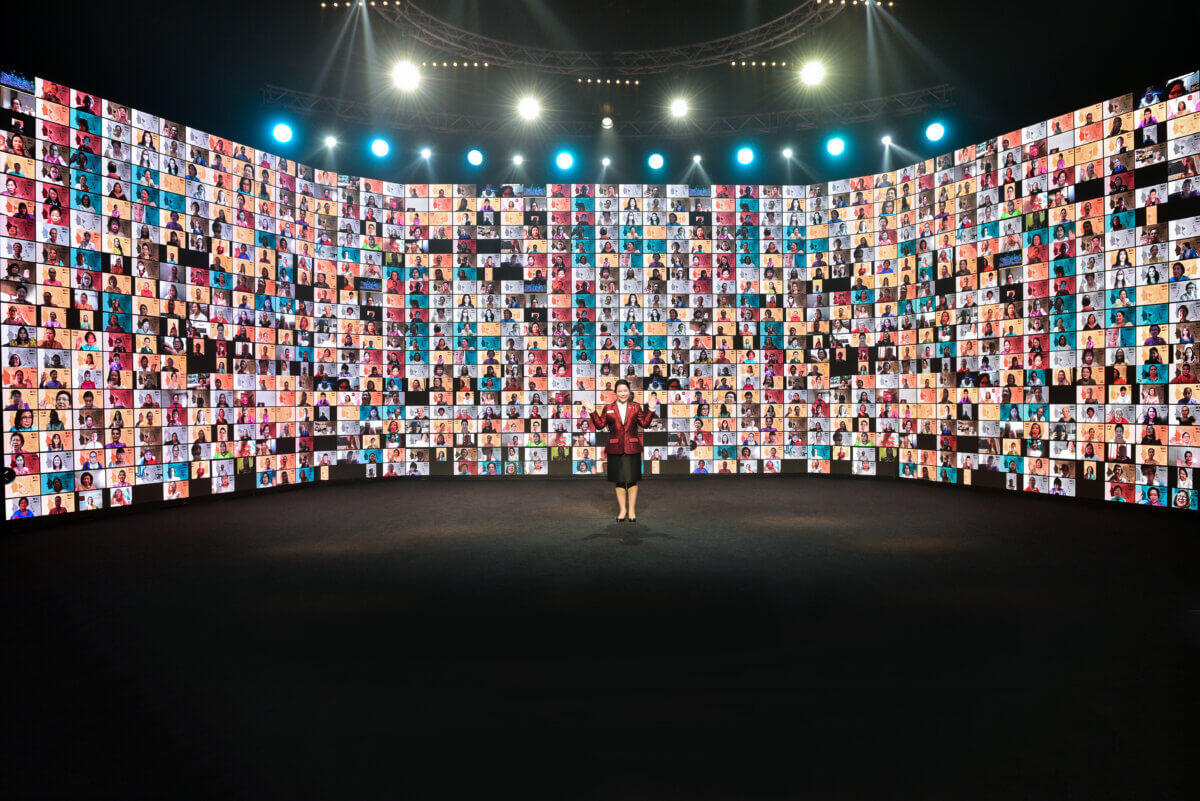
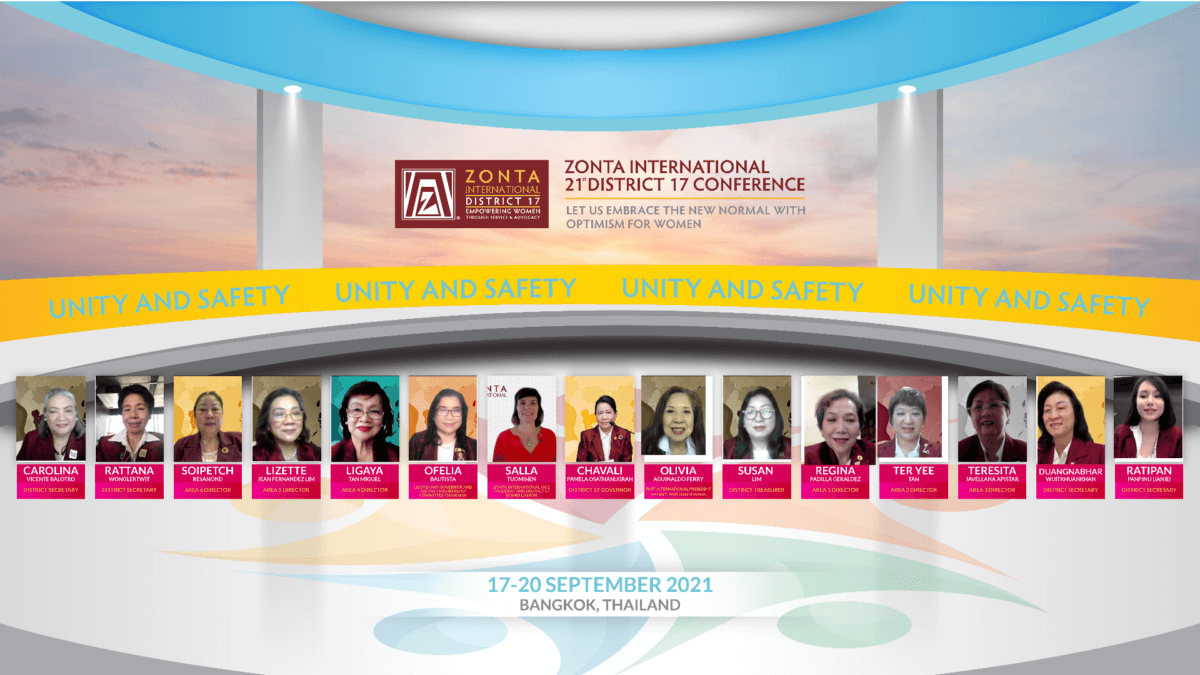
The first electronic 21st Zonta International District 17 Conference was held from Bangkok, Thailand presided by District Governor Pamela on 17-21 September 2021. Over 900 Zontians registered to this first-ever electronic District 17 Conference— the largest number of registrants to any Conference. Due to its electronic /virtual nature. Pre-Conference activities, trainings, sessions and voting for Amendment to Bylaws began on 31 July 2021 electronically and took place over a period of several weeks until its culmination on 3-6 September 2021 with the electronic elections of the 2022-2024 District officers. On a rotation basis, and elected at the 21st District Conference, the District 17 Governor-elect Ofelia Bautista is from the Philippines and the Zonta Club of Greater Rizal l Area 1.

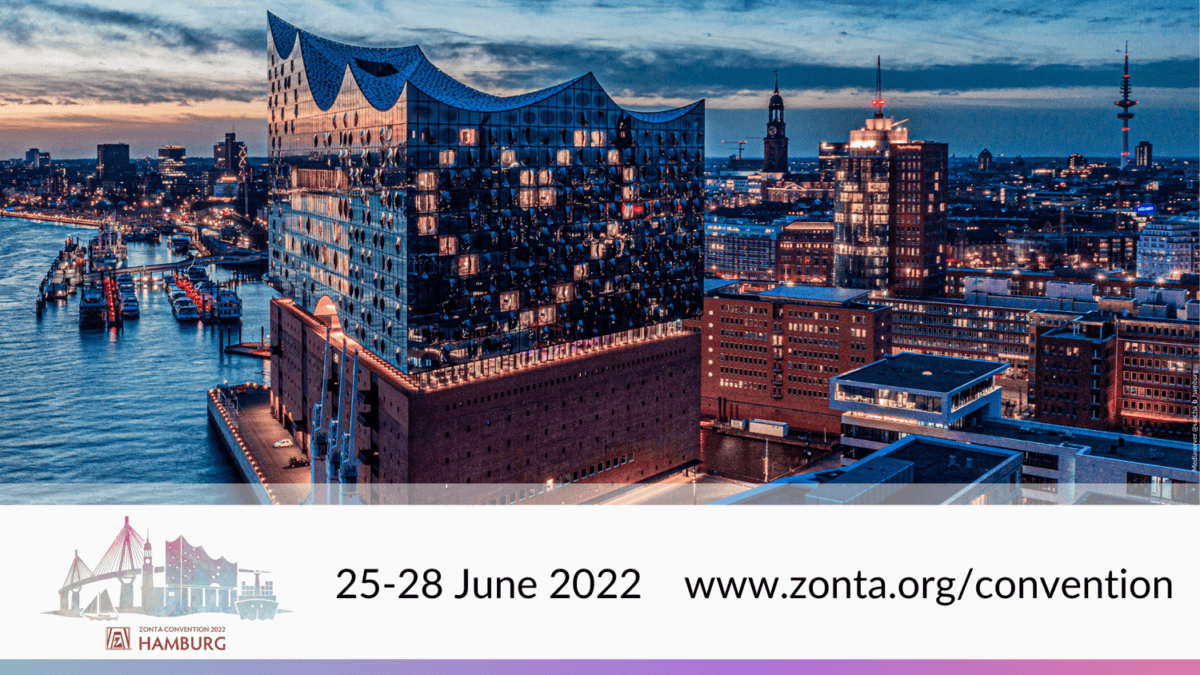
Zonta International is hosting its 65th Convention in the captivating Hamburg, Germany from 25-28 June 2022. This will be a special convention, as it is the first one of its second century of empowering women through service and advocacy. All Zontians and guests around the globe are welcomed to participate, where voting on amendments to the Zonta International Bylaws, and elections of the Biennium 2022-2024 Zonta International Board and Nominating Committee members will take place. It is an opportunity for Zontians to rekindle old friendships and meet new friends.

How public can get involved

Zonta offers unique membership opportunities through invitation and application. Mrs. Pamela encouraged, “Join our community of members and partners worldwide and improve the lives of women and girls in your local community and around the world.”

For more information on Zonta International, our causes and programs, please checkout our website at https://www.zonta.org/

0 comment
0 FacebookTwitterPinterestEmail

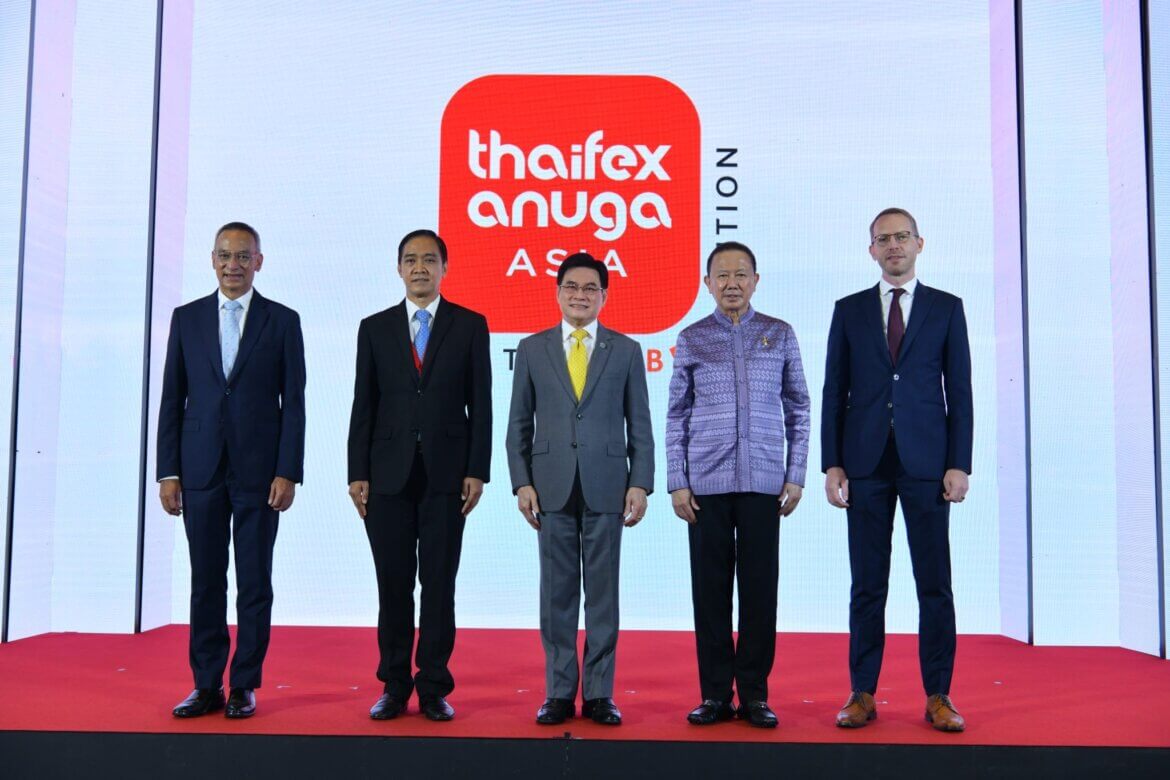
H.E. Mr. Jurin Laksanawisit, Deputy Prime Minister and Minister of Commerce presided over the THAIFEX-ANUGA ASIA 2022 “The Hybrid Edition” opening ceremony together with Mr. Keerati Rushchano, Deputy Permanent Secretary, Ministry of Commerce, Mr.Phusit Ratanakul Sereroengrit, Director General of the Department of International Trade Promotion, Mr. Sanan Angubolkul, Chairman of the Thai Chamber of Commerce, Mr. Mathias Cooper, Managing Director of Cologne Messe Company Limited, senior executives of the Ministry of Commerce, and representatives from government and private agencies at IMPACT Challenger Hall 2, Muang Thong Thani. 

Mr. Jurin revealed that the food and beverage industry is an important asset for the Thai economy. Thailand is reportedly the 13th largest food exporter in the world, with the market share of more than 2.3%, and the 4th largest exporter in Asia. Although international trade is restricted due to the Covid-19 outbreak, the export of Thailand food products in the first quarter of 2022 could reach the amount of 286 billion baht, an increase of 28.8% compared to the first quarter of 2021. 

To create safety standards and enable buyers to trace the origin of the products, Mr. Jurin initiated collaboration between 4 Ministries in issuing Covid-19 Prevention Best Practice certificates to 262 factories, aiming to raise confidence and encourage Thailand to become the hub of the world’s agricultural product and food producers. Another important policy is to make Thai food become the food of the world, to lead a greater demand for Thai products and services, as well as generating more exports from Thailand to the world. 

THAIFEX – ANUGA ASIA 2022 - The Hybrid Edition

To achieve the goal “Thai Food” to “The World’s Food”, the Ministry of Commerce organised the event “THAIFEX – ANUGA ASIA 2022 - The Hybrid Edition” with the theme “Reimagine the Future of Food and Beverage Industry,” to meet the requirements of many buyers who wish to buy products from local sellers in Thailand.

“The onsite trade show will be held from May 24 – 28, 2022. Meanwhile, the buyers who are unable to travel to Thailand can visit “THAIFEX Virtual Trade Show” via the online platform at www.thaifex-vts.com. The event will be held online in parallel with the onsite event. Exclusively, buyers can use this channel to find and talk to sellers for another year for more trade opportunities. This hybrid trade show will be able to generate a trade value of more than 10,000 million baht for the Thai economy,” Deputy Prime Minister and Minister of Commerce said.

The data from the Department of International Trade Promotion indicates that the THAIFEX – ANUGA ASIA 2022 “The Hybrid Edition” was a combination between the event in the exhibition centre (offline) and the virtual food exhibition (online). In this year, there were a total of 1,603 offline participants, comprising 722 Thai entrepreneurs and 881 foreign entrepreneurs from 36 countries, such as East Asia, ASEAN, Europe, the United States, Australia, Latin America, the Middle East, and others. It expected to create a total value of 10,000 million baht, consisting of 9,550 million baht from the offline event and 450 million baht from the online event. More than 75,000 participants were expected to visit the event during May 24-28, 2022.

The products exhibited in the event were divided into 11 zones, comprising all types of food products, seafood, frozen food, rice, vegetables and fruits, snacks, beverages, tea and coffee, tools/appliances/equipment, as well as various services related to the food and beverage industry.

International participation

There was strong participation from overseas exhibitors. An example was the Italian Pavilion organised by the Italian Thai Agency with the support of the Embassy of Italy. The Food School Bangkok, member of Thai-Italian Chamber of Commerce, in partnership with ALMA School offered live food demonstrations.

Brazil with a 90sqm pavilion, born out of a partnership between the Ministry of Agriculture and the Ministry of Foreign Affairs. The 12 exhibitors covered products such as beef, coffee, honey, cheese, acai and amazon products, bean and pulses. All of them showcased some of Brazilian flavours that may still not be fully known by the Thai public, but aimed to cater to their tastes. Selected Thai importers and distributors also had the opportunity to meet with Brazilian exhibitors in a networking session at the official Residence of Ambassador Jose Borges dos Santos Jr. during the opening day of the fair.

Brazil

Ranked as the 2nd Asia’s largest food exporter after China, the Indonesia Pavilion in partnership with Embassy of the Republic of Indonesia in Bangkok has 17 booths that showcased many interesting halal products like fine food, sweet and confectionary including coffee and tea that is well known for its signature. Visit arrangement was organised by Visit Tourism Indonesia Officer (VITO) Thailand.

Indonesia

Many countries had big pavilions like Japan, Korea, and Vietnam but there were many interesting ones to visit like Malaysia, and Turkey. Some countries like Poland promote strongly on “healthy Polish apples.”

poland

Apart from the masks wearing, the crowded scenes on the exhibition floors offered a sense of normalcy that rivals the busy time before the pandemic. This event certainly built confidence for the return of the promising era of the exhibition industry. Many individual local Thai and international exhibitions were clinging with this sense of hope when they proudly display their products and services throughout the four day period.

Khao
0 comment
0 FacebookTwitterPinterestEmail

The unique Turkish cuisine, a defining element of the country’s cultural identity, was introduced at the newly launched Turkish Cuisine Week. Held for the first time this year from 21 to 27 May, Turkish Cuisine Week aimed to showcase Turkish dishes with all their original qualities as the crown of our tables. The event will be celebrated with promotional events in Turkey and abroad.

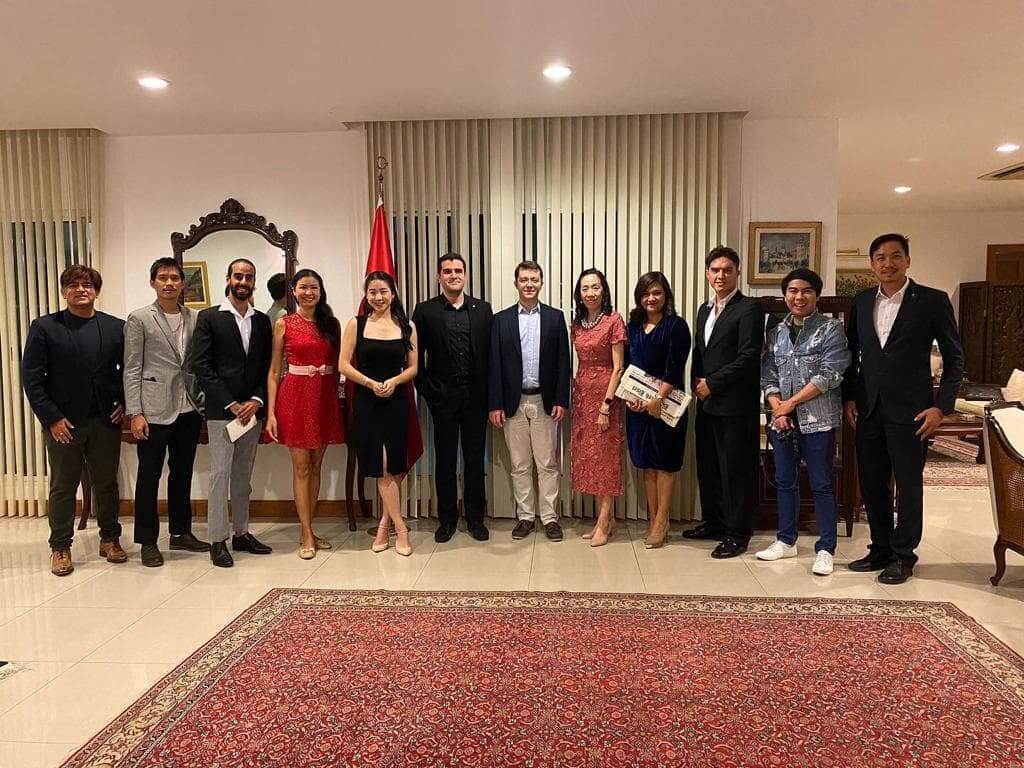
In Bangkok, a sumptuous feast was arranged at the residence of H.E. Ms. Serap Ersoy, Turkish Ambassador to Thailand. The dinner was hosted by Mr. Melihcan Ersen, Second Secretary to a selective group of guests to sample the timeless recipes. According to Mr. Ersen, “From this year onwards, we take a humble step forward with Turkish Cuisine Week towards highlighting and emphasising the healthy, zero waste and traditional character of Turkish cuisine. We invite the public to take time and experience Turkish cuisine, not only for trying new and extraordinarily delicious recipes, but also a means to embrace a sustainable, wasteless, balanced and a healthy lifestyle.”

Turkish cuisine

Turkish cuisine, nurtured and shaped by the deep rooted Anatolian history, stands out with its healthy characteristics, creative aspect, and sustainable structures. Mr. Ersen explained, “The flavours of Turkish dishes, influenced by thousands of years of history and the Seljuk and Ottoman palaces, carry a vast cultural accumulation to the present day. Dishes and meals that utilise every element of a product, without waste, reveal an ecologically sustainable tradition of taste. Offering countless options for vegetarian and vegan diets along with restorative pickles and vinegars, Turkish cuisine is also a world cuisine with the potential to respond to all dining trends.”

Turkish cuisine presents to the world its legendary flavours, each of which reflects centuries old knowledge and cultural heritage. During Turkish Cuisine Week, meals prepared with creative presentations by Turkey’s world famous cooks were offered to visitors in their own geography, with hospitality held in different countries. At the same time, menus created specifically for Turkish Cuisine Week in Turkey invited both Turkish and foreign guests to experience the best examples of Turkish cuisine in restaurants.

Turkish Cuisine With Timeless Recipes 

Turkish Cuisine With Timeless Recipes (Asırlık Tariflerle Türk Mutfağı) is the gastronomy book published under the leadership of First Lady Emine Erdoğan and under the auspices of the Presidency, in cooperation with the Turkey Tourism Promotion and Development Agency (TGA) with the support of the Ministry of Culture and Tourism, Aimed at promoting the richness of Turkish cuisine to a global audience and featuring contributions from prominent chefs, academics and experts, Turkish Cuisine With Timeless Recipes draws attention to the famous Turkish cuisine and its waste free, ecological and sustainable characteristics.

In addition to discussing the healthy storage and cooking techniques used in Turkish gastronomy, the book is intended to record centuries old traditional recipes in their original form, and make them accessible to future generations.

Published in Turkish and English, the book presents 218 recipes for healthy and alternative diets, including recipes for waste free, fermented, regional, local and gluten free dishes. The dishes and beverages in this book represent examples of the rich Turkish culinary culture.

Samples of Istanbul themed menu

Yaprak Sarma (Stuffed vine leaves)

Vine leaves are the most widely used type of leaves in Turkish cuisine for both meat and olive oil sarmas. Developed from a recipe from the Ottoman period, stuffed vine leaves combines sweet and sour flavours with the aromas of cinnamon, plenty of pine nuts and currants. Today, lemon slices have replaced the sourness of sour cherries, which were more commonly used during Ottoman period. Stuffed grape leaves in olive oil are cooked using different spices in every region and every home, sometimes sweet and sometimes slightly bitter, but always with a sour touch.

Zeytinyağlı Enginar (Artichokes braised in olive oil)

ilaki or braised fish stews are not only prepared with fish but also with shellfish such as mussels and clams, or legumes. The main ingredients of pilaki are onions, garlic, vinegar or lemon juice, parsley and olive oil. Various vegetables such as; potatoes, carrots and celeriac enhance the flavors further. All the ingredients are simmered gently on the stove over a low heat with a small amount of water, or it can be cooked in the oven as in this recipe.

Hünkâr Beğendi (Lamb stew with velvety eggplant puree)

As the name suggests, Hünkârbeğendi (Sultan’s Delight) is a dish worthy of Sultans. This is a popular dish served to entertain guests in the best possible way. In Turkish cuisine, it is a popular practice to roast eggplants and purée the flesh. However, preparing a roux similar to the technique used for béchamel sauce, and flavouring it with plenty of cheese indicates traces of Westernisation.

Sütlaç (Oven baked rice pudding)

Fırın Sütlaç (oven baked rice pudding) was one of the most popular of the Ottoman cuisine. It also gained fame in Europe as Turkish style rice pudding. Today, rice pudding is one of the most popular milk based desserts. When the rice pudding is to ready to be baked, egg yolk is added so a thin creamy skin is formed on top, and it is baked until golden brown in the oven.

Expat Life in Thailand readers who want more information on Turkish cuisine, can visit

https://turkishcuisineweek.com/turkish-cuisine-week

0 comment
0 FacebookTwitterPinterestEmail

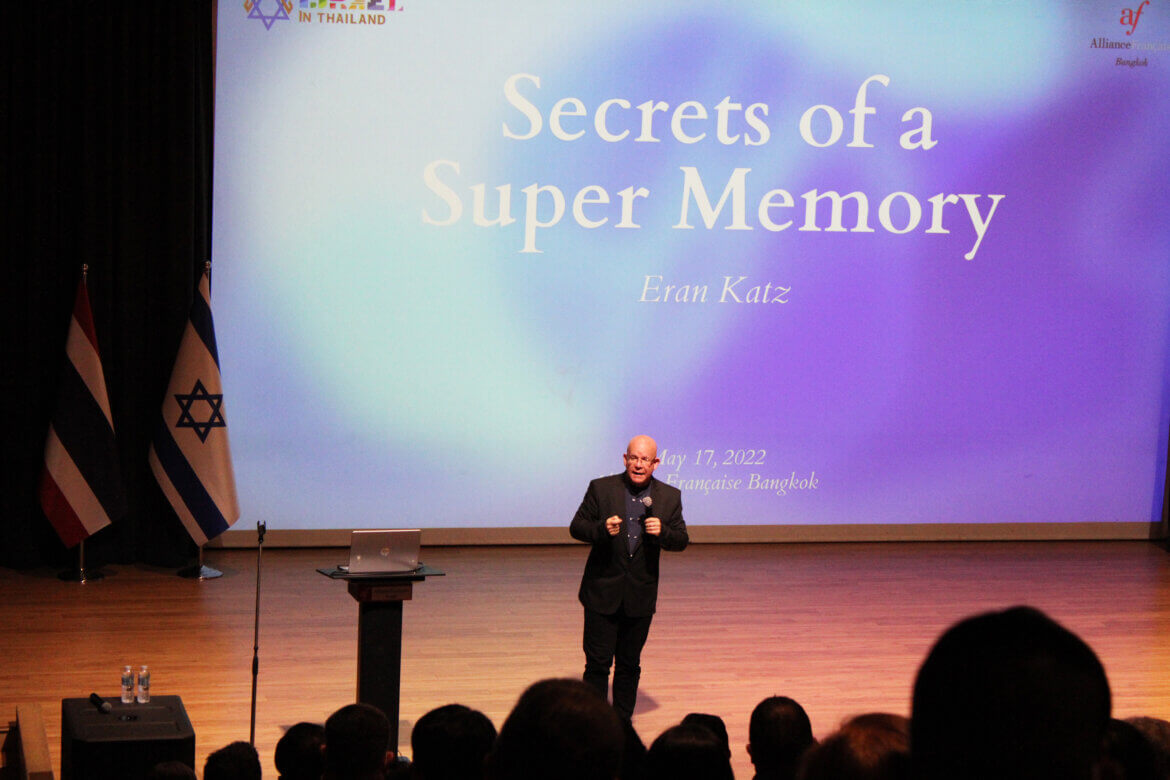
The Embassy of Israel recently organised a whimsical, brain stimulating evening with the best selling author and Guinness Record holder, Eran Katz at the Alliance Francaise. In his fun and interactive way, Mr. Katz shared with the audience his secrets for accessing the brain super power.

In a fully packed room, the attendees were mesmerised with all the tricks that Mr. Katz shared on “Secret of a Super Memory”. A live demonstration was given when the author successfully remembered a series of numbers, even by reciting backwards.

Eran Katz is a leading speaker on memory and intelligence and a popular guest on TV and radio shows. He has delivered his lectures and seminars to hundreds of leading multinational companies and organisations worldwide including Motorola, IBM, Oracle, Microsoft, Nokia, General Electric, Coca Cola, AT&T, Avis, The European Petrochemical Association, Singapore Government, Japan Opensense workshops, Thai Chamber of Commerce and many more.

In his youth years he worked in the cowshed on kibbutz Yahel and remembered all the cows’ names. In fulfilling his military function as a radar operator, he remembered an infinite number of frequencies and markers using extraordinary techniques that, at present, he teaches during his lectures.

Approximately 250,000 people around the world have attended one of the 1,800 entertaining lectures and seminars he has delivered. Mr. Katz also holds the Israeli Guinness Book of World Records title in memory stunts. His books, “Secrets of a Super Memory” and “Five Gifts for the Mind” have been on the bestsellers list in 4 countries. Translation rights for his books were sold in 17 languages.

Expat Life was fortunate to sit down with the renowned author to learn about his secrets of a super memory.

Do you believe that super memory can be trained? If so, how hard is it?

I not only believe, I can prove instantly anyone can do wonderful things with their memory using the right techniques. Not hard at all.

Your seminars talk about mind hacking? What do you mean?

I mean that there are tasks we can do with our brain that we either do not believe we can do, or never tried. For example we can remember hearing a number of 50 digits once and repeat it and we can erase bad memories that cause traumas. Mind hacking also means to realising the rules for making better decisions, bringing more luck, etc.

Why do so many Jews win the Noble prize? Is there the existence of Noble Prize Mind?

For several psychological and cultural reasons. The Jewish way of learning is asking questions and arguing, not taking facts for granted, challenging assumptions. This inquiry results in solving problems, researching and discovering. That is the basis of Nobel Prize. In addition the Jews were always persecuted through out history and they had to think to steps ahead before anything they did. Your brain really sharpens when you are in survival mode. Lastly, Jews always wanted to contribute and make the world better. That is why you have in Israel the highest percentage of start up companies. Innovation is engraved in the Jewish DNA.

Everyone admires a linguist? What strategies can be applied with learning new languages?

Talking without the fear to make mistakes, learning the vocabulary that is really important and necessary in real life, using mnemonics to remember words and more

For ordinary folks, ability to recall names and faces is an achievement, what tricks can be offered?

To begin with you need to be friendly and genuinely interested in people. To remember names you should observe a person and create a visual link between the name and the face. If you meet someone named ‘Mary’, you can imagine her in a wedding dress getting married.

Your extended work focus strongly on the young generation, can you share with us on what you hope to achieve.

Mainly helping them remember information for exams and reducing exam anxiety.

What more impacts do you aim to accomplish?

I just want as many people as possible to improve their lives, the way they think and to make them happy and learn with joy.

To conclude, do you have any final thoughts you would like to share with our readers?

My thoughts are not important. What is important is that everyone will always continue thinking and challenging their own beliefs, thoughts and assumptions.

0 comment
0 FacebookTwitterPinterestEmail
Independent since 1830, Belgium is a relatively young country, and its history is closely linked to the ones of its neighbours. Being located in the centre of Europe, Belgium is strongly connected to its bordering countries. Throughout its history, it has been part notably, of the French, Austrian and Spanish Empires. Its cuisine is therefore influenced by the cuisine of its neighbours but also by the more recent labour migration, first Italian and then, 50 years ago, Turkish and Moroccan. 

Belgian cuisine is therefore a very diverse cuisine that is open to novelties and influences. The Belgians like to celebrate and that is also clearly reflected in their dishes. I sat down with H. E. Mrs. Sibille de Cartier d’Yves, Ambassador of The Embassy of the Kingdom of Belgium to the Kingdom of Thailand to learn about Belgian culinary story.

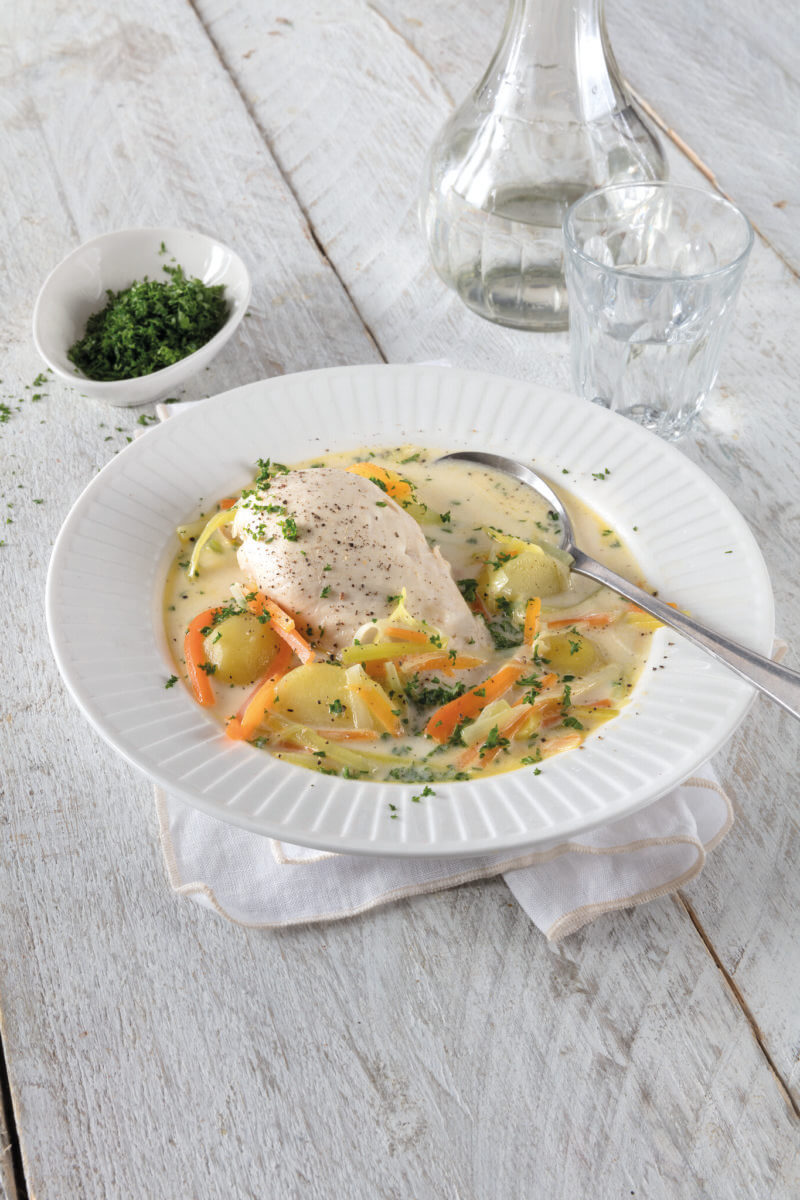
I asked Ambassador Sibille about the history of Belgian cuisine, she described, and “Belgian cuisine has been strongly linked to the French for a long time. However, some specifically Belgian dishes date back to the 19th century, like waffles or waterzooi (a soup made of vegetables, cream, and fish). We also find centuries old Mediterranean influence in Belgian cuisine, as Italian merchants were regular visitors to the city of Bruges, which was a commercial metropolis at the centre of Europe in medieval times.”

Ambassador Sibille further elaborated, “Belgium produces a lot of craft beers and they form the basis of many of our dishes. The North Sea being part of our territory, seafood is traditionally also part of Belgian cuisine, notably in the North of the country. The famous mussels, the Belgian grey shrimps, eels or sole’s are prepared in many different ways. The South of the country has lots of forests, so you will find game meat, such as wild boar and deer, on the menu in wintertime.”

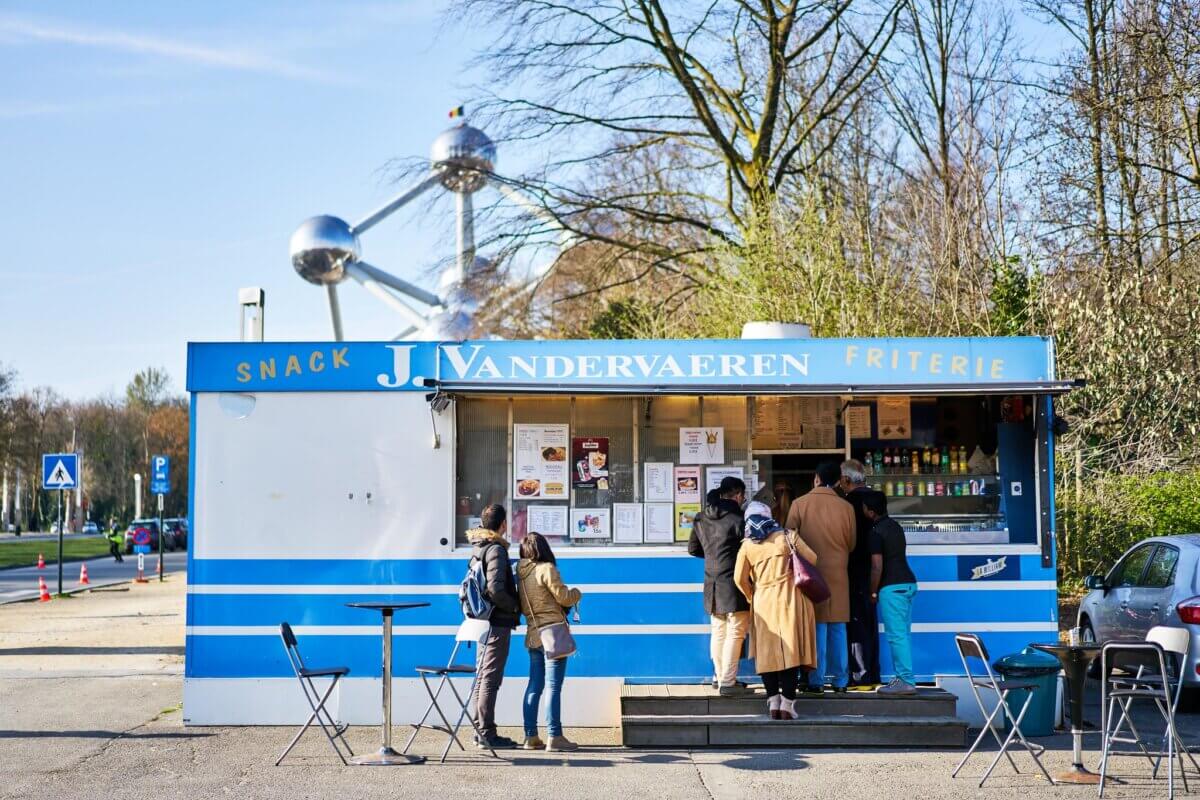
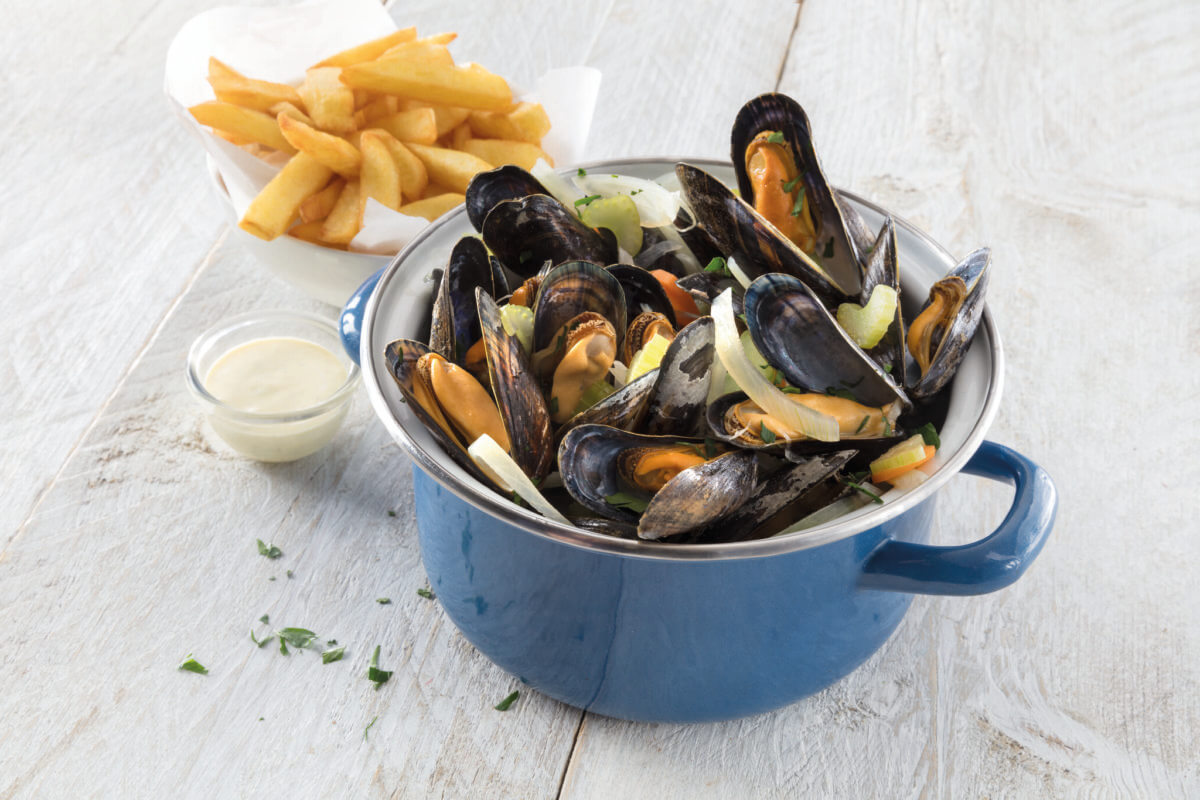
“Brought to Europe from Latin America in the 16th century, the potato has been part of Belgian cuisine since the 18th century. Today, it is an essential part of our food tradition, from street food – with the famous “frietkot” selling fries – to high-end culinary traditions. You will rarely find a Belgian dish without the potato, but its shapes and tastes come in hundreds of variations. Therefore it is not surprising that mussel’s fries became one of our most famous national dishes! As far as vegetables are concerned, endives, white asparagus or the famous Brussels sprouts are typical Belgian accompaniments.”

©visitflanders.com

Belgium_copyright @visitflanders

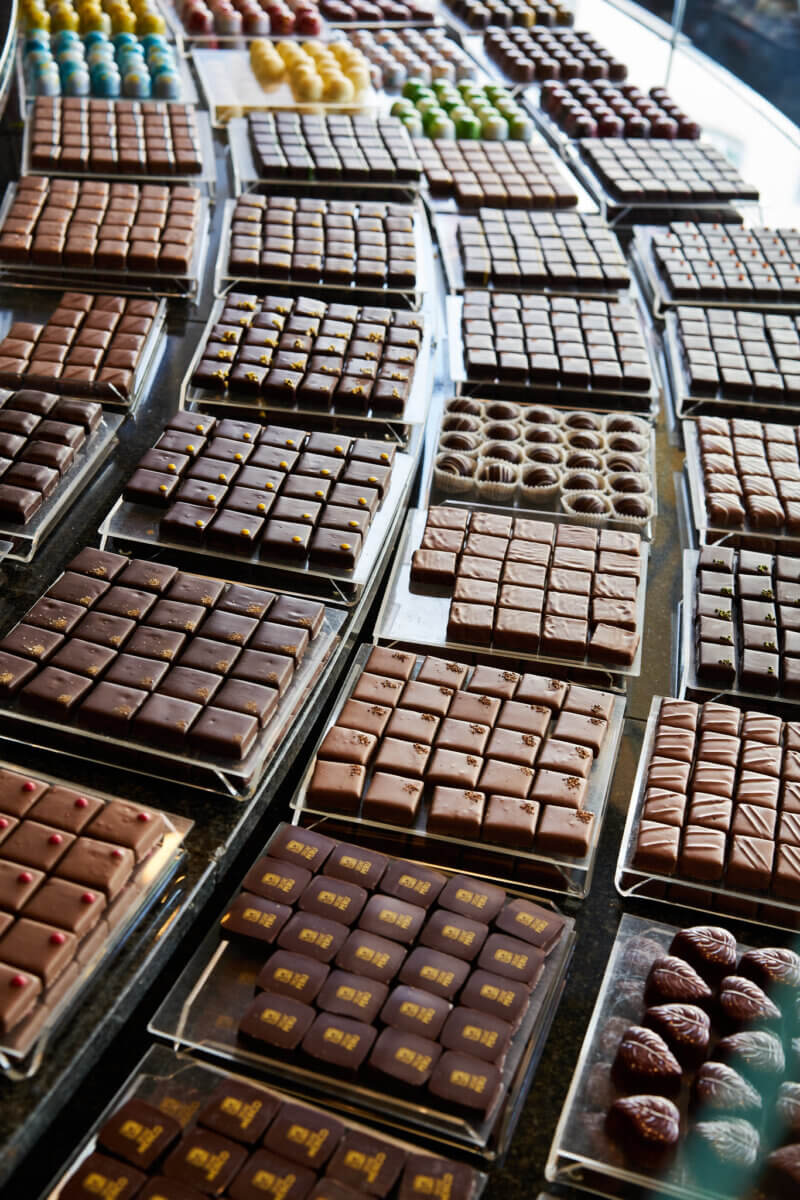
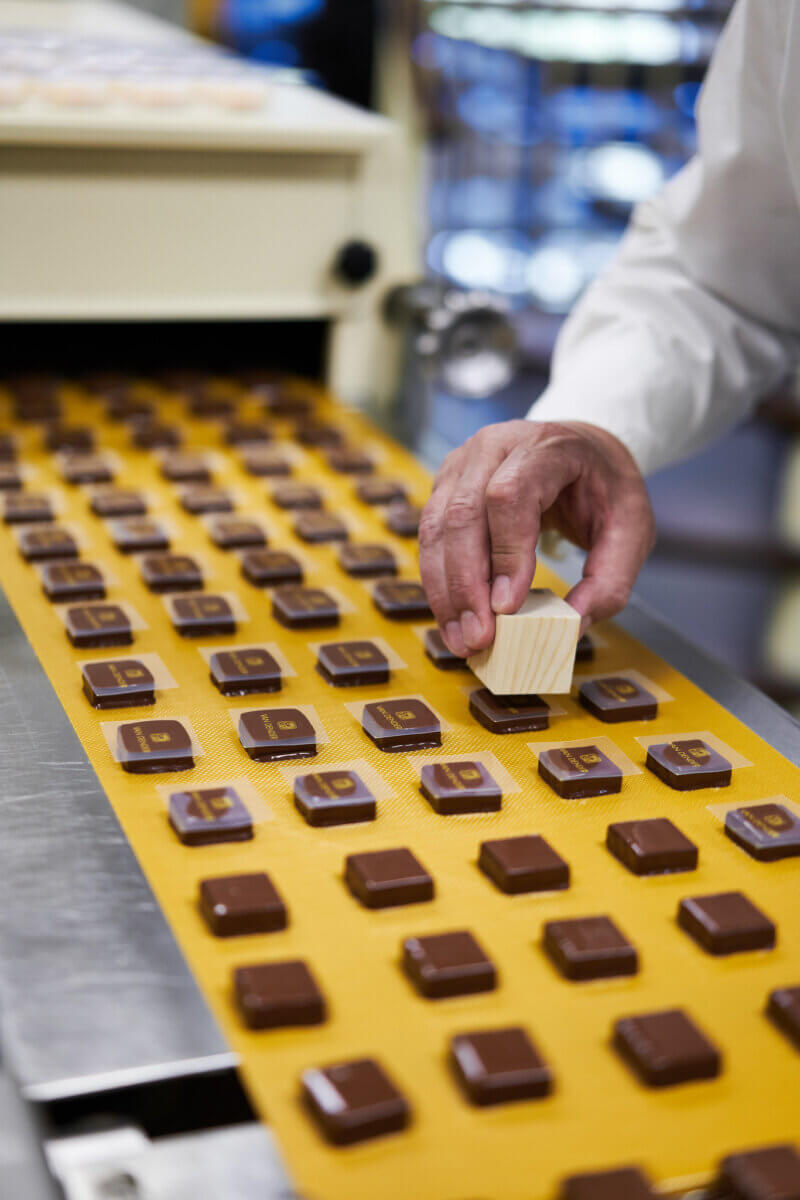
Next, we discussed the popularity of Belgian cuisine in the world, and “Belgian cuisine is mostly known for our flagship products With hundreds of different types being brewed, beer is of course one of our prime export products. The quality of Belgian chocolate, another famous export product, is renowned throughout the world. Waffles are usually also known as one of Belgium’s culinary specialties, just as mussels and fries – typically eaten in Belgium with a homemade mayonnaise.”

©visitflanders.com ©SPFAE

Royal Palace ©SPFAE

Proudly shared, “Being the headquarters of the European Union, NATO and more than 60 European and international institutions, Brussels has evolved into a truly international city. Did you know that it is the city with the highest number of diplomats in the world? Of course, this international network is also reflected in the presence of restaurants from all around the world in the country, but also in the evolution of Belgian cuisine, which does not shy away from integrating new influences, ingredients and spices. Today, the offer is also being expanded with vegetarian and or vegan experiences.” 

With regard to food culture in Belgium, “What makes Belgian food unique?” Ambassador Sibille candidly answered, “The openness of our citizens to novelties, creativity and “joie de vivre” is probably the main characteristic of our cuisine. The typical Belgian cuisine is a combination of innovation and tradition, with rustic local products adapted to today’s taste and with regular new influences.”

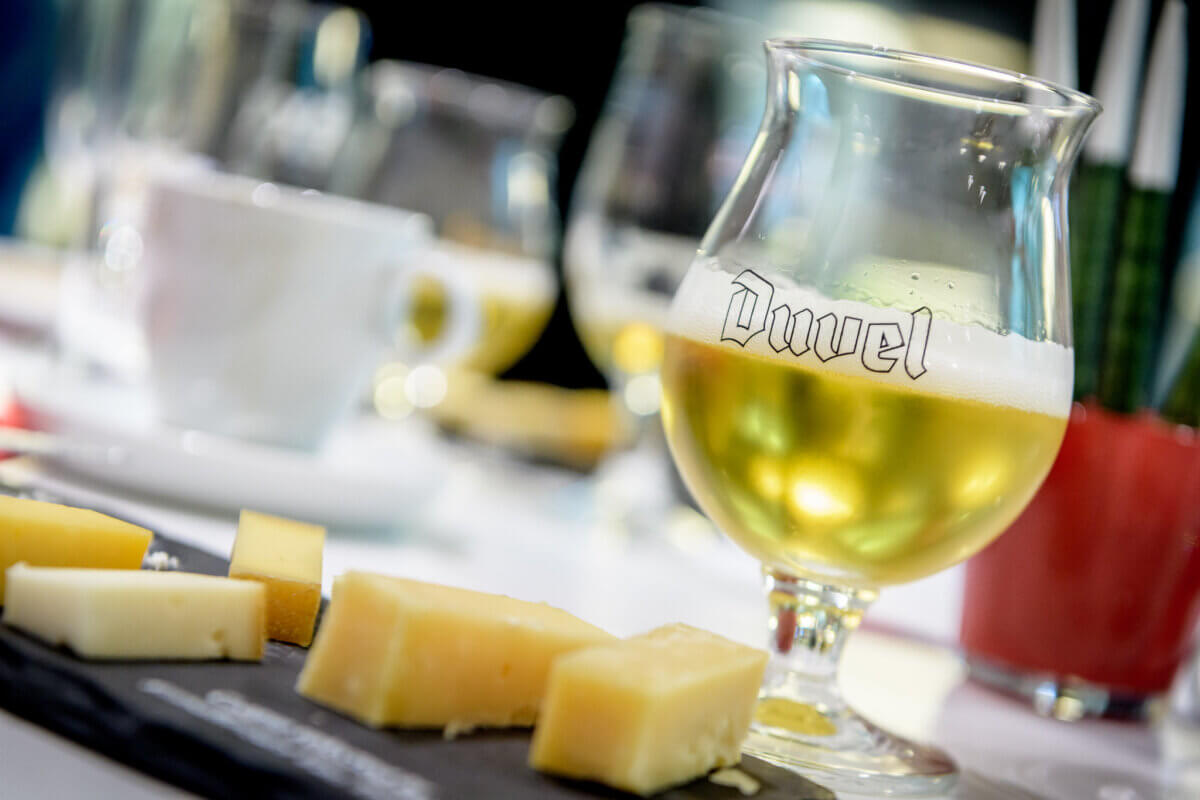
“Our most important drink remains beer, a product that has been part of our tradition for centuries. In Belgium, hundreds of different beers are brewed in nearly every city. Belgium is also known for the Trappist beers, brewed by monks in monasteries, a tradition that dates back to the Middle Ages, when abbeys became important centres of knowledge about agriculture and crafts.  In Belgium, beer doesn’t only come with diversity and quality; it also represents a culture in itself, each beer being served in its own particular glass. Belgium is not a large producer of wine, although we drink it commonly and use it regularly in our cuisine as well. In the last decade, we have also seen an increasing production of Belgian sparkling wines, which have achieved high scores in international competitions.”  

©SPFAE Grand Place ©Shutterstock.com

“As far as food is concerned, its specificity is difficult to summarise in a few lines, as there are so many recipes and traditions, although Belgium has only 11 million inhabitants. Eating, and cooking, is really part of our way of life and each family will have its own secret recipes.”

Sharing with our readers some typical Belgian secrets, Ambassador Sibille elaborated, “The first secret is the sweet note we end dinner or lunch with. Not only do we have a dessert but also we usually have a little chocolate (the famous praline) or a nice biscuit – often a speculoos, a cookie made with cinnamon and the typical brown sugar of Belgium “cassonade” - with our coffee or our tea afterwards.

The second one is how we celebrate every opportunity with food: we have many festivities around the year, from Epiphany (6th of January) to Easter, Saint Nicholas or Christmas. Each one of them is accompanied by a different culinary speciality, which may vary from one city to another. Some of them are only eaten once a year on that special day!”

©Shutterstock.com

Key representative Belgian dishes

Belgium is known for its waffles. But outside of Belgium it is rarely known that waffles come in many different versions. If you want a “Belgian” waffle, you will first need to decide if you want a waffle from Brussels, light and crispy, often eaten with whipped cream and fruit, or one from Liège, a waffle with a special kind of sugar, which is eaten very warm. These two varieties are the most well known, but many more exist. 

©Shutterstock.com ©visitflanders.com

A simple but very typical Belgian dish is the “steak tartare”. It is made up of good quality minced raw beef, mixed together with mustard, shallots, pickles, capers and some herbs and spices. The Belgian version of the dish is usually served with mayonnaise and Belgians call it an “American filet“ (it has nothing to do with America but that doesn’t matter!). Of course, they serve it with fries. Or Belgians just eat it on a sandwich, as a quick lunch, on a working day.

Another typical Belgian dish is the “waterzooi”, a soup made with chicken or fish, according to your taste, cooked with vegetables (usually carrots, celery and leek) and potatoes, and thickened with cream. It originates from the city of Ghent and was traditionally served with fish, although it is more often made with chicken today.

Flemish stew, a beef stew slowly cooked with dark beer, is another common Belgian recipe. Traditionally it is cooked with special syrup from Lieges, creating a sweet and sour flavour. In Belgium, it would typically be served with mashed potatoes or fries.

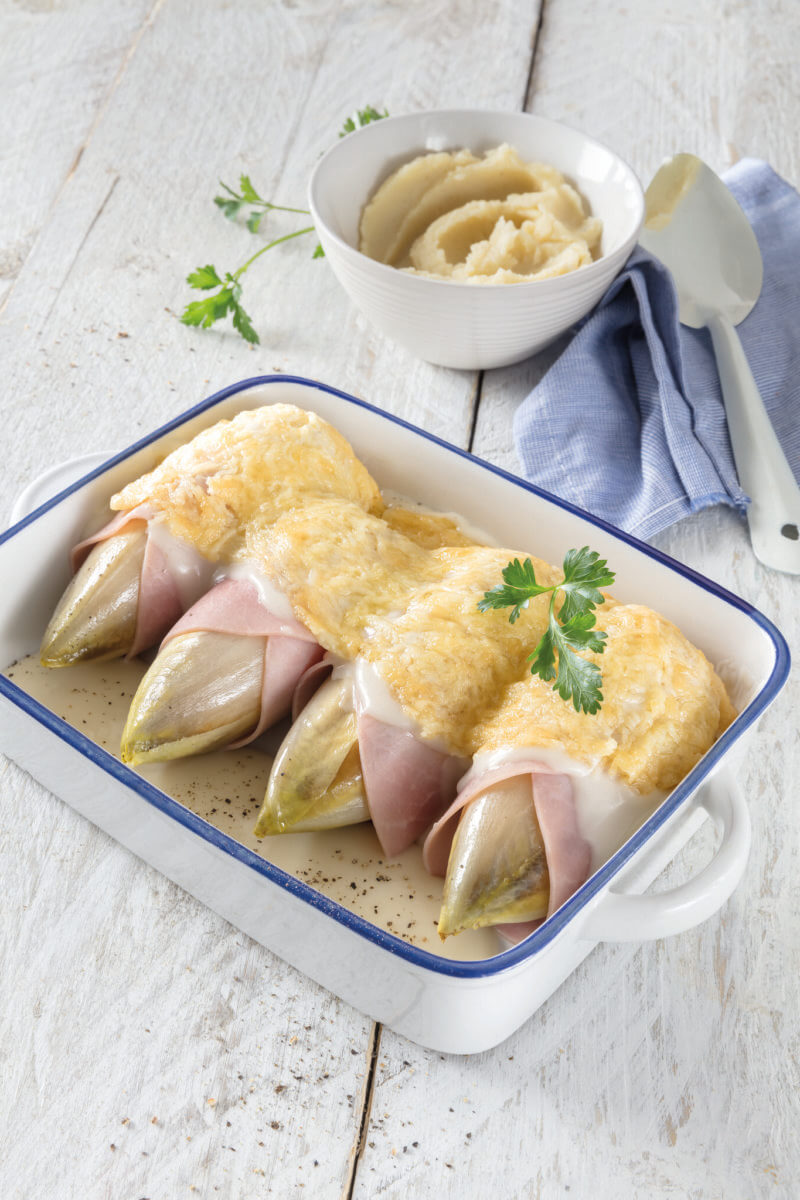
In another family recipe, some Belgian endives wrapped in ham and cooked in the oven with a white sauce usually do the trick. It is a very traditional family dish. For children, who usually do not like their bitter taste, the endives (Belgians call them “chicon” in French or “witloof” in Dutch) can be replaced by leek.

For dessert, what about a “chocolate mousse”? The Belgian recipe is usually very light, without cream or milk, focusing on the taste of the dark chocolate mixed with whisked egg whites.

Maybe, as a last one, amongst many more specialities to be explored by our readers, is the Dame blanche or “white lady”. A very simple recipe, made of vanilla ice cream (advised for a homemade one by Ambassador Sibille) covered with a hot chocolate sauce – made with Belgian chocolate of course. “For those with a sweet tooth, I would further advise to add whipped cream and some crushed speculoos on top! Easy and delicious for children and adults alike!”

As our interview drew to a close, Ambassador Sibille shared for the most curious of our readers and the food lovers amongst them, some interesting websites where you can find recipes:

https://walloniabelgiumtourism.co.uk/en-gb/3/i-love/food-and-drink/chefs-recipes

https://www.visitflanders.com/en/themes/flemish-food/flemish-dishes-and-specialities/flemish-dishes/

https://visit.brussels/en/article/do-it-yourself-gastronomy-cooking-brussels-style

Enjoy discovering Belgian cuisine!

©visitflanders.com

0 comment
0 FacebookTwitterPinterestEmail