Art and Culture

Historical city of Sukhothai


After residing in Thailand for thirty years, I finally fulfilled my dream to visit Sukhothai. I have often been told by my Thai friends, “If you enjoy visiting Ayutthaya which is only one hour drive from Bangkok, you are going to fall in love with Sukhothai.” And, they are perfectly right. The most historically significant and splendid temple ruins are inside the Sukhothai Historical Park and nearby Si Satchanalai Historical Park. Sukhothai and associated cities, namely Si Satchanalai and Kamphaeng Phet were declared the 574th UNESCO World Heritage in 1991. Located over 400km from Bangkok with a five hours drive, this partly explains the reason for less foreign visitors without the convenient transportation. Frankly admitting that the current Covid situation has encouraged everyone like me to appreciate domestic travelling. I am totally enchanted by the rustic lifestyle of what Sukhothai offers as a quiet rural city in Thailand. Given the opportunity of a long weekend stay, one will not be disappointed! Sukhothai worth’s deserved as a UNESCO World Heritage city.

Cradle of Thai civilisation


The Sukhothai Kingdom (1238-1438) was considered as the cradle of Thai civilisation, with Sukhothai city as the first capital of Siam. “Sukhothai” means “the dawn of happiness” which launched the birthplace of Thai art, architecture and language. The kingdom enjoyed 200 years of peace and prosperity until the Ayutthaya Kingdom annexed it. Under King Ramkhamhaeng the Great (1239 – 1317), the second ruling monarch of the Phra Ruang dynasty, the Ceylonese school of Theravada Buddhism was established as the state religion. Thai alphabets were documented from ancient Khmer scripts and an administrative system for the government was set up. It was marked as golden period for Siamese art and architecture.

Sukhothai Historical Park


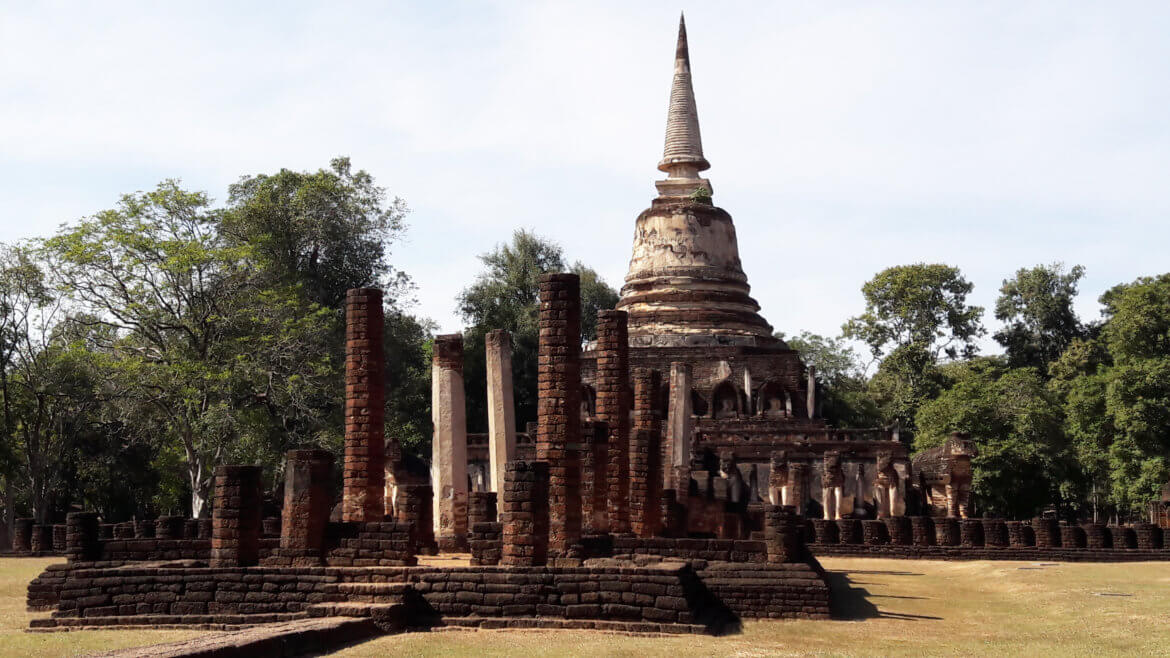
The Sukhothai Historical Park ruins are one of Thailand’s most impressive World Heritage sites. It is a great testimony of the glorious part of Thailand. The park covers an area of land totally 70 square kilometres with 193 ancient monuments, including 60 ancient monuments inside the town walls, 27 ancient monuments outside the town walls in the North, 37 ancient monuments outside the town walls in the South, 19 ancient monuments outside the town walls in the East and 50 ancient monuments outside the town walls in the West. In terms of visiting the whole compound, the ground is divided into three separate but adjoining areas. Most visitors concentrate in the central area. I found the most amazing site in the North with Wat Si Chum. The roofless mondop building enshrines a huge Sukhothai style Buddha image named Phra Achana (translated as “He who is not frightened”). It is the largest Buddha image in Sukhothai measuring 15 metres high and 11 metres wide.

The Sukhothai style image wearing a serene facial expression occupies the total space of the mondop’s interior. At the centre of the mondop is an opening diminishing in size towards the top through which the image can be seen from the outside. Local people also refer this amiable image as “Speaking Buddha”. The architecture of Sukhothai temples is most typified by the classic lotus-bud chedis, featuring a conical spire topping a square sided structure on a three tiered base. Generally known as the Sukhothai style, these lotus-bud chedis, brick-over-stucco construction techniques present the Buddha images with a signature graceful form. Some sites exhibit other rich architectural forms introduced and modified during the period, such as bell shaped Sinhalese and double tiered Srivijaya chedi. The grounds of the historical park are so expansive and I saw so many tourists renting bicycles to joyfully enjoy the scenery at their own pace. I hope my next visit to this beautiful historical park is during the Loy Krathong festival, as it is the most important festival of the year in Sukhothai. The local guide explained that during the Loy Krathong Festival, the Sukhothai Historical Park offers exceptional evenings with performances, ceremonies, monuments illuminations, entertainment, booths of all kinds of local products and food mixed with the famous krathongs, small rafts that people launch on the pounds of the park. The night ends with a light and sound and fireworks on the pond in front of Wat Sa Si. Ramkhamhaeng National Museum The National Museum was built
for history and archaeology aspect to honour King Ramkhamhaeng the Great, the King of Phra Ruang Dynasty of Sukhothai. The Ramkhamhaeng National Museum was officially opened in 1964 for over 50 years. It is located inside the Sukhothai Historical Park. The museum displays detailed exhibition on “Sukhothai: the Past and the Present.” A replica of the famous Ramkhamhaeng inscription, said to be the earliest example of “Lai Sue Thai”, the Thai letter of the alphabet, is kept here among an impressive collection of Sukhothai artefacts.

Si Satchananalai Historical Park


Less than one hour drive from Sukhothai, we spent another day to explore Si Satchanalai. With the total area of 45 square
kilometres, this historical park extends over 4 sub-districts including Si Satchanalai, Sara Chit, Nong O and Tha Chai. Its ancient monuments are entirely located in the district of Si Satchanalai. The ruins here are just as amazing as in Sukhothai and thoroughly well kept. Sawankhalok Together with Sukhothai, Si Satchanalai grew from a rural area to an urban centre. According to a stone inscription, Si Satchanalai of Sukhothai had been formally known as Chaliang. When Sukhothai was annexed and Ayuthaya became the capital of the Kingdom of Siam, Si Satchanalai was renamed as Sawankhalok, which was regarded as an outer town. In 1991, UNESCO as World Cultural Heritage together with Sukhothai and Kamphaeng Phet designated the ancient town of Si Satchanalai. Earlier in 2019, several artists from around Thailand and the ASEAN region were invited to Sawankhalok to create street art along a stretch of road near the town. Sawankhalok Walking Street Art has drawn many curious tourists.

Sangkhalok ceramics


Sangkhalok ceramics are ancient Thai traditional ceramic ware specifically derived from Sukhothai kingdom period. The pottery is made in very fine ceramic and glazed signature green olive colour. The green exquisite pottery making has also been known as “Celadon”. There is a small museum called Sangkhalok Ceramics Conservation and Study Centre, which is worth a visit.

Sukhothai noodles


One of the popular street foods and unique to the province is Sukhothai noodles. The main difference between Sukhothai noodles and regular Thai noodles is the ingredients. Sukhothai noodles are always served with thin rice noodle with sliced roasted pork, to be accompanied with green beans, small pieces of salted turnip and ground peanut.

The taste is slightly sweet and sour because the last touch is the addition of palm sugar, dried chilli and lime. A trip is not completed without shopping for some souvenirs to take home. I picked up a few pieces of Sangkhalok ware with simple designs under their greyish blue/green matte glaze for our friends. Sukhothai is well known with the gold and silver jewellery with its exclusive design. Colourful embroidered textiles are widely available at a much affordable than in Bangkok. For many places, we will feel that one visit is enough in a lifetime, it will definitely not in my case with Sukhothai. As said earlier, I wish to experience Loy Krathong festival at Sukhothai Historical Park, perhaps in my Thai traditional outfit!

0 comment
0 FacebookTwitterPinterestEmail

Historical city of Sukhothai

After residing in Thailand for thirty years, I finally fulfilled my dream to visit Sukhothai. I have often been told by my Thai friends, “If you enjoy visiting Ayutthaya which is only one hour drive from Bangkok, you are going to fall in love with Sukhothai.” And, they are perfectly right. The most historically significant and splendid temple ruins are inside the Sukhothai Historical Park and nearby Si Satchanalai Historical Park. Sukhothai and associated cities, namely Si Satchanalai and Kamphaeng Phet were declared the 574th UNESCO World Heritage in 1991.

Located over 400km from Bangkok with a five hours drive, this partly explains the reason for less foreign visitors without the convenient transportation. Frankly admitting that the current Covid situation has encouraged everyone like me to appreciate domestic travelling. I am totally enchanted by the rustic lifestyle of what Sukhothai offers as a quiet rural city in Thailand. Given the opportunity of a long weekend stay, one will not be disappointed! Sukhothai worth’s deserved as a UNESCO World Heritage city.


Cradle of Thai civilisation

The Sukhothai Kingdom (1238-1438) was considered as the cradle of Thai civilisation, with Sukhothai city as the first capital of Siam. “Sukhothai” means “the dawn of happiness” which launched the birthplace of Thai art, architecture and language. The kingdom enjoyed 200 years of peace and prosperity until the Ayutthaya Kingdom annexed it.

Under King Ramkhamhaeng the Great (1239 – 1317), the second ruling monarch of the Phra Ruang dynasty, the Ceylonese school of Theravada Buddhism was established as the state religion. Thai alphabets were documented from ancient Khmer scripts and an administrative system for the government was set up. It was marked as golden period for Siamese art and architecture.

Sukhothai Historical Park

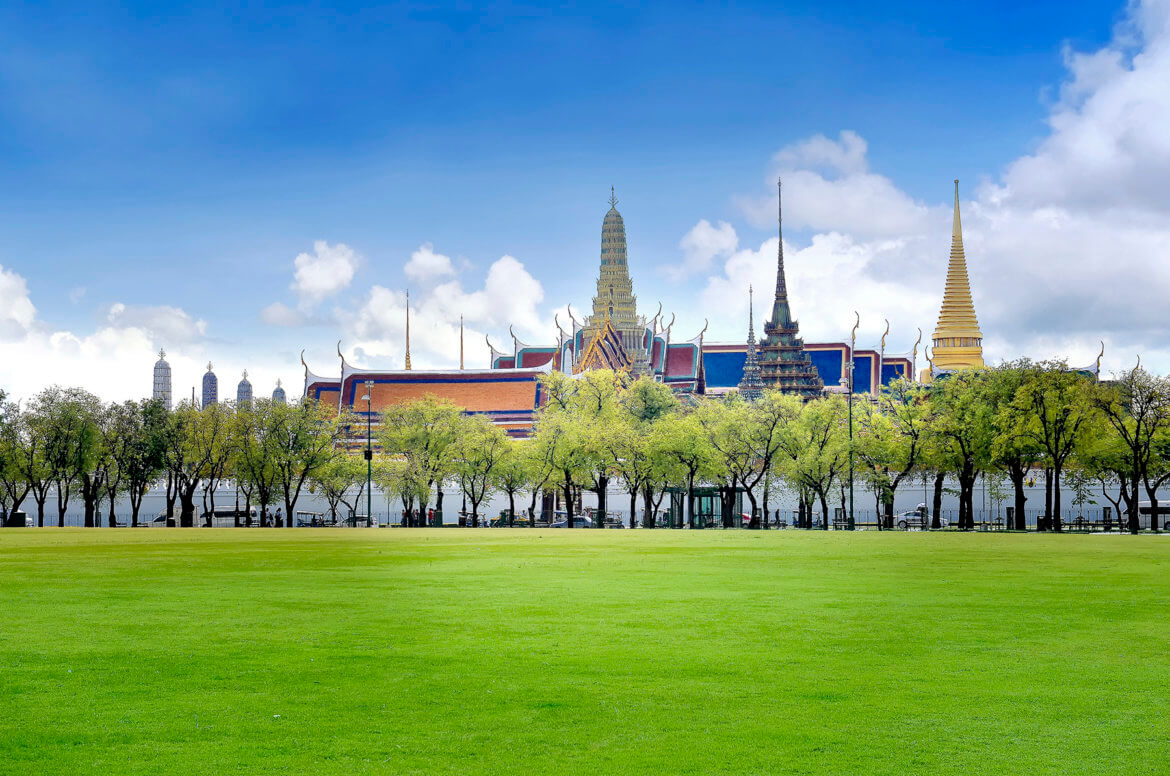
Sukhothai Historical Park

The Sukhothai Historical Park ruins are one of Thailand’s most impressive World Heritage sites. It is a great testimony of the glorious part of Thailand. The park covers an area of land totally 70 square kilometres with 193 ancient monuments, including 60 ancient monuments inside the town walls, 27 ancient monuments outside the town walls in the North, 37 ancient monuments outside the town walls in the South, 19 ancient monuments outside the town walls in the East and 50 ancient monuments outside the town walls in the West.

Sukhothai Historical Park

In terms of visiting the whole compound, the ground is divided into three separate but adjoining areas. Most visitors concentrate in the central area. I found the most amazing site in the North with Wat Si Chum. The roofless mondop building enshrines a huge Sukhothai style Buddha image named Phra Achana (translated as “He who is not frightened”). It is the largest Buddha image in Sukhothai measuring 15 metres high and 11 metres wide. The Sukhothai style image wearing a serene facial expression occupies the total space of the mondop’s interior. At the center of the mondop is an opening diminishing in size towards the top through which the image can be seen from the outside. Local people also refer this amiable image as “Speaking Buddha.

Wat Sichum

The architecture of Sukhothai temples is most typified by the classic lotus-bud chedis, featuring a conical spire topping a square sided structure on a three tiered base. Generally known as the Sukhothai style, these lotus-bud” chedis, brick-over-stucco construction techniques present the Buddha images with a signature graceful form. Some sites exhibit other rich architectural forms introduced and modified during the period, such as bell shaped Sinhalese and double tiered Srivijaya chedi.

The grounds of the historical park are so expansive and I saw so many tourists renting bicycles to joyfully enjoy the scenery at their own pace. I hope my next visit to this beautiful historical park is during the Loy Krathong festival, as it is the most important festival of the year in Sukhothai. The local guide explained that during the Loy Krathong Festival, the Sukhothai Historical Park offers exceptional evenings with performances, ceremonies, monuments illuminations, entertainment, booths of all kinds of local products and food mixed with the famous krathongs, small rafts that people launch on the pounds of the park. The night ends with a light and sound and fireworks on the pound in front of Wat Sa Si.


Ramkhamhaeng National Museum

The National Museum was built for history and archaeology aspect to honour King Ramkhamhaeng the Great, the King of Phra Ruang Dynasty of Sukhothai. The Ramkhamhaeng National Museum was officially opened in 1964 for over 50 years. It is located inside the Sukhothai Historical Park. The museum displays detailed exhibition on “Sukhothai: the Past and the Present.” A replica of the famous Ramkhamhaeng inscription, said to be the earliest example of “Lai Sue Thai”, the Thai letter of the alphabet, is kept here among an impressive collection of Sukhothai artefacts.

Si Satchananalai Historical Park

Less than one hour drive from Sukhothai, we spent another day to explore Si Satchanalai. With the total area of 45 square kilometres, this historical park extends over 4 sub-districts including Si Satchanalai, Sara Chit, Nong O and Tha Chai. Its ancient monuments are entirely located in the district of Si Satchanalai. The ruins here are just as amazing as in Sukhothai and thoroughly well kept.

Si Historical Park

Sawankhalok

Together with Sukhothai, Si Satchanalai grew from a rural area to an urban centre. According to a stone inscription, Si Satchanalai of Sukhothai had been formally known as Chaliang. When Sukhothai was annexed and Ayuthaya became the capital of the Kingdom of Siam, Si Satchanalai was renamed as Sawankhalok, which was regarded as an outer town. In 1991, UNESCO as World Cultural Heritage together with Sukhothai and Kamphaeng Phet designated the ancient town of Si Satchanalai.

Earlier in 2019, several artists from around Thailand and the ASEAN region were invited to Sawankhalok to create street art along a stretch of road near the town. Sawankhalok Walking Street Art has drawn many curious tourists.

Street Art

Sangkhalok Ceramics


Sangkhalok ceramics are ancient Thai traditional ceramic ware specifically derived from Sukhothai kingdom period. The pottery is made in very fine ceramic and glazed signature green olive colour. The green exquisite pottery making has also been known as “Celadon”. There is a small museum called Sangkhalok Ceramics Conservation and Study Centre, which is worth a visit.

Sukhothai noodles

One of the popular street foods and unique to the province is Sukhothai noodles. The main difference between Sukhothai noodles and regular Thai noodles is the ingredients. Sukhothai noodles are always served with thin rice noodle with sliced roasted pork, to be accompanied with green beans, small pieces of salted turnip and ground peanut. The taste is slightly sweet and sour because the last touch is the addition of palm sugar, dried chilli and lime.

Noodles

A trip is not completed without shopping for some souvenirs to take home. I picked up a few pieces of Sangkhalok ware with simple designs under their greyish blue/green matte glaze for our friends. Sukhothai is well known with the gold and silver jewellery with its exclusive design. Colourful embroidered textiles are widely available at a much affordable than in Bangkok. For many places, we will feel that one visit is enough in a lifetime, it will definitely not in my case with Sukhothai. As said earlier, I wish to experience Loy Krathong festival at Sukhothai Historical Park, perhaps in my Thai traditional outfit!

Textile Musuem
0 comment
0 FacebookTwitterPinterestEmail

by Ruth Gerson

Thais love a party! And indeed, the annual calendar is packed with cultural events and festivities, each month offering a colourful experience. The festival that marks the start of the Thai New Year in the month of April is Songkran - the focal holiday of Thai culture. The customary three days of celebrations embrace the rites of spring, family gatherings honouring the elderly, acts of purification, Buddhists rituals, and the now very popular water splashing revelry. It is the time to clean the house and burn the old refuse thus hoping to be rid of all the bad luck of the old year, and start anew with a clean slate, so to speak.

The name Songkran is derived from the ancient Sanskrit. Using ancient astrology to determine the position of the sun in the sky, it literally describes its monthly movement within the zodiac from one sphere to the next. In April the sun leaves the sphere of Aries and enters that of Taurus, a period known as Maha Songkran or the Great Songkran. It is believed that the festival of Songkran was introduced into Thailand from India where the festival of Holi is still celebrated. The theme of water splashing during the hot season has been so well integrated into SE Asian cultures that most countries neighbouring to Thailand have their own water festivals, from the Southwestern province of Yunnan in China, to Laos, Cambodia and Myanmar. The purpose of water is manifold, as it is used for cooling, for symbolising the act of purification, and for invoking the life giving monsoon rains.

At present the official cultural Thai New Year falls in April, the fifth month of the Thai lunar calendar (the first month being December). At one time this holiday was celebrated by Tai of Yunan on the first lunar month, a more befitting date. It is explained, however, that the cultivation of rice was a major factor for the change, as the Tai originated from China where harvest time was different from that of tropical Thailand, and subsequently they adopted the highly skilled agricultural system of the Mon-Khmer. Denis Segaller, an author and expert on Thai culture reinforced this idea with his comment that present day Songkran depends on the cycle of rice cultivation, “with the rice harvesting finished, and the planting of the new crop not yet begun,” a time when people can relax. Another possible reason was that the astrological configuration in the April sky was considered more favourable, and the Thai are great believers in these astral phenomena. It is interesting to note that for years Songkran was the official Thai New Year. In 1888 King Chulalongkorn (Rama V) adopted the Thai version of the solar calendar called Suriyakhati, based on the Gregorian calendar, Suriya being the Hindu sun god. Consequently, the King moved the official New Year to 1 January to conform with most of the world.

Originally a lunar holiday, Songkran is now a fixed date on the Thai calendar to accommodate modern times, and is officially celebrated in most regions in the country from the 13th to 15th of April. However, in recent years the three days have been stretched out to five days and occasionally even longer. In the northern city of Chiang Mai this festival lasts up to a week and is lavishly and recklessly celebrated, as do the Mon people in Prapadaeng, in the harbour area of Bangkok. The latter celebrate Songkran one week after the rest of Thailand. In Chiang Mai the Buddha image is taken out on procession, as is the custom in numerous Thai cities and towns, but appears to be in a much more elaborate fashion than seen anywhere including

Bangkok. Just ahead of the Buddha image is the Songkran Queen, chosen from the beautiful young women of Chiang Mai. She rides a mythical animal, usually the one symbolising the year to come. These animals represent the twelve year cycle of the zodiac introduced into Northern Thailand by the migrating Tai from Southern China around the 13th century.

On the eve of Songkran, every house is thoroughly cleaned and old refuse is burned so as not to carry bad luck or anything harmful into the New Year, with hopes of starting everything afresh. Another old tradition is the setting off of firecrackers to frighten away any bad spirits that may lurk about from the old year. This day is known as Tarusa Suta Pi, the last day of the old year. Wan Songkran or Songkran Day, the first day of the year, is also known as Wan Thaloeng Sok. This day was believed to have been the peak of the hot season when the hours of the day and night were equally divided.

Early in the morning of Songkran Day people pay respects to the monks by bringing offerings of food prepared the previous day. This is customarily a temple ritual which enables the public to acquire merit, an important act in the lives of Thai people that is carried out all year long. In recent years hundreds of monks have gathered at the Pramane Ground to receive alms from the public, enabling the many people of Bangkok to carry out this important meritorious act.

In the early afternoon, Buddha images are taken out of temples for ritual bathing and are sprinkled with lustral water by devotees. A most revered image in Bangkok is the Phra Phuttha Sihing, housed in the National Museum’s Buddhaisawan Chapel. The image is taken out to the Pramane Ground every year for the public to pay their respects. Before placing the image in the elevated pavilion erected for the purpose, it is carried around the city to allow a greater number of people to receive merit. Once in place, the image is sprinkled by thousands of people who also free birds from their cages and release fish into rivers so as to gain additional merit and good fortune.

The act of purification is also performed on Buddha images in private home shrines, on family elders, and on specially revered monks and village elders who are father figures to their communities. Songkran is a time for family gatherings, when young members bringing gifts visit their elders, pour scented water over the palms of their hands, and receive blessings in return. In the past, these respected elderly relatives were bathed and dressed in new garments brought as gifts for the New Year.

The traditional gentle water sprinkling that takes place within families has escalated outdoors into public splashing, dousing by the bucketfuls. No one is spared a generous dose of water in this mischievous merriment and all participate good naturedly. Moreover, nobody seems to mind getting drenched, as April is the hottest month of the year and a shower can be most welcome, dress and all. The water throwing has a further purpose than just having fun. It is an old belief that if one walks around soaking wet, it is a hint to heaven to send down rain. In the agricultural regions of Thailand rain is of prime importance.

Today’s celebrations of Songkran with raging water battles that use power water guns and water hoses have moved away from the traditional festivity. “In the old days Songkran was full of meaning, but today much of the holiday’s spiritual aspect is gone. People just think of having a good time,” says Khun Euayporn Kerdchouay, Siam Society Senior Consultant. And indeed, it seems that this age old holiday has grown into a water festival to please the young and the tourists who visit Thailand. A good example are the annual festivities on Khao San Road, a backpackers’ enclave, and the more recent municipality sanctioned festival on Silom Road that closes for traffic on this occasion. Both locations draw huge crowds, as do other designated spots in the city and which are very popular. In fact, the result of the water festival has been so successful that last year Singapore staged its own water splashing festival. Khun Somlak Charoenpot, former Deputy Director General of the Fine Arts Department, Ministry of Culture explains the reasons for the change in nature of the celebrations: “The concept of Songkran is still the same today as in the past but due to changes in social and economic conditions it became a target for tourism and thus some of the different ways in celebrating the event appear.”

Also well liked at this time is the dabbing and smearing of white powder or paste on revellers’ faces. It is one of the oldest Songkran traditions and is believed to protect the person, warding off evil; traditionally the paste has been applied by an older person. This custom grew out of the practice by Buddhist monks who use chalky white powder to bless people, places and items on which they put their distinctive mark. The paste, the water, and even ice stuffed down people’s shirts have gotten out of hand as the festival of Songkran continues to evolve. The Venerable Phra Kantasilo articulates, “In recent years, the observance of Songkran amongst Thai youth has taken on a particularly sinister mood, hardly resembling the fun and innocent practices of bygone years.” Philip Cornwel-Smith, author on Thai culture explains the importance of such outlets for energy, “The sanuk surplus acts as a social safety valve,” providing a much needed outlet for the stress of daily life.

For years Songkran has been the time for courting, when young men of one village woo the girls of another. These lively events begin on the afternoon of first day of Songkran when groups of young men and women play old courting games believed to be a vestige of an ancient culture and referred to by some scholars as ‘mating games’. One such game still widely played in Thailand today is the game of saba, in which both sexes participate. Generally girls of one village play with boys from another village as this flirtatious game often leads to marriage, thus eliminate the pairing of those who may be related. They sit opposite each other in a small, enclosed arena and take turns in carrying a flat, rounded piece of wood on one foot while hopping on the other. The object of the game is to knock down a similar piece of wood, perched on its side in front of a person of the opposite sex. Both success and failure elicit further flirting and teasing.

Songkran serves a multitude of religious and social functions. Its festivals are celebrated with great zeal, including parades, carnivals, and beauty contests, while music blares and great quantities of food and rice liquor are consumed. On the first afternoon, a Nang Songkran or Miss Songkran is chosen to reign over the festival. She is led in procession seated on an animal figure representing the day of the week on which Wan Songkran falls that year. There are seven such animals. The Garuda, for example, stands for Sunday while a tiger is for Monday. These figures derive from an ancient Hindu legend telling of a god who had lost a bet and in the process also lost his head. His seven daughters ensured that his memory lived on by parading his head once a year. This procession still continues as part of the Songkran festival; the severed head, however, has been replaced by seven different creatures, each corresponding to one of the god’s daughters.

A tradition practiced on the second day of Songkran is the building of sand chedi. Although predominantly a Northern custom, sand chedi have become a popular way of devotion in many regions of Thailand. A sacred structure, the chedi symbolises the place where the Buddha’s ashes were kept. Wealthy people often add new structures to a temple compound usually in the form of a chedi. The poor emulate this meritorious act by constructing a representation of a chedi, a small one made of sand, in a designated area of the temple. As in permanent chedi, small items such as coins, bodhi leaves and Buddha images are placed in the core of the sand chedi. Likewise, these tiny structures are decorated with colourful flags, topped by candles, incense sticks, and flowers. The completed sand chedi are sprinkled with scented water and some temples award prizes to the most beautiful ones. This custom is also a symbolic replacement of sand which may have clung to devotees’ shoes and inadvertently carried out of the temple.

The Songkran festival goes on for several days, a welcome respite from work and daily routines, and a temporary diversion from the summer heat. Special food served in central Thailand at this time is khao che which is cooked rice soaked in aromatic cold water surrounded by delicate dishes of food, a dish inherited from the Mon, while glutinous rice cakes is the fare in Northern Thailand.

The water festival is not unique to Thailand although its celebrations are known worldwide. In Asia both Buddhist and Hindu enjoy water festivities, such as several states in India and some of Thailand’s neighbouring countries. Myanmar celebrates Thingyan, Laos has Songkran or Boun Pi Mai, and Cambodia observes Chaul Chnam Thmey literally meaning to enter the new year, all celebrated like Songkran in Thailand with similar traditions and practices, as well the as the mythical tales that accompany this holiday. In Sri Lanka the holiday is called Aluth Avurudda while in Tamil Nadu it is Puthandu, Bohag Bihu in Assam, and in Orissa Pana Sankranti also known as Mesha Sankranti. In South India, especially in Karnataka, a festival called Okhali or Okhli is celebrated. People there keep a barrel of water in their home mixed with chalk and turmeric which they throw on others. Bengali New Year includes east India and Bangladesh and is known as Pohela Boishakh. Here not much water is splashed but the lively parades are reminiscent of those in Thailand, only more colourful. Holi, a Hindu water and colour festival, is celebrated in India about a month before all these other water festivals, all of which amazingly fall on April 14th.

Interestingly, there are some water festivals in Europe as well. Hungary has a traditional event in which people get soaked, especially women, while Poland, Slovakia and parts of the Czech Republic splash people with water during the Easter celebrations. Fortunately, beneath some rough festivities of Songkran remains a culture that is still intact and celebrated in a serious manner. It is practically a must for young people to return home on this landmark holiday to pay respects to the elders at home. As Bangkok is the hub of employment for thousands of upcountry people, particularly for those from Isaan, a great exodus is to be expected as the holiday nears. No matter the fashion in which Songkran will be celebrated, it remains the corner stone of Thai culture.

0 comment
0 FacebookTwitterPinterestEmail

Robert Hunter (1792-1848) was the first European merchant to reside in Siam. He was the most important intermediary between the royal court for two decades serving as an unofficial diplomat during the reign of King Rama II.

Hunter was originally from Scotland. His family were established merchants and traders since the early 18th century. They exported tobacco from Virginia to France, but that business ended with the start of the American Revolutionary. They started to manufacture linen, cotton and glass from their home town near Glasgow, Scotland.

Hunter first went to India to learn trading. He arrived in the newly founded Singapore in 1819 and founded a firm called Hunter Watt & Company. While he was there, the British East India Company sent James Low to Siam on the first diplomatic mission in 1824. Low was an officer of the English East India Company. He was also an early student of Thai. Low wanted to enlist Siam’s help for the British invasion or Burma and gain an agreement for trading rights with King Rama II. However, Low was not successful.

In the early 1820s, foreigners started to return to Siam after a hiatus of almost 140 years since all foreigners were expelled in 1688. In July 1824, King Rama III ascended to the throne. In a canny move, Hunter arrived in Bangkok that August bearing a gift of 1,000 muskets as the Siamese were preparing for war with Burma. Hunter spoke to the Minister of the Treasury (Phra Klang) and received the right to trade with other foreigners on behalf of the royal family and nobility. After receiving permission, Hunter was allowed to settle in Bangkok. In 1840, the King directed a prominent three storey building be erected in Thon Buri along the Chao Phaya River for his residence and business concern then called the “British Factory” (or what trading posts were called by Westerners then).

Hunter also obtained permission from the King for other Europeans, then living on house boats, to also build home along the riverbank. Many quickly moved ashore and built new houses. With no British legation in Bangkok, formal diplomatic relations or treaty, Hunter served as an unofficial British representative handling visitors and trading between Siam and Singapore with great success.

In 1825, Hunter wed Angelina Sap, a half-Siamese, half-Portuguese lady. She was also descended from Constantine Phaulkon, the famous 17th century Greek adventurer who was probably the most famous foreigner in early Siamese (or even in all Thai) history. Angelina taught Hunter to speak both Thai and Portuguese fluently. As there were no other English speakers (or Thai speaking foreigners) at court, the Hunter wielded enormous influence in trade negotiations and diplomacy by his ability to speak fluent Thai. As Christian missionaries and diplomatic missions began to pour into Thailand, Hunter was instrumental in guiding them. He also helped Henry Burney negotiate a successful trade treaty in 1826 between the Great Britain and Siam. In 1831 Hunter received the distinguished title of “Luang Awutwiset” which honored his service in supplying weapons to the kingdom.

Hunter was directly involved in introducing the most famous Thai personalities to the world (before 1965 Miss Universe winner Apasra Hongsakula, 1988 Miss Universe winner Porntip Nakhirunkanok, Tiger Woods and U.S. Senator Ladda Tammy Duckworth), namely the original “Siamese Twins,” nicknamed Chang and Eng (meaning “left” and “right” in Thai). In 1824, on a trip up the Chao Phaya River, Hunter spotted what he saw was a “strange animal.” It was the shirtless twins bathing along the river. He instantly saw the lucrative financial opportunity by displaying the twins to the public on an international tour. He first befriended the twins and their family, then sought permission from the King to bring them to England on tour. The twins and the family were agreeable, but it took five years for permission to be granted. In 1829 Hunter and his American business partner, a sea captain named Abel Coffin, sailed to Boston in 1829. They were an instant sensation. They went to New York to continue their successful tour and then to London. After their success there they toured the British Isles to great acclaim. However, the press of business in Siam forced Hunter to leave London for Bangkok. He departed on 28 September 1830. Coffin bought out Hunter’s interest in 1831, but Hunter kept in regular contact with the twins for years after.

Hunter then went into partnership with another British merchant named James Hayes. The 1826 Burney Treaty allowed more trade privileges for all the British merchants based in Singapore, but Hunter & Hayes completely dominated the market in Bangkok. They had a monopoly on imports from the U.K., but that concession was only limited to textiles from Liverpool. However, their business was overwhelming in exports. This was due to the monopoly they held on European type square-rigged sailing vessels that the royal court could use for their own trading interests.

This business arrangement between Hunter and the Siamese government could not last forever. As trade rapidly expanded throughout the 1830s, the King and nobility obtained their own sailing vessels. They now began to trade with foreign merchants who were crowding into Bangkok other than Hunter. Due to his rapidly falling profits, Hunter decided to trade in opium. This illicit trade was expressly strictly forbidden. But King Rama III had to tread lightly on the matter as he was worried about Hunter’s threat to summon the Royal Navy to defend his business interests. The King knew the fledgling Siamese Navy would be no match against British warships. However, disrupting opium shipment at sea was one thing, seizing illegal goods at the port was another.

In 1839, Hunter & Hayes suffered great losses when the Siamese government suddenly monopolised teak exports. Then in 1842, they suffered ever greater losses when the King imposed heavy customs duties on sugar and seized Hunter & Hayes’ stock to collect on the overdue customs bill. From close trading partners, both sides were now bitter rivals for trade and business.

The final straw was when King Rama III and Hunter fell out on the purchase of a steam warship. The First Opium War (1838-1842), involving Great Britain and China, had widespread regional repercussions. King Rama III was worried about British intentions towards Siam. He ordered a large supply of weapons and a steamship named the Express just in case the British attacked Siam. However, the war ended with the signing of the Treaty of Nanking in 1842 and the British did not attack Siam. By the time the steamship finally arrived on 11 January 1844 there was no need for it.

The negotiations between the King and Hunter quickly grew to be contentious. It is unclear if the King refused to pay for the vessel, or if Hunter quadrupled the price on delivery in an extortion attempt. Matters came to a head when Hunter threatened to sell the vessel to the Vietnamese, Siam’s sworn enemy at the time. The King was immediately outraged at this naked threat and Hunter was immediately expelled from the Kingdom. Hunter departed Bangkok on Express, bound for Singapore, on 24 February 1844.

Upon landing in Singapore, Hunter immediately lodged a complaint with the colonial governor. The governor proved to be non-committal. So Hunter took the Express to Calcutta and saw the head of the East India Company. Hunter stated that King Rama III had violated the Burney Treaty. He also wanted the establishment of a British counsel in Bangkok, British warships to be dispatched to intimidate the Siamese and a renegotiation of the import duty. Eventually, the Governor General of India ruled that the dispute was a personal one between Hunter and the King of Siam and wisely took no action. Hunter did make good on his threat to sell the Express to the Vietnamese but at a great loss of profit.

One of Hunter’ assistants at the firm, Christopher Harvey, ran the business while Hunter was away. Hunter returned in July 1844 to collect on his outstanding debts then dissolved the business for good. Hunter left Bangkok for good on 29 December 1844. He returned to his native Scotland and died in Glasgow on 07 September 1848.

Hunter’s son. Robert Jr., remained in Siam and maintained better relations with the court. He died on 19 April 1865 and was buried in Bangkok’s Protestant Cemetary. Hunter left an uneven legacy in Siam. It was said Hunter unsuccessfully mixed shrewdness and arrogance, zeal and kindness. In 1850, during James Brooke’s unsuccessful mission to extend the terms of a freer residency for Europeans, King Rama III specifically cited Hunter’s behaviour as the reason to reject any new agreement. The King distrusted Europeans for the rest of his reign. When King Rama IV ascended to the throne in 1851, trade relations became more cordial. The King signed the Bowring Treaty in 1855, trade between Siam and Great Britain saw a tremendous expansion.

0 comment
0 FacebookTwitterPinterestEmail

Of all the major or important sights in Bangkok that have changed the least, then Sanam Luang (Thai: สนามหลวง, or literally “royal turf”) is most likely at the top of the list. The spacious grounds has served a multitude of official and unofficial functions for almost two and a half centuries. The royal field is an important part of modern Thai history and its national culture having had so many important events and rituals held in the public park.

Sanam Luang was laid out during the construction of the Grand Palace complex in 1782, when the capital was moved from the Thon Buri side of the Chao Phaya River to Bangkok. Sanam Luang now measures 74.5 rai, 119,200m2 or almost 30 acres. It is considered both an open field and public square. Officially, Sanam Luang is known as “Thung Phra Men” or (the royal cremation ground; Thai: ทุ่งพระเมรุ). It has also been referred to as the Royal Park, the Royal Field and the Royal Grounds for the many royal or official ceremonies held there. It is a public square situated right in front of the Grand Palace. Sanam Luang has been frequently used as a site for the cremation of royal family members, including many of Thailand’s kings, queens, royal princes and princesses plus other nobility since the reign of King Rama I.

The first royal cremation at Sanam Luang was King Rama I’s brother, the vice-king or prince-successor, who occupied the Front Palace, a royal residence nearby the Grand Palace. King Rama II followed this tradition by both performing royal ceremonies at Sanam Luang and conducting the cremation rites of his closest brother, also a vice-king or prince-successor. During King Rama III’s reign, Thailand entered into a dispute with Vietnam over Cambodia’s border demarcation. Since “farangs” were starting to return to Thailand at this time, the king wanted to demonstrate to them, and all other nations, that his country was a flourishing, prosperous nation. So Sanam Luang was converted into a rice field. Even the grounds in front of the Grand Palace were placed into rice cultivation. When the grounds were needed for a royal funeral, Sanam Luang was covered over with dirt for the cremation ceremony. There was a barn nearby to store the rice husks.

In 1855, King Mongkut (King Rama IV) changed its name from “Thung Phra Men” to “Thong Sanam Luang”. The name was later shortened to “Sanam Luang” and is now of common usage. King Mongkut also established Sanam Luang as the site for the ancient ritual, the Royal Ploughing Ceremony. Low walls were placed on the grounds and a small pavilion was erected to house a Buddha statue for the ceremony. There were other pavilions and towers placed on the grounds including one for the king so he could watch the ceremony. Next to the king’s pavilion a stage was erected so plays could be performed as part of the ploughing ceremony to appear the ancient spirits.

King Chulalongkorn (King Rama V) enlarged the grounds. He also ordered all the old buildings dismantled that had been previously used. Rice growing was discontinued as the space was needed for Bangkok’s centennial celebration in 1897 when King Rama V returned from his European tour. He also ordered two rows of tamarind trees to be planted that encircled the park. By 1900 Sanam Luang was the site of Bangkok’s first golf course and race course. This was due to more foreign visitors and residents. In a July 1901 local newspaper article it mentioned that “farangs” doing snipe hunting in the park. Kite flying has always been a popular sport there.

King Vajiravudh (King Rama VI) continued his predecessors use of Sanam Luang for conducting various ceremonies. King Bhumibol Adulyadej (King Rama IX) also sponsored the Royal Ploughing Ceremony each May. Other celebrations conducted during his reign were the 1982 bicentennial celebration of Bangkok’s founding and the grand celebration of the King’s golden jubilee in 1996. Royal cremations included those for King Ananda Mahidol (King Rama VIII) in 1950, Queen Vadhana in 1956, Queen Rambhani Barni in 1986. Princess Mother Srinagar Indra in 1996, Princess Galyani Vadhana in 2008, and Princess Bejaratana Rajasuda in 2012. On 26 October 2017, King Rama IX was cremated in the most ornate and lavish funeral ceremony the country has witnessed in a 50 metre high pyre.

Sanam Luang holds a very special place in the hearts and minds of all Thais.

0 comment
0 FacebookTwitterPinterestEmail

Easter of 2020 had a pandemic, and unfortunately, Easter 2021 will have a continuation of that pandemic. Such a situation brings the only objective, to lead the Christian people, communities of faith and people of goodwill to think, evaluate and identify ways to overcome the polarisations and violence that mark the current world. It brings us together to reflect on this devastating world problem that affects not only our health, but the environment, the family, the economy and all matters that contribute to the flow of life.

The history of Easter

The Christian Easter is based on the Passover of Jewish origin. In addition, a celebration in the Western world was influenced by elements of the pagan culture of Germanic peoples. Easter is the principal festival on the Christian calendar and has its origins based on both Jewish tradition and pagan elements that were collected from Christianised peoples, such as the Germans. This celebration has a moving date and its Christian meaning recalls the crucifixion and resurrection of Christ. The Easter, the English word Easter, which parallels the German word Ostern, is of uncertain origin.

Passover

The Christian Passover is based on the Passover (“pesach”, in Hebrew), celebration of Jewish tradition that recalls the liberation of the Hebrew people from slavery in Egypt. The Passover celebrated by the Hebrews was held around the time that marked the beginning of spring. In Jewish tradition, this feast in reference to the liberation from slavery in Egypt was a direct order from Yahweh to Moses. (Exodus 12:21-27)

Teenage girl with praying. Peace, hope, dreams concept.

Christian Easter

Although Christianity emerged from a sect derived from Judaism, the meaning of the Christian Easter is different, as it recalls the three days of death until Christ’s resurrection. Christ’s resurrection is one of the main pillars of the Christian faith, which highlights the importance of this feast on the religion calendar. Christ, seen as the Lamb of God, offered himself in sacrifice to save humanity from sin. After being crucified and killed, he was resurrected after three days. The crucifixion and resurrection of Christ would have happened exactly at the time of the Jewish festival, which created a parallel between the two celebrations. In the Catholic Christian tradition, Easter ends Lent, which is basically a forty day period marked by fasting. The last week of Lent, called Holy Week, begins with Palm Sunday, which marks Christ’s triumphal entry into Jerusalem; passes through Good Friday, which makes reference to the death of Christ; and is completed on Easter Sunday, which celebrates Christ’s resurrection. The date of Easter was instituted by the Church during the Council of Nicaea in 325 AD. The Church determined that the first full moon after the spring equinox would be the date to commence the commemoration of Easter. The equinox marks the beginning of spring in the northern hemisphere.

Pagan elements at Easter

Christianity, in general, during the process of converting pagan Germanic peoples, appropriated innumerable traditions of these peoples. Easter, especially in the northern hemisphere, has some associations with pagan traditions. Some historians relate Easter to the cult of the Germanic goddess Eostern, also called Ostara. The term Easter in English and German, in fact, most likely has its origin based on this goddess.

Easter, the English term for Easter (note the similarity to the name “Eostern”);

Ostern, the German term for Easter (note the similarity to the name “Ostara”).

The parties that took place between Germanic and Celtic peoples for this goddess were held at the same time as the Christian festival. With the Christianisation of these peoples, the traditional pagan festival was mixed with the Christian celebration.

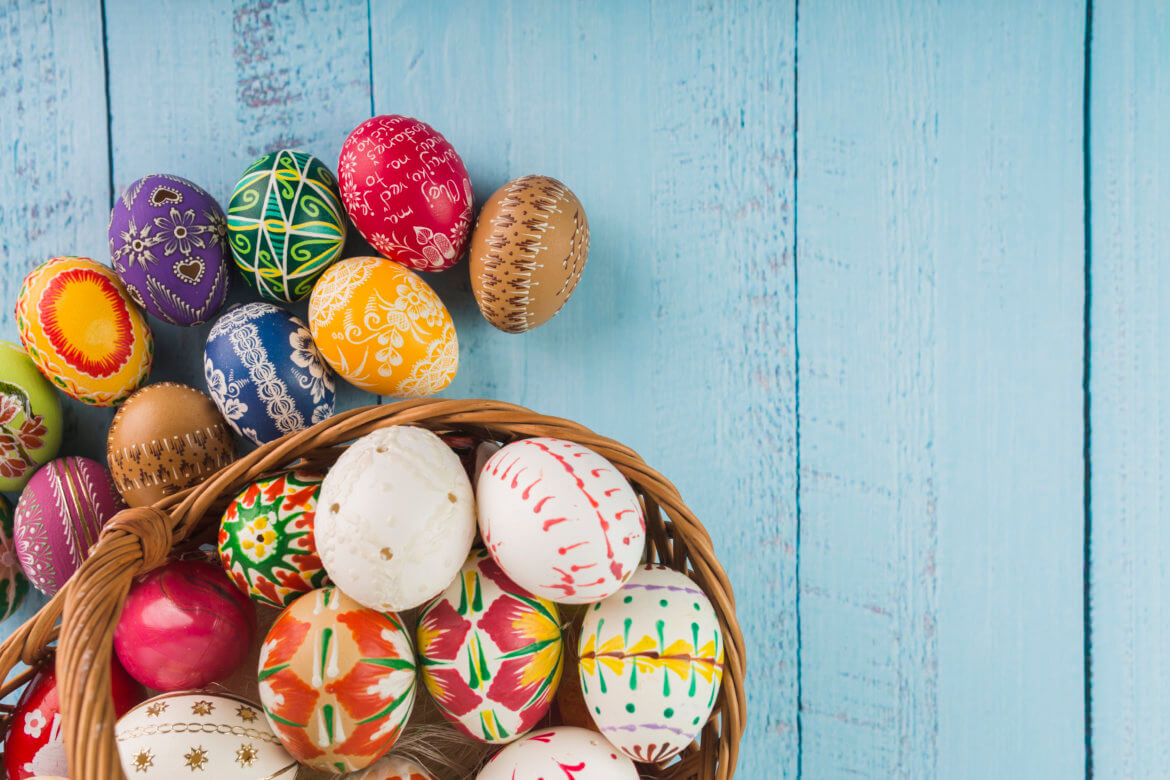
Easter symbols - the rabbit and eggs - are also attributed to pagan elements. It is believed that eggs and rabbits were seen by people in antiquity as symbols of fertility. Thus, as these peoples were Christianised, these elements were absorbed by the Christian feast. The tradition of decorating eggs and hiding them would have reached the American continent through German immigrants in the 18th century.

What will be your Easter in 2021?

Staying inside your bubble is much more comfortable for those who gloat over the sharing experience. The world is at a vulnerable time in terms of health, economics, politics, and so many other social weaknesses. The complacency and the selfishness of not perceiving the other, is called disunity, because in order to do something concrete, it is necessary to dispose of: structures, ideologies, proselytisms and also yourself. Now what is divided has to be unified.

With the pandemic, social differences broke out even more. The life of the population, especially the perception of the great problems that affect, above all, the poor people, who do not always have anyone to turn to in their suffering due to unjust situations. And it is known, a people that questions hunger, misery, violence, can awaken to think and act organic, besides to community.

This moment invites you to renew yourself. Be a new person. The self of human aid. The self of empathy and resilience. Regardless of belief, be someone’s Easter. Make your Easter different. Take the resurrection of your attitudes to the mountain: Denounce the violence against people, peoples and the creation, especially those that use the name of Jesus; Encourage justice to restore people’s dignity, to overcome conflicts and to achieve social reconciliation; Encourage engagement in concrete actions of love for the person close to you; Promote the conversion to a culture of love instead of a culture of hate; Strengthen and celebrate ecumenical and inter religious coexistence.

Let us keep the message of the Holy Pope in our minds and hearts:


“Behold, we are going up to Jerusalem” (Mt 20:18)
Lent: a Time for Renewing Faith, Hope and Love

0 comment
5 FacebookTwitterPinterestEmail

Thailand has had a fascinating history of unique “farangs” who came here to live and work throughout its recent history: Constantine Phaulkon - prime minister to King Narai of Ayutthaya; Jim Thomson - the American silk king of Thailand; billionaire William E. Heinecke - Head of Minor International, a huge regional conglomerate and Louis T. Leonowens - an early important English trader whose firm still exists as a major company, amongst others. However, the Japanese merchant warrior, Yamada Nagamasa, can easily take his place on this unique list.

Nagamasa was born in Otani, Numazu, Shizuoka, Japan in 1590. Supposedly he started his career as a palanquin bearer for the Lord of Numazu. He eventually became involved in Japanese trade activities with SE Asia when Japan officially authorised ships to trade outside the country. He settled in the Ayutthaya about 1612. Nagamasa had a spectacular rise while there under King Songtham. From 1617 and beyond he was the head of the Thai village inside of Ayutthaya called “Baan Yipun” (or Japanese village). This village had roughly 1,000 Japanese residents. It was run by a Japanese headman who was nominated by Ayutthayan authorities. The village’s inhabitants were a combination of several hundred Christian converts who had fled Japan following the religious persecutions of Tokugawa Leyasu and Toyotomi Hideyoshi. There were also Rōnin (unemployed former Samurai) who had been on the losing side at the battle of Sekigahara (1600) or the Siege of Osaka (1614-15) and other merchant traders.

The Japanese colony was very active in trade. The most important export to Japan were deer hides. In return, Japan exported silver and highly valuable handicrafts like swords, high quality paper products and lacquer boxes. The Japanese were in direct competition for regional trade with the Dutch East India Company’s (initials V.O.C.) monopoly based in what is now Indonesia. Nagamasa supposedly carried on business as a privateer from the period of about 1620. He was said to have attacked and plundered Dutch ships in and around Batavia (now Jakarta). After more than 12 years in Ayutthaya, Nagamasa went to Japan in 1624 on a trade mission. He sold a cargo of Siamese deer hide in Nagasaki. He remained in Japan until 1627. He departed with the simple status of a foreign ship without an official trading license. On his return Nagamasa rose from the rank of “Khun” to the elevated rank of “Ok-ya Senaphimuk”.

The Japanese colony also offered valuable military services to Ayutthaya. The King organised a group of Japanese military volunteers. Nagamasa supported the military campaigns of King Songtham as the head of a Japanese army. In 1628, his ships were carrying rice from Ayutthaya to Malacca. Nagamasa was arrested by a Dutch warship blockading the city on one journey, but once his identity became known he was immediately released. The Dutch knew Nagamasa was held in great respect by the King of Ayutthaya. They did not want to spark a diplomatic conflict. He was also a supplier of deer hide to the Dutch. They sought more of his trade.

However, Nagamasa’s luck finally ran out when he got in the middle of the successor war for the throne. King Songtham died in late 1628. The King entrusted Phraya Siworawong, or Prasat Thong, to be the regent to his son. Prasat Thong acted as “king-maker” and eventually executed both of King Songtham’s sons and anyone else who opposed his reign, usurping power. Once Nagamasa heard King Songtham had died he objected. Now King, Prasat Thong sent Nagamasa as the governor of Ligor (now Nakhon Si Thammarat) in 1630 to get rid of him.

A few months later Prasat Thong then had Praya Chaiya secretly poison Nagamasa. Then the new King sent an army of 4,000 soldiers to destroy the Japanese settlement in Ayutthaya. But many Japanese managed to escape to Cambodia. In 1633 several hundred Japanese managed to return and reestablished another residence in Ayutthaya. In 1634, the Japanese Shogun was informed about these problems and refused to issue official authorisations for trade ships to Ayutthaya. The Ayutthaya King was still desirous to retain Japan’s trade and sent a trade mission in 1636. But the Shogun rejected the offer and formal relations between the two countries came to an end until the 19th century. Japan then closed itself off from the world. The Dutch promptly stepped in to fill the trading void.

Nagamasa’s grave is now in his home town of Otani.

0 comment
0 FacebookTwitterPinterestEmail

by Masako Tsuruta

There are many cultural festivals in April and May in Thailand, China, India and Japan. Here are just some of them.

1: Thai and Indian culture

In April, there is the famous Thai New Year “Songkran Festival” in Thailand. This year Songkran falls on April 13-15th. The word “Songkran” comes from Sanskrit word meaning, “approaching”.

Thai vocabulary derived from Sanskrit

According to the Wikipedia, not only this word “Songkran”, but over half of the Thai vocabulary is derived from Sanskrit language in India. This clearly shows us that there are some strong cultural connection between Thailand and India.

Lists of Thai vocabulary derived from Sanskrit: adversary, air, animal, apartment, association, bay, blame, boat, building, bus, castle, cloud, company, computer, danger, desk, design, destruction, food, fund, Goddess, glass, grape, great, head, hell, hope, human being, king, intelligence, language, life, living, lion, live, long, loyal, moon, mosque, mountain, name, noodles, paper, perfect, picture, raspberry, review, saddle, science, snow, soap, special, storm, suffering, taste, teacher, temple, ten thousand, time, two, universe, violin, week, woman and you.

Mural of Ramakien at Emerald Buddha Temple (Wat Phra Kaew) in Bangkok

“Ramakien” means the glory of Rama, this originated from the Hindu epic “Ramayana”, and it places a very important role in Thai literature. Many Thai people knows this story, how Lord Rama was gracious, how Hanuman was brave, and how the evil king “Thotsakan” was full of jealousy, anger, and endless greed. Some part of this story can be seen on the mural at Emerald Temple. Thai King Rama II, rewrote this Ramakien version for Khon (Thai traditional performance) drama.

New Year Celebrations in April in India

Thai Songkran Festival falls on April 13th. In India, this day is called “Ugadi”, to celebrate New Year for Deccan region that includes State of Andra Pradesh, Maharashtra, Goa and Karnataka. There is a spiritual significance added according to Indian mythology. This is the day that Lord Brahma started his work, and Lord Rama returned back home after his 14 years of exile in Dandakaranya forest in India.

On April 14th is Tamil New Year in the state of Tamil Nadu, on April 15th is Bengali New Year in the state of Bengali.

Vesak (Buddha Jayanthi, Buddha Poornima)

Almost 95% of Thai are Buddhists. The founder of Buddhism, Gautama Buddha was born in ancient India (5th to 4th century BCE). In 1950 in Sri Lanka, during the first fellowship of Buddhists, “Vesak” day was declared to celebrate as the Buddha’s birthday. This holy day is called “Buddha Poornima in India, Wisakhbucha in Thai, Buddha’s Birthday in China, Hanamatsuri in Japan.

2: Japanese Festival between April and May

Between April and May, there are around 118 festivals in Japan. The most significant one is Kyoto’s “Miyako Odori”, Onbayashi matsuri at Suwa Nagano, Ohanami, Hanamatsuri, Asakusa Sanja Matsuri at Tokyo,

Miyako Odori

Miyako Odori, the showcase of Geisha’s dance and music public show started in 1872 in Kyoto. This rare Geisha’s annual public entertainment show can be only seen from April 1st till 23rd, 24, 27 or 30th. Advance booking and reservation must be done through official agents only.

Onbashira Matsuri

Onbayashi Matsuri is one of the top three unique Japanese festivals. This festival is done at the Suwa Taisha where people worship Japanese Shinto Gods of harvests, wind, water, and agriculture.

Ohanami

Ohanami simply means cherry blossom viewing in English. It started during Heian period, around 812AD among aristocrats and royal families. In 1598, the most extravagant ohanami was conducted by “Shogun Toyotomi”. After over a century and half passed, Japanese people still enjoys ohanami. Nowadays, people love to eat, drink Sake, and sing karaoke under and/or beside cherry blossom trees.

Hanamatsuri

This year May 19th is the Hanamatsuri day. English translation of this days is Buddha’s Birthday or Buddha Poornima. The first official ceremony of this day was conducted by Shotoku Taishi in 606AD, April 8th. The present, Japanese offer specially brewed tea over small Buddha’s statute that right hand points at sky, and left hand points at the earth.

Asakusa Sanja Matsuri

This is one of the three greatest matsuri (festival) in Tokyo, and the widest and largest one in Japan. It is held on the third weekend of every May at Asakusa, Tokyo. There are over hundred Mikoshi carried by Shinto Gods’ worshippers including small children and women.

3: Chinese cultural influence in Thailand

Many Thai are of Chinese origin. Nowadays approximately 14% of the Thai population can still speak Chinese. A span of over 200 years, Thai Chinese is now deeply rooted in Thai society. King Ram I, the founder of present Chakri Dynasty was of Chinese descent.

There are Teochew, Yunnanese, Hokkien and Hakka ethnicity groups in Chinese community in Thailand. Teochew people came via Gulf of Siam by boat and arrived at Chonburi and Samut Prakan. Many of them settled around Chao Phraya River in Bangkok. Hokkiens were good sailors and many of them settled in Southern Thailand including Songkhla, Satun and Phuket. Many big rice traders are Hokkien descendants. Hakka people are seen mainly in Chiang Mai, Phuket and central western provinces. Many private banks were owned by Hakka descendants. The most notable one is the Kasikorn Bank owning family. Yunnanese descendants are seen around Chiang Rai province.

Taochiao (fermented bean paste), soy sauce, tofu, Ba Mii, Khanom Jiin, Guay Chap, Guay Tiaw, Salapao, Khao Kha Moo were brought to Thailand by these Chinese ethnic groups.

Historical background

Ayuthaya was under Burmese’s attack from 16th century onwards. From 1766-1769, Emperor Qianlong in China sent his armies four times to subdue the Burmese army, but failed. In 1825, there were 230,000 Chinese lived in Thailand, that grew till 792,000 in 1910, approximately 12.2% of Thai population. Mainly these Chinese immigrants were men, and later they married to Thai women. Their children were called Shino Thai or Luk-Jin in Thai. In the early 20th century, many Chinese women immigrated to Thailand. From 1882 to 1917, around 13,000 to 34,000 Chinese from Southern China entered to Thailand yearly. Most of them settled in Bangkok. By 1970, more than 90% of Chinese born in Thailand, abandoned their Chinese citizenship and obtained Thai citizenship. In 1975, diplomatic tie between China and Thailand was established.

Chinese New Year

This year, the Thai Government officially announced Chinese New Year as an official holiday in Thailand.

Qingming Festival on April 4th

Qingming (ancestor’s day) normally occurs around April 4 to 6th, that is, the 15th day of the Spring Equinox. This day is designated for cleaning and sweeping graves and for worshipping ancestors by offering food and burning incense. Qingming is a public holiday in China.

Qingming (ancestor’s day) normally occurs around April 4 to 6th, that is the 15th day from the Spring Equinox. This day is designed for cleaning and sweeping the graves, and for worship ancestors by offering food and burning incense. This Qingming is a public holiday in China. Qingtuan (green dumpling made of glutinous rice and barely grass, filled with red or black bean paste) is the famous food to be offered.

Water splashing festival in Xishuangbanna, China

April 13 -15th is the water splashing festival days for Dai ethnic minority in China. It is very similar to the Songkran festival in Thailand.

Thai Chinese Business Entrepreneur

Many Thai Chinese has well established business, and representing all levels of Thai society. Today, we can say that they lead a prominent role both in business and political sectors in Thailand.

0 comment
0 FacebookTwitterPinterestEmail

Nepal is a place associated with the distant and the incredible. I’ve always wanted to return to this mysterious country if not for this pandemic which made it impossible to travel. I can still remember the thousands of visitors who savour the spirit of Nepal each year going home laden with things considered “Nepalese” - religious objects, antiques, carpets, pottery, embroidered clothing, gems and silver. You can see the excitement on their faces as they carry their amazing finds.

It was closed to autumn when we visited, so you can just imagine the cool weather condition. Even during summer time, the weather is unpredictable and it varies considerably with elevation. Looking at the photos we took then, the skies were clear and sunny, temperature range from warm in the lowlands to crisp in the mountains. We stayed a week so we ignored the weather and just seized the moment and enjoyed its mystique.

Nepal’s splendour will forever be registered in your mind. As you walk through the roads and alleys, you experience the intense culture of the Hindus and slowly submerge into the quiet serenity of the Buddhists. The practice of religion in Nepal is a mixture of Hindu and Buddhist ways of life, which the Nepalese have merged. These beliefs are evident in their art as well as their surroundings.

Wandering into the heart of Kathmandu, up and down narrow alleys and passages, you pass little shops and old houses with intricately carved window frames. The shops sell thangkas (religious paintings) and shawls made from pashmina in different colours and quality. Their appearance startling in the dusty dimness. Every lane seems to lead to a little square. Soon you’ll find roving in Durbar Square encircled by gilded spires and domes of countless temples. I hate to think of the recent fire that gutted many houses, stores and temples in Kathmandu. I can just imagine the elaborately carved windows, pillars, domes and beams destroyed by the fire. Looking back, Durbar Square is an amazing sight. Every corner shelters a shrine which houses a God such as Ganesh (the elephant headed God) or Hanuman (the monkey God); carved on the side of a phallic representation of the Hindu God, Shiva is Buddha.  All around, pigeons flutter from rooftop to rooftop.

About thirty minutes from Kathmandu is the city of Patan. It offers a feast of diverse temple styles. The maze of temple shrines, small stupas and stupas, grinning Gods and Goddesses all intricately carved and ornamented give pleasure to the eye and bewilder the mind.

As you explore the Pashupatinath Temple area, you are surrounded by vendors selling all types of wares - from bangles to beaded necklaces with yak bone pendants to musical bowls. Swarming the temples are sadhus, Hindu holy men. Their bodies covered with yellow powder and ashes, they perform a myriad of self- mutilating feats as they go about their day to day existence. Saddhus have chosen to give up their material lives and walk about meditating in search for inner peace. They wander barefoot across the country on pilgrimage, receiving their sustenance from generous people.

At Bodnath Shrine stands the largest and most important stupa outside of Tibet. It sits on a flatland with the Buddha’s eye painted on four sides. These eyes seem to follow and watch your every move. Buddhists come from all over the world to visit this predominantly Tibetan shrine. Chanting can be heard from as far as five hundred metres reverberating around the site, adding to the feeling of peace that envelops the place. Colourful prayer flags have been strung by pilgrims. Even more fascinating than the impressive structure of Bodnath are the calm, spiritual people who throng to this temple.

At Nagarkot which is 2,195 metres above sea level with a magnificent panoramic view of the Himalayas, a splendid full moon covers the entire valley below. It’s breathtaking especially in the morning is the cleansing breeze, accompanied by chirping birds and the aroma of wild and yet delicate flowers.

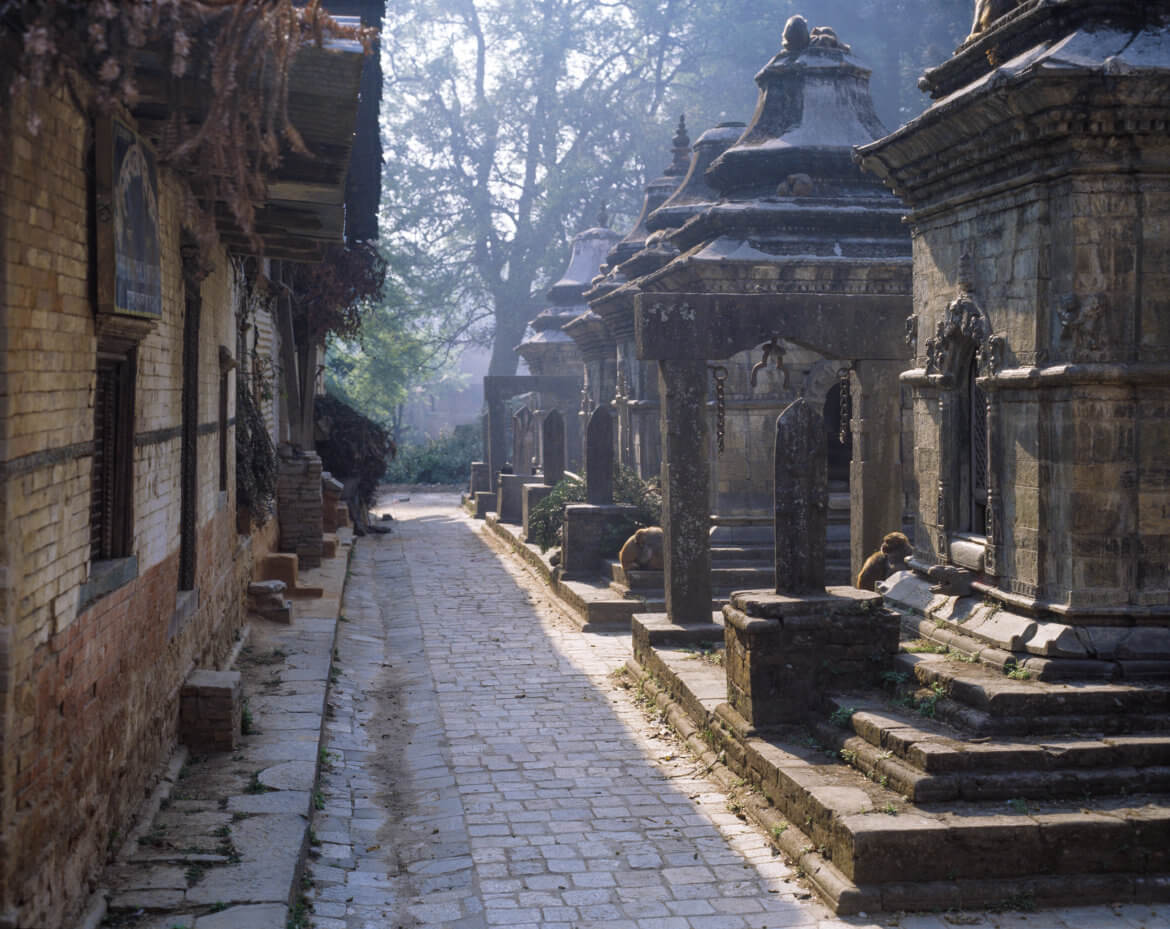
Golden yellow mustard flowers fill the fields around Bhaktapur. Walking the village streets paved with bricks and cobblestones, is quite an adventure. Black eyed children peering from window smile sweetly as I pass. Men are seen sitting or chatting quietly with each other while the women are working so hard gathering wood for cooking or carrying large baskets of ripened fruits and vegetables. I see an older woman bent over almost touching the ground, carries a load of dried twigs and a younger woman driving a flock of goats.

It is a long zigzag and dusty road inside the village but it is worth it. There are woodcarving shops, you can appreciate the intricate window frames, so different from the ones found in other parts of Asia. You can appreciate the warm and friendly people. Their faces show no sign of bitterness because of poverty, instead they seem to be happy and content.

0 comment
0 FacebookTwitterPinterestEmail

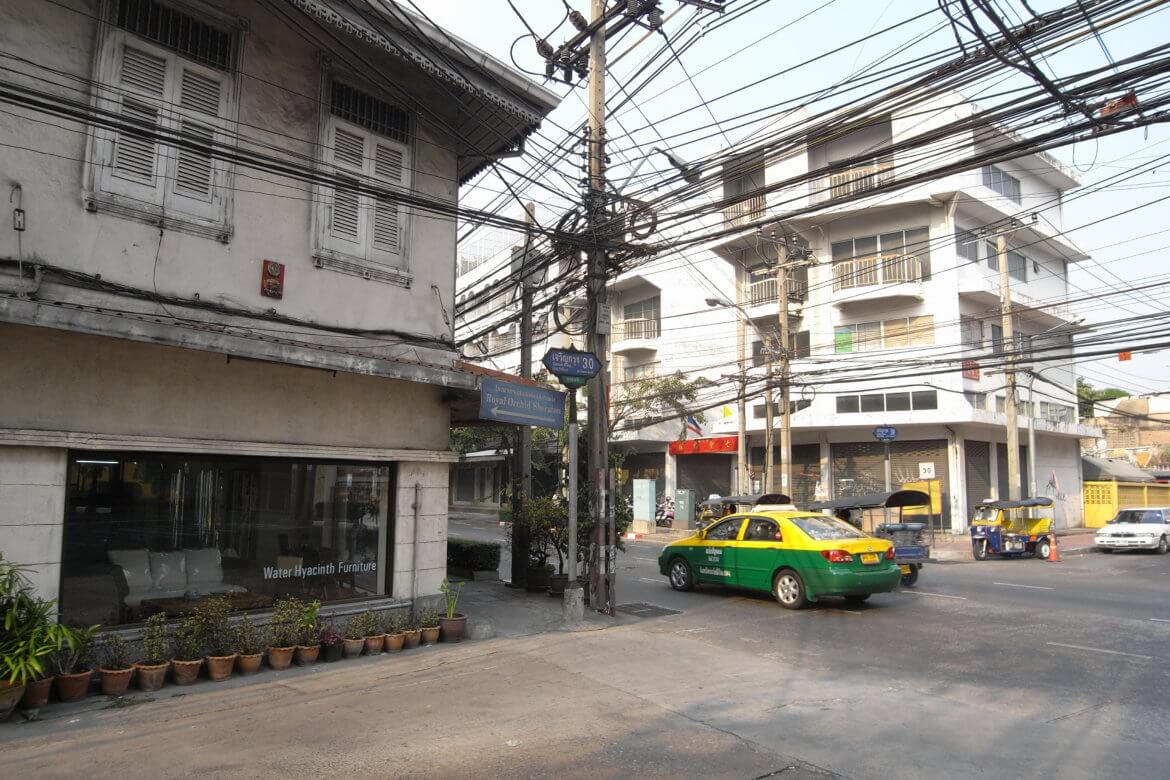
It is fascinating that up to a dozen Thai Thanons (or avenues or streets) and Sois (lanes) have been given ‘farang’ nicknames. At least one, Henri Dunant Road, was given a name change back in 1965 (formerly known as Thanon Sanam Ma), but the several others include Soi Bearing (actually Behring or Sukhumvit Soi 107), Rue de Breast (Thanon Charoen Krung Soi 36), Wireless Road (Thanon Witthayu), New Road (Thanon Charoen Krung), Soi St. Louis (off of Thanon Sathorn), Soi La Salle (Sukhumvit Soi 105) and Soi Nana (actually it is the name same in Thai since Nana is an Indian family name, the family owns all of the Nana area and beyond), Soi Cowboy (off of Thanon Asoke) and Captain Bush Lane (Soi Charoen Krung 30), is perhaps the earliest ‘foreign’ nicknamed thoroughfare here.

Sir John Bush (1819-1905), an English sea captain commonly referred to as Captain Bush, was actually an Admiral in the Siamese Navy. He was very influential in the development of Bangkok as an international port. He served during the reigns of King Rama IV and King Rama V and commanded several Royal Siamese vessels. Captain Bush also managed the Bangkok Dock Company and served as Bangkok’s Harbour Master, a very important position at the time. The Soi where he used to reside is named in his honour.

Captain Bush Lane is noteworthy in early Bangkok history for its concentration of important expatriate businesses, buildings and residences either on the lane or in the immediate area from the mid-19th to the early 20th century. Early in the 19th century there was little more than a small Chinatown in the area, Charoen Krung Road was just an elephant track through the jungle. The first Thai building in the immediate area was a Buddhist temple called Wat Kaeo Fa. The first foreign structure built was the Portuguese Embassy, the oldest diplomatic residence in Thailand. It was first established on the site in 1820 on land granted by King Rama II. With the signing of the Bowring Treaty, then foreigners started flooding into Thailand. Numerous legations and consulates were established in this area. Business started to flourish as trade quickly expanded.

Charoen Krung Road, the first paved road in Thailand, was opened in 1864 to serve the expat and Chinese communities. In 1888 Captain Bush Lane was built. Along with several European expatriates, consular officials and Captain Bush, all resided on the Soi. Also in 1888 part of the Wat Kaeo Fa temple grounds were used for the first foreign bank here, The Hongkong and Shanghai Bank. This operated out of the old Customs House building. In 1890, it relocated to a permanent office on the mouth of Khlong Phadung Krung Kasem. That building lasted until 1977 when it was demolished to make way for the Royal Orchid Sheraton Hotel.

Also on the temple grounds was the United Club built in 1888. It was an international expatriate social club for Western expatriates. Its members included British, German, French, and American nationals. The club was described as having a large well laid out area with billiard rooms, card tables, a reading room, tennis courts, a bowling alley and dining facility inside the building. But in 1903 the British Club members split off due to some unremembered dispute to form their own social organisation called the British Club.

The Southern plot of the temple grounds was rented to a French beverage company called Societe Française des Distilleries de l’Indochine. This firm constructed an office building, later to be called House No.1, sometime between 1907 and 1925. It was built of masonry and load bearing walls. It was a two storey building done in neo-classical style with tiles on the first floor and teak wood on the second floor. It had a hipped roof with diamond shaped tiles over a timber frame.

The Northern plot of the temple grounds was rented to the Louis T. Leonowens Company, Ltd. They built offices and warehouses. One warehouse, next to House No.1 was probably constructed between 1907 and 1913. This structure is now the only remaining building left from the company’s ownership.

In 1898, the foreigners living in the area sent in a letter of complaint about the stench coming from the temple due to its service as a cremation ground and pig sty. An official investigation was ordered, and the temple eventually was relocated.

Captain Bush Lane is colourful reminder of the early past foreign influence on Thai history.

0 comment
0 FacebookTwitterPinterestEmail