Travel and Leisure

I recently had an opportunity to stay at the apart hotel Chatrium Sathorn. It is a classy fronted property with a The Coffee Club within its long fascia to the left.

The concierge took my bags and the check in was simple and painless. I was staying for 3 nights but some residents stay 3 years and more!

The GM told me that roughly 25% of their rooms are for long stay residents. They charge just under the Sathorn quarter rate to attract the business. They have Japanese businessmen, teachers from international schools, Thai and international business people and many that stay in BKK and want the facility of a full hotels services.

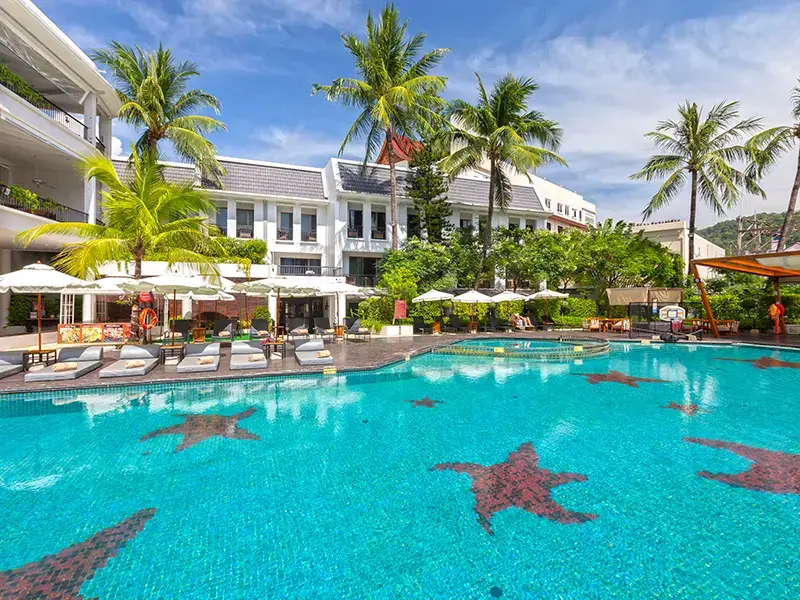
There is an oasis of a swimming pool in mature well kept gardens and 7 towers that surround it.

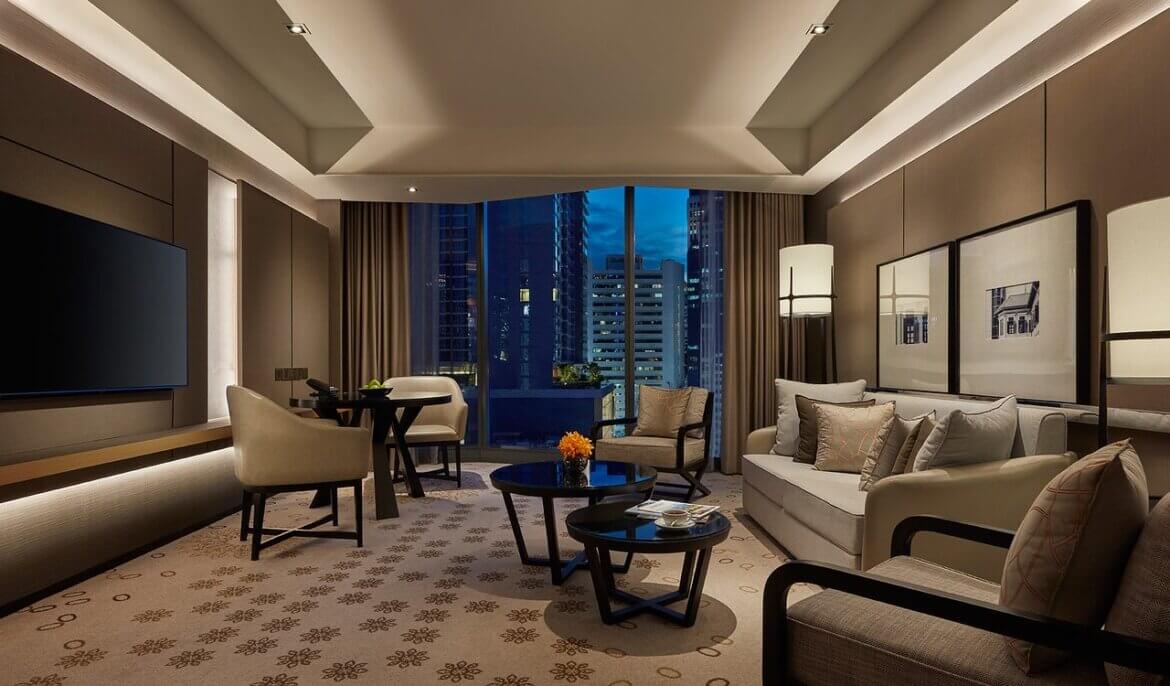
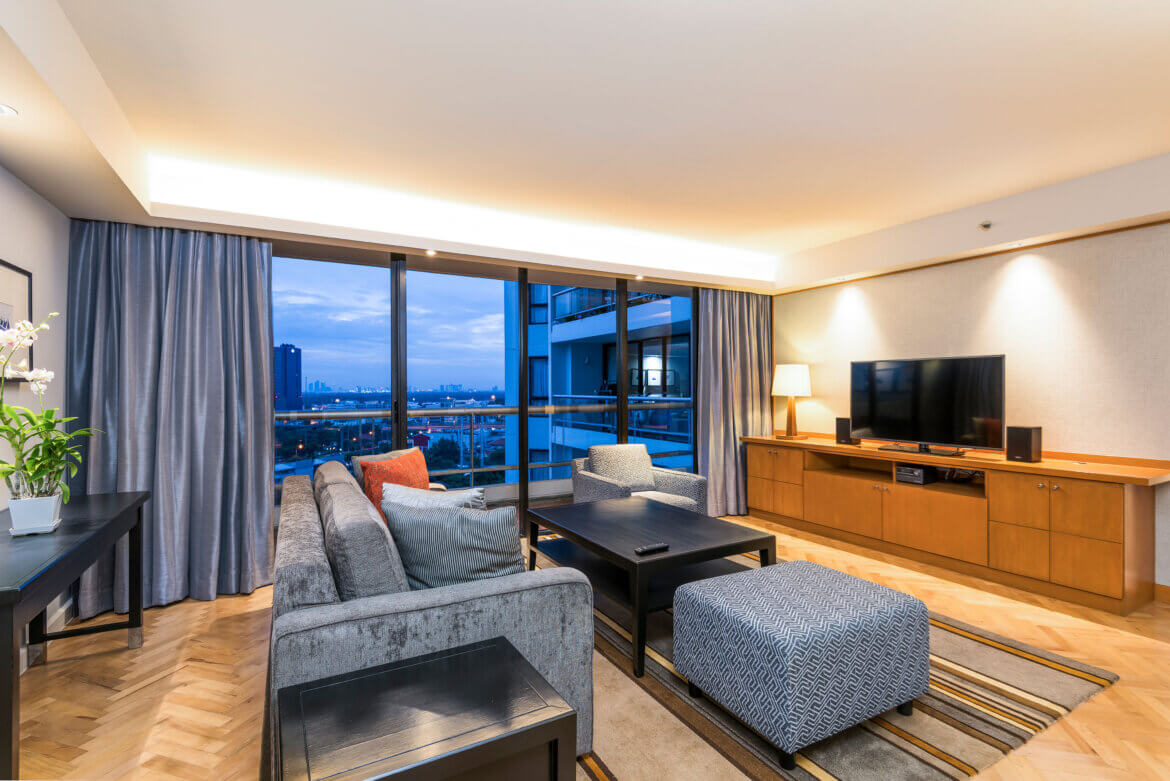
There are one, two and three bedroom suites. Enough to house a family! Each room comes with a bedroom, bathroom, terrace and a fully fitted functioning kitchen. I was just passing through but even I found the kitchen a valuable asset even though I was only there 3 days.

In terms of catering they serve a varied and wholesome quality breakfast. The have a signature Spanish restaurant, Albricias, an a la carte al fresco restaurant and bar Flow overlooking the swimming pool serving food and drinks all day. And of course all day dining in the Coffee Club so you are not going to go hungry although I saw food delivery boys everyday there bringing food in constantly.

There is a very large and well equipped Fitness Centre on the 4th floor for those wanting to keep up their fitness regime, with personal trainers and a variety of fitness classes throughout the week.

Try it next time you are in the central business district:

Chatrium Residence Sathon Bangkok
291 Naradhiwas Rajanagarindra 24,
New Sathon Road Bangkok 10120
T: 02 672 0200 . F: 02 672 0190
E: [email protected]chatrium.com,www.chatrium.com

0 comment
0 FacebookTwitterPinterestEmail

Pinch a couple of pics from the internet to accompany please?

I had to stay in Bangkok recently and where better than the Hyatt at Nana BTS. Your feet don’t even have to touch the sidewalk if you arrive from the BTS as there is a skywalk into the hotel. By car there is a spacious multi storey car park and they will even park your car for a small gratuity. Although you don’t need it as the lift delivers you into the heart of the hotel.

The staff never fail to impress which I am sure comes from the top - the GM. They are polite and efficient, from the check in staff to the restaurant staff and the food there is just wonderful. Breakfast has an international buffet that serves everyone’s palate. The restaurant then becomes Khao for lunch and dinner which serves the finest Thai fare that you will find.

On the rooftop they have Spectrum which offers stunning views and you can either join in upstairs with the DJ and trendy cocktail bar or sit on the lower terrace which offers intimate lighting and attentive staff. They also have a full a la carte menu up there so whether it’s group nibbles or a business meeting they have it covered.

The rooms are just splendid from the comfortable beds with crisp white sheets and fluffy towels to the bathrooms which offer every amenity.

This really is up there to be challenged in Bangkok in my impression.

Hyatt Regency Bangkok Sukhumvit. 1 Sukhumvit Soi 13 (BTS Nana) Bangkok, 10110 Tel: 02 098 1234

0 comment
0 FacebookTwitterPinterestEmail

Just 88kms, 75 minutes south of Hua Hin on highway Number 4 there is a discreet sign for Tolani Resort Kui Buri. An oasis of calm on a quiet, clean beach in Prachaup Khiri Khan on the coast of the Gulf of Thailand. The hotel is a “boutique” style resort with individual villas and when I stayed there it was surprisingly busy and seemed popular with Thai guests with their pets - dogs and cats. The accommodation and service was to a high standard and this would be the ideal place to get away from the hustle and bustle of everyday life.

Like a phoenix rising from the ashes Tolani Resorts is casting off the shell of past brands, X2 and Cross Hotels, and now has 11 privately owned hotels at the core of its future operations. Kui Buri, Pranburi, Koh Kood, Samui, Chiang Mai, Khao Yai, Bangkok and Patong all have hotels.

15 years ago Anthony MacDonald, an Australian with a flair for hospitality, and his Thai lady wife Khun Kaewjai Phaoenchoke, Group CEO ThaiRung Partners Group, helped introduce the boutique hotel concept in Thailand. The company grew rapidly with Thailand’s popularity as an exotic tropical destination and their resorts introduced new levels of hospitality.

They grew the company and then sold out to Flight Booking International from Australia.

Many business people would have called it a day but after selling out but not this hard working duo. Whilst they have various other business interests Khun Kaewjai Phaoenchoke is now set to build it all again under the name of Tolani Hotels and Resorts and she is aggressively targeting growth in offering “serviced management contracts” to third party hotel owners.

This is certainly one to watch for the future as they hungrily grow their group through acquisitions, launches and taking on management service contracts.

0 comment
0 FacebookTwitterPinterestEmail

Far from the madding crowd

I stayed at the Siam Movenpick Jomtien last week and was pleased to see that my favourite hotel in the Chonburi province is still popular despite the endemic, the low season and lack of international guests. It has become a favourite with Thai visitors.

This 5 star Movenpick branded, Accor managed hotel has always been a favourite of mine, as I see it as “far from the madding crowd” of downtown Pattaya. Preferring peace and quiet as averse to late night entertainment it looks out to the islands in the Gulf and is a delightful family destination. The huge swimming pool leading to the ‘cleaned every day’ beach has a Waterpark which is always popular with the little ones and has a varied selection of water sports in a safely cordoned off area. It was, as ever, a pleasure to watch Thai parents entertaining their children and to see and hear their excitement unveiled.

The rooms are simple but luxurious, well equipped and all rooms look out to sea and offer the most wonderful sunsets. The catering outlets are well staffed and serve first class fare. I was alone so I did not eat at the signature T55 New York Grill restaurant but have enjoyed many excellent meals there before.
Let’s Relax the only publicly quoted Thai spa and massage specialists now provide the excellent “pamper” services on site. 
Highly recommended for a short or long stay as there is just no need to leave the complex. 
Mövenpick Siam Hotel Na Jomtien Pattaya | 55 Moo 2, Sukhumvit Road Km. 156.5, Na Jomtien, Sattahip | Chonburi | 20250
033 078 888
0 comment
0 FacebookTwitterPinterestEmail

I recently reacquainted myself with one of Pattaya’s finest 5 star hotels. This prime hotel site is located between Beach and Second Road alongside Royal Garden Shopping Mall with all its shopping and family attractions.

The hotel was busy despite being low season and I saw, and heard, several American, Middle Eastern, European, South Korean, Japanese and Indian visitors, along with the normal high volume of Thai guests.

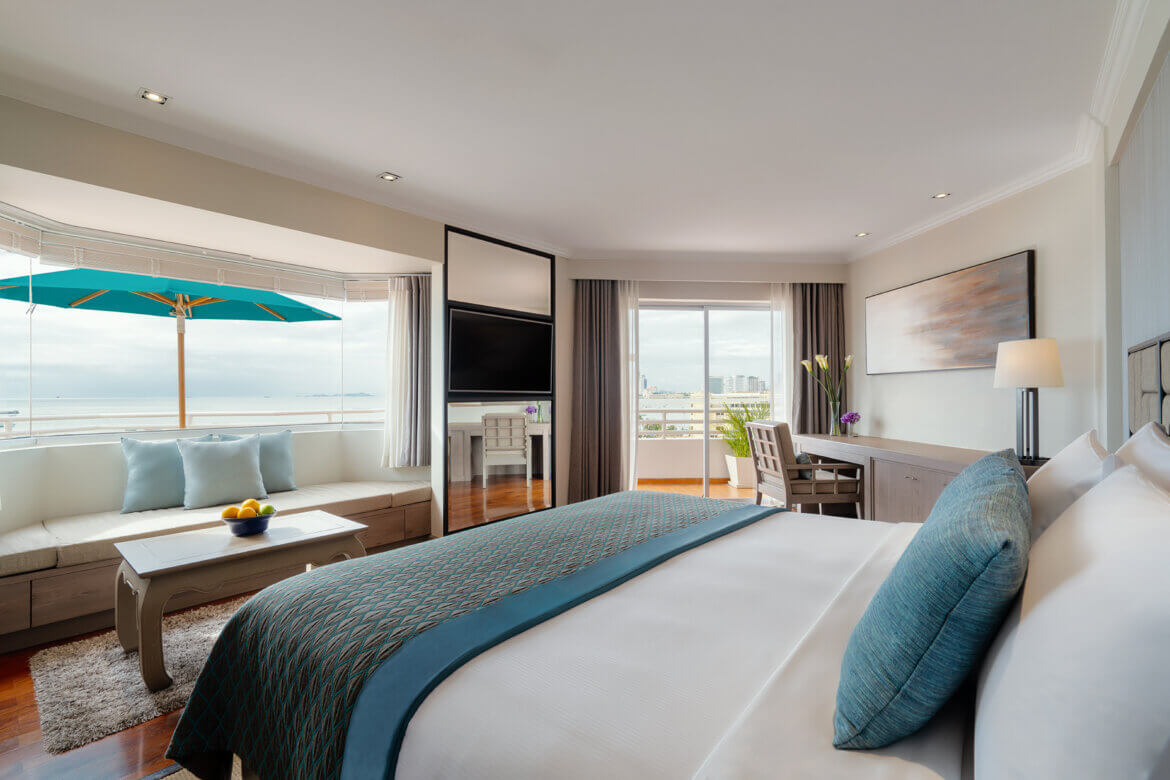
My room had a balcony that overlooked the verdant, mature gardens, beautifully manicured with many frangipani trees, the swimming pool, and out across Pattaya bay, ever busy with pleasure boats. My bed was so comfortable that I had trouble getting up each morning! The room and bathroom were well-equipped for a short or long stay.

When I did manage to extricate myself from my bed and stumble down to breakfast, the buffet was extensive and catered to all of the differing visitors palates. The team was efficient and attentive. Unfortunately, I didn’t get the opportunity to try the famed Benihana Japanese Steakhouse, as I was travelling alone, but know very well how excellent the food and entertainment is. I did however, visit The Pantry - great cake! and Dicey Reilly’s Restaurant & Bar. They were both popular and served delicious fare.

0 comment
1 FacebookTwitterPinterestEmail

A brief introduction to the cultural background of Israeli food

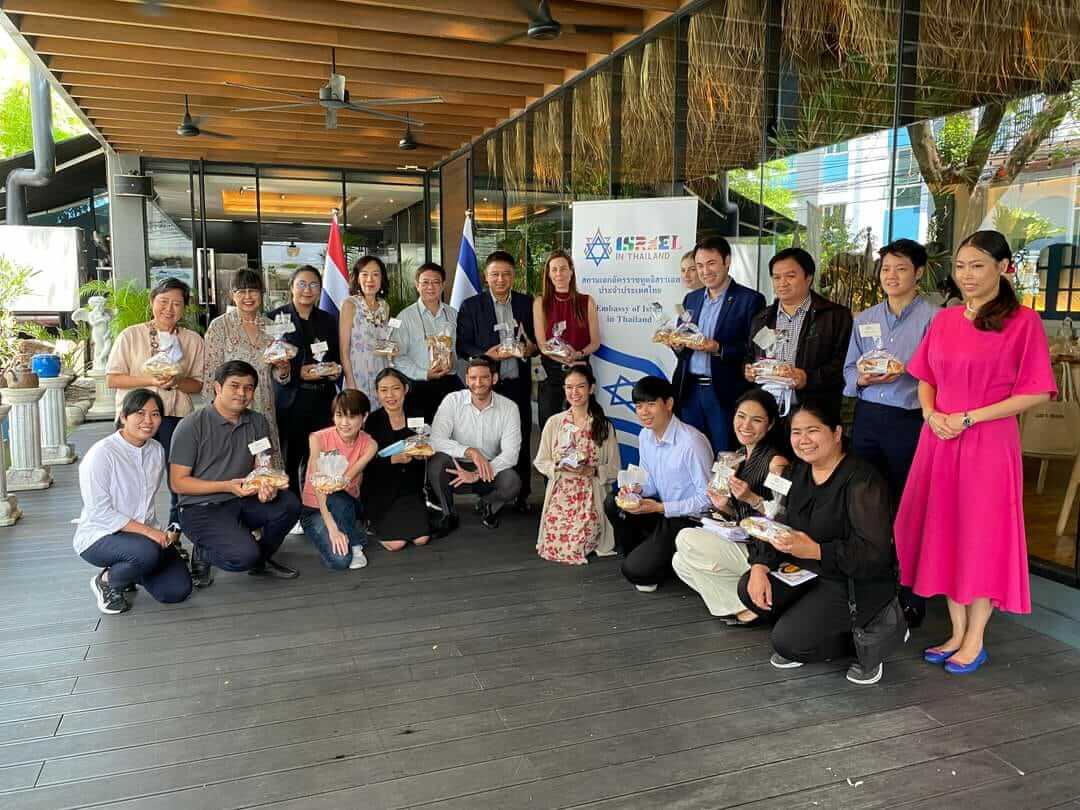
The Embassy of Israel recently hosted a cooking workshop under the theme “Israel’s diversity: Stories behind the dishes”, introducing the many Israeli communities through their unique culinary traditions. The event took place at the newly opened Helena Restaurant in Sukhumvit Soi 51. 
 
The Jewish nation has a long history of thousands of years, though the State of Israel was established only in 1948. At the establishment, the population of the young country was about 800,000 people, 650,000 of them were Jewish, and the rest were Muslims, Christians and other minorities.
 
Since the establishment of the State, waves of Jewish migrations have arrived from all over the world, the biggest waves being from Iran, Iraq, Yemen, the former USSR, Turkey, Syria, Ethiopia, Morocco, Tunisia and Europe. By 2022 the population of Israel reached 9.5 million people, about 74% of them are Jewish. The migration throughout the years has created, not only a very diverse population, but a blend of many of these cultures. That diversity is reflected very well in the Israeli cuisine, which is a mixture of various dishes from different origins, as well as new fusion dishes.

In the workshop, participants learned how to make several dishes which originated from other countries and are part of the Israeli cuisine, such as Challah, Shakshuka and Falafel. The workshop was followed by lunch comprising more than 25 Israeli dishes, showcasing the various flavours and colours of Israeli cuisine.

Ambassador Orna Sagiv explained to the audience, “The diversity of Israel’s population is quite unique, compared to most countries which tends to be more homogeneous. This diversity presents many opportunities and plays a major role in the development of the young country. The various flavours of the Israeli cuisine, as well as the new fusion food, combining the different ingredients, is a manifest of the “melting pot” Israel became for these various cultural groups. In today’s workshop we tried to share this aspect of our culture with the Thai media, in a fun and delicious way.

Hopefully, through a better understanding of the Israeli culture this will be another bridge for stronger Thai-Israeli relations.”

0 comment
0 FacebookTwitterPinterestEmail

Le Méridien Bangkok is welcoming the world back to Thailand’s vibrant capital city following an extensive refurbishment that has elevated every aspect of this stylish, art inspired hotel.

Nestled in the beating heart of Bangkok, surrounded by the restaurants, bars and nightlife of the Silom district and connected by Sala Daeng BTS and Sam Yan MRT stations, Le Méridien Bangkok puts guests in the heart of the action. With Bangkok now welcoming international visitors without any travel restrictions, guests can discover a new era of revitalised guest rooms and dining concepts that take inspiration from Bangkok’s treasure trove of traditions, artistic culture and upbeat urban vibe.

Definitive first impressions are created by the new look lobby where the iconic I-Jud giant white dog statue awaits with a playful welcome.

Marriott International Hotel

The refreshed and fabulous guest rooms are built with ergonomic design and modern amenities, such as touchscreen IP phones, LED Smart TVs and Bluetooth speakers. The rooms are complemented with comfy sofas, big floor-to-ceiling windows, extra long working desks with a number of electrical outlets for all business travellers, deep soaking tubs and separate rain showers to create a deep sense of calm. With striking views of the city from street to sky, these refreshed rooms set the stage for immersive urban adventures.

Marriott International Hotel

At Latitude 13 Indoor, à la carte local and international snacks and shareable dishes are available throughout the day. Signature items range from bomboloni sweet sensations to savoury crostini. Outside visitors are welcomed to take advantage of the friendly outlet in the lobby as a casual meeting places throughout the work.

Marriott International Hotel

Surrender to savoury succulence at Rolling Ribs Brew Bar & BBQ, where taste buds are treated to combos of ribs, pulled pork, beef brisket, chicken and more, accompanied by a selection of side dishes such as tangy coleslaw and barbecued corn on the cob, and washed down with signature cocktails straight from the wild west. A must try place for lovers of American style BBQ which gives the feeling of “TGIF feeling”!

A brand new bar, Tempo, sees mixologists embrace a Japanese attitude and use local plants and herbs to craft high end cocktails. Latest Recipe, the international culinary marketplace, enhances every dining experience with two tempting promotions. “La Cantine” is the restaurant’s brasserie style alter ego, where diners can come and unwind during the day with mouthwatering Euro-centric menus, from giant spinach ravioli and lobster tortelli to Merlot seafood soup, braised beef shin, roasted sea bass and more. Pick from quick two, three or four course set lunches every day from 12:00 to 14:30, priced at 390B, 490B and 590B net respectively. À la carte options are also available. Then in the evening, “Creative Hour” offers 120 minutes of free flow drinks and luxurious light bites between 19:00 and 22:00 hrs, priced at just 950B net per person!

Inspired by the rich traditions of European spas, SPA by Le Méridien breaks away with refreshing interpretations reflecting the sophisticated ways of today’s international travellers. Seven treatment rooms are configured in circles to represent the global meridian from which the brand derives its life force. All treatments and therapies seek to achieve purification, restoration of natural energy, and mind and body harmony.

To celebrate the return of refined European hospitality to Le Méridien Bangkok, guests and local residents are invited to explore “Au Soleil by Le Méridien”. Allure yourself with afternoon tea, spa treatment and many more initiatives under Au Soleil theme at Le Méridien Bangkok

For more information and reservations, please contact 02 232 8888 or [email protected]
Website: www.lemeridienbangkoksurawong.com
Facebook: www.facebook.com/LeMeridienBangkok
Line: @lemeridienbangkok

0 comment
0 FacebookTwitterPinterestEmail

Grande Asset Hotels and Property PCL has partnered with the Amatara Wellness Resort to establish a seaside estate atop a mountain that offers opulence with a holistic wellness experience. Overlooking the Gulf of Thailand and the islands in Rayong province in the Eastern Economic Corridor area, the Amatara Residences Rayong is positioned as a new destination for world-class wellness-centric living that is friendly to the environment.

A new era of ethical living begins at a prime location of Thailand’s famous beach in Rayong as the Amatara Wellness Resort combines a right mix of wellness and luxury.

“The project responds to the growing trend of luxurious, healthy living that is strengthened by environmental awareness”, said Mr. Pheeraphon Nonthasoot, Executive Vice President Sales and Marketing of Grande Asset Hotels and Property Public Company Limited, Thailand’s leading real estate developer.

Amatara Residences Rayong consists of 61 pool villas, 282 condominium units and 209 5-star resort-style quarters. The estate’s common facilities include, among others, the Infinity pool, exclusive restaurants and Ocean Sky Bar which complement the lifestyle and creating a superior experience for its selected residents.

The project’s latest progress sees the completion of the first nine luxury beachfront pool villas which have featured contemporary Thai style based on the traditional architecture. The villas and facilities are designed to create a seamless harmony with the nature, such as the use of natural light and organic materials with state-of-the-art technologies thrown in to enhance the quality of life of residents.

In addition, the initiative offers wellness benefit programs, top-notch workshops, and leisure activities which are geared towards promoting contacting with the nature among people of all ages, from children to seniors, so that they have had a variety of different life experiences. Its ultimate goal is to enable every resident to find their own way of being physically, mentally and spiritually healthy.
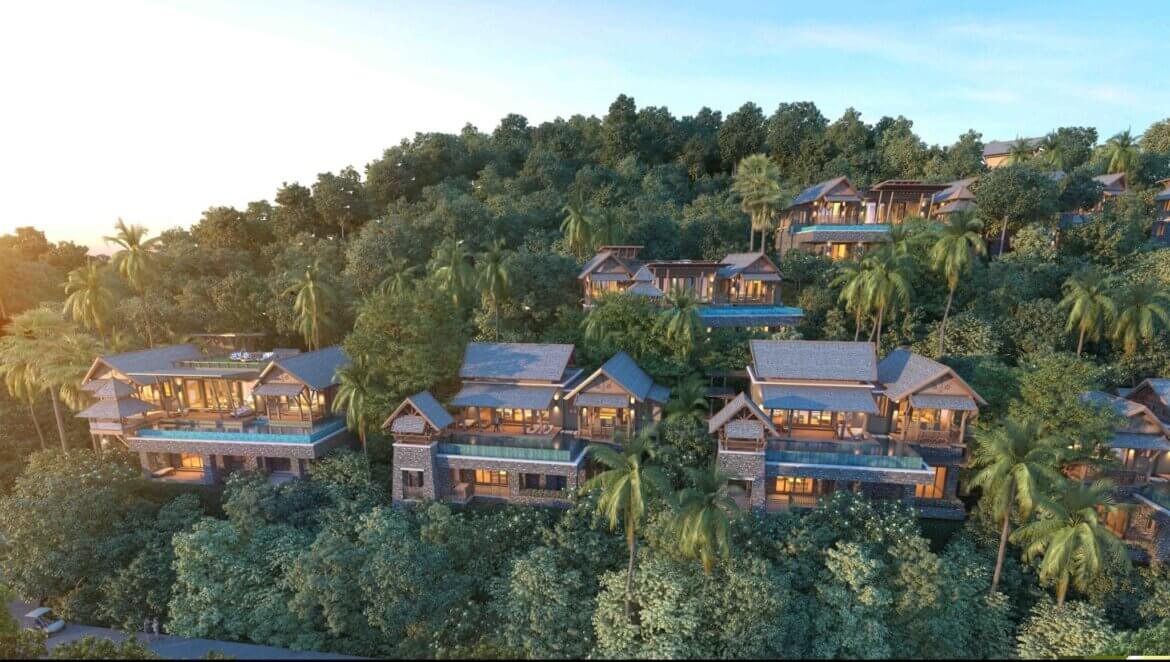
One of the most outstanding features of Amatara Residences Rayong is its ideal location. It is situated in the Eastern Economic Corridor (EEC) where extensive infrastructure and facilities are being developed. A new transportation network is also under development to turn the EEC into an important economic centre and technology hub for Thailand and the ASEAN region in the future. Those developments will further transform Rayong as a prime location that attracts people to come to work, doing businesses and live. That will make the Amatara Residences Rayong even more prominent as an estate of choice for them as well.

In addition, the collaboration with Amatara Wellness Resort, a well-known health resort brand from Phuket with outstanding wellness services through natural methods, has strengthened the estate’s attractiveness as a wellness destination.
The collaboration between the two reputable leaders in their respective fields enables Amatara Residences Rayong to offer a unique experience and superior living with holistic wellness services — a global trend in new housing development. Amatara Residences Rayong will help elevating Thailand to become the world’s leading health tourism destination.

Mr. Pheeraphon Nonthasoot, Executive Vice President Sales and Marketing of Grande Asset Hotels and Property Public Company Limited described the Amatara Residences Rayong as an opulent place in the midst of serenity.

“It lies on the coast in a prime location tucked away in the midst of nature and fertile mangrove forests surrounded by more than 50,000 well-preserved plants. The project also has various systems in place to take care of the environment around its site. For instance, there is a system for treating rainwater for use in the project, and a wastewater treatment that takes effluent upward into the top drain to prevent the release of wastewater into the sea.”

Living quarters of Amatara Residences Rayong come with sea views, the private infinity pool, spacious living room, fully fitted kitchen and dining area. In terms of services, the project provides private parking and security, premium assistance services such as 24-hour concierge services, maid service, bellboys, butlers and buggy drivers. All of these will allow residents to take their lifestyles to the next level of peace, contentment and comfort.

Amatara Residences Rayong is easy striking distance of Bangkok, only 180 kilometres from Bangkok or about 2-hour drive. Alternatively, it can be reached by air with the U-Tapao Airport 77 km away. Units at Amatara Residences Rayong are priced from 33 million baht. For more information, call 095 575 9999.

0 comment
0 FacebookTwitterPinterestEmail

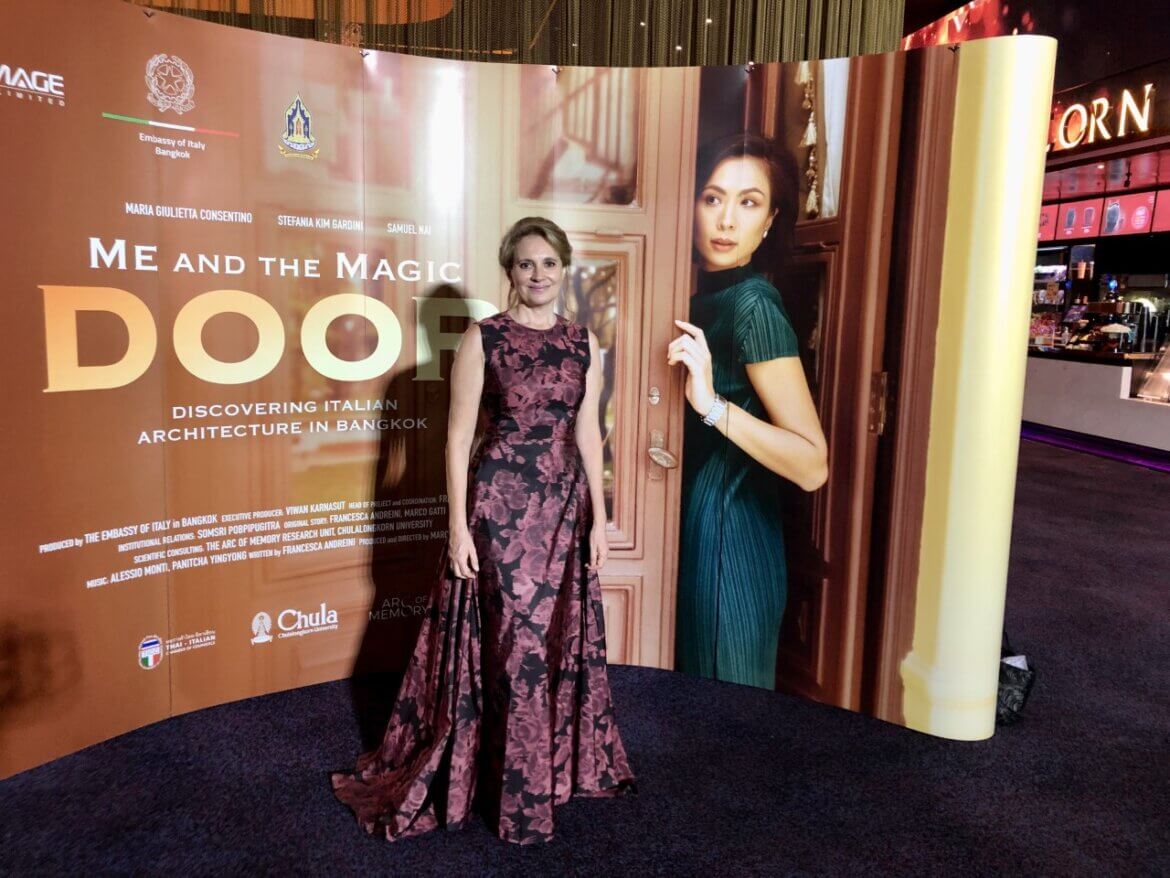
“ME AND THE MAGIC DOOR - Discovering Italian Architecture in Bangkok”, a documentary film, was recently released by The Embassy of Italy in Thailand, together with the Thai-Italian Chamber of Commerce and Max Image Co., Ltd., with the aim of promoting artistic and cultural cooperation among Italy and Thailand.

The documentary unfolds from the perspective of Fai, a Thai-Italian character who travels to Thailand to write an article about the Italian cultural heritage in Siam. The audience can follow Fai’s journey and her discovery of many iconic places such as Ananta Samakhom Throne Hall, inside Dusit Palace, Baan Norasing (Government House), Baan Phitsanulok and several other impressive buildings created by Italian architects and decorated by Italian artists, under the guidance of Thai personalities of the time, during the late 19th and early 20th Centuries.

H.E. Mr. Lorenzo Galanti, Italian Ambassador to Thailand explained, “After the reunification of Italy in 1861 the Kingdom of Siam established friendly relations with Italy. His Majesty King Chulalongkorn (Rama V) and King Vajiravudh (Rama VI) were profound connoisseurs and admirers of Italian art and culture. Therefore, several construction projects in Bangkok were assigned to a group of Italian experts, creating the conditions for a highly successful artistic cross-fertilisation.”

Directed by Marco Gatti, written by Francesca Andreini and starring Stefania Kim Gardini, Giulietta Consentino and Samuel Nai. Expat Life sat down with Madame Francesca, spouse of the Ambassador of Italy to Thailand to learn more about this inspirational story.

What inspired this film project?

Unlike other countries, where European architecture is present as a result of a history of colonialism, here in Thailand it was the result of an Italian immigration of high professional quality. Under King Mongkut (Rama IV) some Italian entrepreneurs had already opened flourishing constructions and import businesses in Bangkok, but the real blossoming of Italian architecture came under King Chulalongkorn (Rama V) and his son, King Vajiravudh (Rama VI). The two monarchs had great admiration for the culture and art of our country and encouraged the arrival of young professionals, as well as established figures, from Italy to work on the modernisation of Bangkok.

These Italian professionals were contracted to build palaces that were ambitious and innovative at the time. Their quality and aesthetic value are such that today these buildings are still perfectly preserved and several among them host Royal or governmental institutions. Italian engineers, architects and artists found in what was then called Siam a welcoming, friendly country that granted them an opportunity for professional and artistic expression. Many of them spent their entire professional lives in Siam, and some became relevant in the Kingdom’s cultural scene.

It was a very beautiful story, and the Italian Embassy decided to tell it, as a tribute to the extraordinary professional and artistic skills of our compatriots, as well as a testimony to the excellent and long-standing relations between Italy and Thailand.

With this documentary project, you received a lot of support from many organizations, who are the key ones that made it happen?

We are very grateful to the Thai institutions, which not only allowed us to shoot the documentary, but accompanied us through all stages of the filmmaking process. I would like to express my deep gratitude to the Royal Household Bureau, which graciously provided us with permission to show some Royal palaces, such as Anantha Samakon and Saranrom Palace. We are also very grateful to the Office of the Prime Minister for allowing us to film some beautiful scenes outside and in the main lobby of the Government House and Baan Pitsanulok, the official Prime Minister’s residence. The Ministry of Foreign Affairs followed us all the way through the preparation of the documentary, helping us to understand what bureaucratic processes we needed to follow.

The contribution of Chulalongkorn University, and in particular of Professor Neungredee Lohapon, who formed the scientific committee for the documentary, was also invaluable, as she verified through original documentation the accuracy of the data we provided. Professor Neungreudee, and the Arc of Memory research Unit, led by her, also made available the paintings we showed in the film. The Ministry of Culture kindly granted its patronage and provided a valuable final check on the contents of the documentary. Last but not least, I would like to mention the contribution of the Thai film Bureau, which supervised all the filming, allowing us to work in a peaceful and fully cooperative atmosphere.

What obstacles did your team encounter and how were they overcome?

The main obstacle was working during a pandemic.The various preventive measures obviously complicated our work and increased the costs. Due to Covid we had to give up filming at a location that was very important to us: Museum Siam. It was closed for a few days due to a case in their staff, and, being on a tight budget, we could not reschedule the filming on an extra work day.

The shooting was a race against time: we had an extremely tight schedule! The film is smooth, entertaining, it is not a classic documentary as it combines the educational part and a fictional story. It is particularly exciting and yet, it is extremely rich in information. I am sure that while the audience watches it, they cannot imagine that it was shot in only two weeks!

The other big obstacle was the heat. The shooting was almost entirely outdoors, and you can easily imagine how much effort it cost to be outdoors for a whole day (from sunrise until sunset). Last but not least, there was the problem of the actors’ makeup, which was flaking off because of the heat!

Different from writing a book, what lessons have you learnt in terms of experience with this adventure?

Writing fiction and writing screenplays are two completely different jobs. When you write a screenplay you can only use images, you cannot describe anything you cannot see on the screen, so you have to create images that can also reveal what is not said, such as people’s moods, or their past history. For a fiction writer like me, it can be a real challenge!

It was not the first time I had tackled this terrain though, because I had already written several screenplays many years ago. A screenplay that I co-wrote, Senza me, received state recognition of cultural interest in 2010!

I enjoyed reacquainting myself with an old passion of mine.

Any fun or heartwarming moments you recall during the filming?

There were countless hilarious episodes that made us laugh so much during the shooting. For example, when the actors could not remember their lines and made funny expressions. In general, I cherish the memory of the very special atmosphere on the set: we all were working under a lot of pressure but with extreme passion and the collaborations between us was total. There were countless problems to solve on the spot: the light not being the right one, a sudden rainfall, a location that was supposed to be free being suddenly occupied… but these difficulties made our collaboration even more intense!

A particularly funny situation was our shooting at Mandarin Oriental: there were guests in the rooms above the halls where we were shooting so we had to whisper the directions while we were working, and that created very funny moments. Imagine a typical set, where everybody shouts instructions, but having to work in a whisper or using mimics: what a comic scene!

The most intense moments were perhaps when we looked at each other, at the end of the day, tired, but with satisfied faces for the work we had done.

What message do you want the audience to take home after seeing the movie?

The first two screenings, organized by the Embassy, were very well received. Various institutions from both Thailand and Italy have asked us to screen Me and the Magic Door, and at the moment there are already nine events scheduled between August and September. I think the success is due to both the formal pleasantness of the film and the idea behind the project, which is to highlight how important cross-cultural exchange and collaboration are. In times like these, of conflict and serious tensions between countries, it is very nice to be able to get this message across to so many people.

As you will be leaving Thailand soon, any last words you would like to share to our readers and the Thai communities?

When my husband and I arrived in this beautiful country, four years ago, we noticed the mutual sympathy and respect that unite Italians and Thais. In making this documentary, I understood where these deep and ancient feelings came from. I am very happy and proud to be able to convey this “discovery” of mine to a wider audience. I therefore leave Thailand with the pride of being able to contribute in a very small way to this beautiful story of friendship, and hoping that it will bear many more wonderful fruits in the future.

As our interview drew to a close, Madame Francesca reminded that this documentary film is a non-profit cultural project to be screened for educational purposes and to stimulate cultural tourism. Whoever is interested can request permission to arrange the screening by contacting the Embassy of Italy in Thailand.

0 comment
0 FacebookTwitterPinterestEmail

It is not inaccurate to say that I’ve always considered myself a lover of knowledge and have taken great enjoyment in adventures and new experiences in the hope of finding some wisdom and a greater meaning to life. So, it wasn’t a great surprise for me to take pleasure in a label that a treasured being bestowed upon me, declaring that I am a ‘researcher by nature’, which I took to heart, and even after many years, still feel proud of.

Therefore, when invited, I naturally agreed to an invitation to attend a Thai boxing event, a domain which was completely new and unfamiliar to me. I have to admit I’ve always considered this whole business of fighting very confusing and appalling; I never could comprehend why someone would want to deliberately hurt another, let alone put themselves in a position so exposed to be hurt badly as well. It was just beyond my comprehension. Sure, I’ve watched the movie ‘Fight Club’, and enjoyed it too, but only to the extent that the characters were unusual - a trait I found most appealing in humans - and the plot intriguing. So, I rushed at the opportunity to witness such a foreign experience, and I prepared myself to observe what all the commotion was about.

Muay Thai is very big in Thailand, and some people dedicate - or are obliged to dedicate - their lives to fighting, starting at an early age and making it a primary source of income and pride for themselves and their families. They see it as an art form, and the business of teaching it to foreigners has grown exponentially over the years, attracting interested candidates from all over the world to train and fight, or just to witness it as spectators. Now, I was about to partake as the latter, a leisurely activity on the island of Phuket, where thousands of the local Baht currency are spent to witness these events.

We arrived at the stadium on the night of the fights, and I was privileged to be led backstage by the boxing gym manager. This gym had two of their trainees fight, and the manager of the gym, my friend, was there to support his fighters. The fighters were getting ready; their coaches massaging them, speaking encouraging words into their half-focused faces, and dressing them with the appropriate gear. 

To my surprise, I saw one of them taking the liberty to pull down his fighter’s shorts, appearing to mess with his private parts. I couldn’t see what was happening so I curiously asked my companion to explain. He said that the fighters all wore a ‘cock-blocker’ made of steel, which was fastened to their bodies with a shoelace in the shape of a T-string. I noticed how tightly the string held on over the fighter’s underwear, between his buttcheeks, and mentioned that it looked like a very uncomfortable thing to have clutched to such a sensitive area of the body. The response came that “it was super uncomfortable, but much more comfortable than knowing that your genitals were exposed during the fight, not to mention the damage that would be sustained, lest the fighter actually received a blow.” I laughed in agreement, partly because I despised the idea of bodily pain and partly because of all the feedback from all the men I’ve met or seen on TV commenting on or reacting to how terrible the pain is when being punched in the testicles.

Then came the actual fights. ‘Great,’ I thought, ‘time for some research’. It started softly with two six-year-old kids. The strange music started playing, which I found fascinating, reminding me of my favourite celebration in Phuket, the Vegetarian Festival. The strangeness of this celebration is attractive and highly intriguing to me. As soon as I heard about it for the first time, I wanted to see what it was all about. I was told that it was like no other festival, and unlike the Buddhist water festivals, which were peaceful and fun, this Chinese festival was far from being anything like those. Apparently, people mutilated themselves in all sorts of violent ways, piercing their flesh, torturing themselves, and spilling blood. Ah, so it is not only in Islam that people shed blood as a means of religious resurrection: a familiar idea to me from the Middle East. Moreover, women didn’t take part in such festivities, “hitting Haidar” as they call it in Arabic, reenacting the martyrdom of their prophet Hussein, where participants would repeatedly slap their foreheads with blades and spill buckets of blood on the streets. I brought my thoughts back to the boxing ring and saw the two 6-year-olds moving in unexpected circles around the ring, touching the ropes, doing some sort of dance before the actual fight. The questions in my head were multiplying by the second and I curiously started asking about the meaning of what they were doing, and I was told that it was part of the opening traditions: they were dancing to show respect to their teacher, and to create protection for themselves and the other fighter. 

The fight didn’t last long; the kids punched, the crowds cheered, the bells rang, and finally the parents came to congratulate the children and take endless photos on their smartphones with them, bragging and boasting about the children’s victory to the audiences. Next, it was a couple of girl fighters. “Interesting”, I thought. Being a woman myself, I wanted to study their faces and try to understand why they would want to engage in such masculine activities. Their fighting seemed different than the children’s and it looked like they were dancing together for a while. 

I was struck by the smile that one of them had on her face the whole time even while she was the one receiving most of the blows. The other girl had such an aggressive expression on her face, that I couldn’t help but blurt out “I never want to come across that person on the street” to my friend. My friend agreed with a, ‘she’s pretty tough, isn’t she?’ She finished her opponent with a ruthless blow, and I was brought back by my memories to a time when I was a teenager, playing ‘Mortal Combat’ on my desktop at home. ‘Finish him,’ the voice ordered, as I pressed a few buttons on my keyboard, sending a last kick to my digital opponent, and thereby concluding the round. A brief hit of inner satisfaction would come over me, slightly intensified when it was followed by a recorded “Flawless victory” playing through my speakers, as the female character I always chose to play raised her fists in triumph. “Maybe I do actually understand some of this fighting art after all?” I silently investigated my thoughts. But there wasn’t any time for contemplation just yet, for the energy in the boxing stadium was hectic, the noises amplified, and the events were happening at turbo speed.

A few fights followed and I got to learn more about the art of Muay Thai; how the fighters prepare for the fights, their diets and weight control, their methods of training, their postures, etc. Soon, it was time for one of the trainees from my friend’s gym to fight. I was left there to sit alone, as he headed towards the ring, joining the trainers, in case anyone needed his support. I didn’t get to watch much and in an instant, the bell had rung and the fight concluded. I saw everyone moving backstage and I rushed to join them. It had all happened so quickly that I still hadn’t understood what had taken place, and as I approached, my friend informed me that the fighter had been knocked down by his opponent, concluding the fight. But the sweaty fighter was moving around, ignoring people as they asked him to take a moment to relax after his fight, to which he replied that he thought he had spotted his father. No one believed him (his father had not said he would be in the country) and thought that stars and chirping birds were still circling around his head from the blow, that he was only hallucinating. But, to everyone’s surprise, the father actually appeared, having travelled thousands of kilometres, to come and witness the fight that his son had so proudly wanted to take part of, which to his ill-fortune, had only lasted a few minutes. I witnessed all these events and thought to myself how everything was so raw, so real that it left no space for pretence. What I mean to say is that these fights actually show how refined one’s skills are, how intense the training and how high or warranted their confidence. There was no hiding, no faking of strength through bragging; everything was so obvious and clear during the actual fight.

We rushed back to the front of the house to watch the other trainee’s fight. I was informed that it was this guy’s first fight ever, and that at the last minute, the promoters had matched him with someone more experienced than him. There was worry that this new fighter would be outmatched, and that he might be beaten up by his opponent. The fight started and this guy, as new to all this as he was, showed real courage and heart, and fought mercilessly. The other fighter was surprised, and quickly showed courage himself, in trying to bring him down and win the fight. The blows kept coming from both sides, but the resistance from both sides was so strong that neither of them was able to make much progress over the other. They were both being hurt badly, but they were both inflicting much pain on the other too. It was getting more intense. The crowd started cheering: the ones on the left were supporting the red fighter, and the ones on the right were supporting the blue. Soon, the crowd became more excited, the bangs on the metal seats were getting louder and louder. The people were out of their seats, shouting, screaming, the music was barely audible, and the fighters were getting more bruised, more sweaty, more tired by the second. Soon, it was pandemonium, and everything got so immersed in the action, so mingled all together, like buckets of paint of different colours being poured into one giant container. I sat there, not believing what I was witnessing: how could all these people be so worked up over this performance, so taken with the energy of the fighters that it seemed that everyone was taking it so personally. It was as if the audience had a large stake in the outcome - in fact they probably did, an idea still foreign to me at the time -  that could directly influence them on the personal level.

And then it hit me: weren’t these spectators behaving in the same way that audiences did during the ancient Roman empire, when gladiators were put in the middle of colossal stadiums to fight criminals, fierce animals, or other gladiators? How much had humanity actually progressed over the last 2000 years? And weren’t the people in this particular stadium being aroused by watching aggression, violence and bloodshed? I couldn’t understand all this, and yet again I thought of the vegetarian festival that takes place in Phuket every October, the violence displayed there and the bloodshed and self-mutilation. All in the name of shifting ill-luck and evil from other worshipers unto themselves, so as to bring good luck to the whole community. 

I had stood there, mesmerised by the performances during the vegetarian festival myself, taking in the rituals and festivities, soaking in the strangest music, interested, strangely horrified and bewildered, trying to make sense of it all. I began to question myself: “What was so appealing to me about that ceremony?” and the answer came: “It is my own outlet for aggressive expression through watching others perform it, for the pleasure of my visual and auditory senses.” It’s what Carl Jung referred to as the personality’s shadow; that one has a dark as well as a good side, like the 2 colours of yin and yang, intermingling together, to form one whole entity. “Ah, so you’re not so different from those participating in these types of events after all!” I replied to myself. And then the whole business of martial arts began to make sense to me. An epiphany, like an unwanted lightning bolt crashing into my consciousness. A loud revelation that reverberated in the echoic halls of my mind.

0 comment
1 FacebookTwitterPinterestEmail
Newer Posts