Author

Kathleen Pokrud

This year marks 37 years since Morocco and Thailand established diplomatic ties. Expat Life recently sat down with H. E. Mr. Abderrahim Rahhaly, the new Moroccan Ambassador to the Kingdom of Thailand. Arriving to Thailand in December last year, Ambassador RAHHALY received the Royal Permission from His Majesty King Maha Vajiralongkorn Phra Vajiraklaochaoyuhua in February. In addition to Thailand, he is also Ambassador non-resident to the Kingdom of Cambodia, the Laos People’s Democratic Republic and the Republic of the Union of Myanmar. He shared that “I am deeply convinced that my appointment as Ambassador of His Majesty the King of Morocco to the Kingdom of Thailand is a reflection of the great and the strong bilateral relations tying the two Kingdoms and the mutual spirit of strengthening more our cooperation.”

Did you arrive to Thailand direct from home, and or where were you posted before?

Before coming to the Kingdom of Thailand, I served as a Consul General of the Kingdom of Morocco in Dubai and the Northern Emirates, United Arab Emirates for 5 years. Prior to that, I held different positions at the Ministry of Foreign Affairs as well as abroad, namely as: Political Counsellor in Pretoria (South Africa), Berlin (Germany), as well as Deputy Chief of Mission in Washington DC. (USA).


Which city were you born and brought up?


I was born in the city of Mohammadia, in Morocco. It is located at the midway between Casablanca and Rabat, around 24 kilometres away from Casablanca on the West coast of Morocco on the Atlantic Ocean.


At which age did you decide you wanted to become a diplomat? 

It is always an honour to represent the country we belong to in so many different ways. Each one of us is somehow an ambassador of his country through a contribution to the promotion of the image of the country.


I got interested in the field of diplomatic career since an early age; therefore I focused my energy on learning more and more about my country to be able to represent it in an outstanding way. 

Do you have any other diplomats in your family?

No, I do not.


How do you see Thailand today, in ASEAN, and in a wider context?

Thailand is among the impressive SE Asian countries that have been able to show signs of development in a quick and sustained way. It was able to build a strong domestic market with a growing middle class, able to drive the country towards a good socioeconomic growth. Thailand is also an important actor in ASEAN family as it is considered an attractive land for foreign investments as it affords suitable and sufficient infrastructures. This aspect should certainly be an important one in ASEAN economic development and should be playing a key role in ASEAN’s trade and commercial relations. As I have been always saying: Just like how Morocco is a gateway to Africa, Thailand is a gateway to SE Asia. 

Do you see any similarities between your country and Thailand?

The first thing to mention is the fact that they are both ancient and deeply rooted Kingdoms who have long and precious history. Our countries both have strategic and highly important position in our respective continents. Both Kingdoms are host of big heritage and astonishing history! They both are diverse lands with a rich culture and tradition as they represent a real melting pot of culture. They have been able to preserve their heritage while undergoing a big wave of modernization and change.


Both countries are constitutional monarchies and they are both led by leaders of Faith: His Majesty Mohammed VI, King of Morocco, is the Commander of the Faithful and His Majesty Maha Vajiralongkorn Phra Vajiraklaochaoyuhuam, King of Thailand, is the Patron of Faith.


One other aspect is that they are both lands of tolerance, dialogue and openness. Morocco is a land of spiritual diversity and fraternity respecting differences and Thailand is in a similar situation. In this regards, the two countries are known for their good sense of hospitability.

Do you have children, if so at what age and where do they go to school, university or work?


I am married to Madam Halima Amezian, a Moroccan national and we have three children; two boys and one girl. My oldest son is now 24, my second son is now 21 years old and my daughter is 14 years old. While my daughter still goes to school here in Bangkok, my two sons are university students.


How do you look upon your work here? How does an average day look like?

It is one of the commonly unanswered questions as it is almost impossible to call a day normal for an Ambassador. As Ambassadors, we explore all the possible ways to connect people together and we attempt to create opportunities favourable for this connection. We try indeed to maintain close contact with leaders and officials as well as the private sector, academia, etc. from the four countries that the Embassy is covering for the purpose to develop and maintain positive and very good relations. Therefore, each day is a different one. 

Have you set some goals you really would like to fulfil before you leave Thailand?

The major objective is to get the two countries and people closer to each other by building more connectivity in various fields, being it culture, trade, investments, etc. 

Within the scope of strengthening the bilateral relations between Morocco and Thailand, I am hoping to contribute to maximising the trade and investment opportunities between Morocco and Thailand in various fields. We can do better and achieve more in terms of mutual private sector investment as both countries have the potential ready for foreign investments. 

Morocco has been doing great in terms of development and is providing now an attractive climate for foreign business. The country encourages foreign investments by introducing new reforms aiming at simplifying the administrative procedures for investing in the different regions in Morocco, especially in its southern Saharan provinces. 

The Kingdom of Morocco is also encouraging direct maritime lines, and is building a strong logistics chain between Morocco and Thailand as a platform for exports to Africa, which would allow partners from Thailand to benefit from the legal arsenal between Morocco and Africa, but also with countries linked by Free Trade Agreements. 

Have you managed to travel in Thailand yet?

It has been just few months since I landed in Bangkok. I still have not had the chance to travel the country but I started visiting neighbouring provinces to Bangkok. I am already astonished with how culturally diverse is Thailand and how its population is open and kind, cherishing and helpful. Moreover, I am getting attracted to the Kingdom’s beautiful landscapes.

When you have a day off, what do you prefer to do? A hobbies or pastimes?

I like everything that brings serenity and calm to the place around me. You know, as a diplomat, you have to worry on a daily basis on different matters and you have to decide upon many issues. Your brain just does not stop functioning. Yet, we have to be reminded that we have to correctly live the other side of us; to pursue a calm and beautiful life of tranquility and meditation. Whenever I have a free time for myself, I like to listen up to some classical music, try to spend my day within the spirit of nature and large green spaces. I enjoy most of all getting together with family and friends and have our own spare of time.

How many of your countryfolk are living in Thailand? When and why did Thailand become a desirable destination for your people?


Actually, we do not have a large community of Moroccans based in Thailand compared to our nationals living in Africa, Europe, the Americas or the Middle East. Based on the number registered in our Embassy’s system, we have round 350 Moroccans based currently in Thailand and they are mostly involved in hospitality services or have their own businesses. Based on some testimonials, they really enjoy living in Thailand, as they feel very integrated among the Thais. As for the Thai community in Morocco, there is a community of Thai nationals and they work as well in restaurants, hotels or areas related to tourism in general. There are also Thai students who follow up their studies in the Moroccan university within the framework of the Moroccan yearly scholarships for Thais.

Does your country and Thailand have an exchange programme for students?

The Kingdom of Morocco grants on a yearly basis several scholarships to Thai students to peruse their studies in Morocco in fields of their choice. It is important to mention that on July 12th, 2018, Morocco and Thailand signed in Rabat a Memorandum of Understanding (MoU) aimed at strengthening cooperation and partnership in education, higher education and scientific research.

The signing of this first memorandum is part of the consolidation of the excellent and distinguished bilateral relations between Morocco and Thailand. This Memorandum contributes into allowing young Thais to study in Morocco thanks to the scholarships offered by the Moroccan Government in several fields. The Memorandum of Understanding included several programmes such as the exchange of information and publications on issues related to education, including pedagogies, teaching methods, and exchange of teachers, students, and experts.


Moreover, I would like to mention that for the first time in SE Asia region, His Majesty the King Mohammed VI has graciously offered the opportunity for six Muslim preachers (Imams) from Thailand to study and train in the The Mohammed VI Institute for the Training of Imams, Morchidines and Morchidates (Religious Preachers).

Do you regularly meet up with your community frequently?

We gather at various occasions, like our celebration of the Throne Day on 30th July or during the cultural events that we organise here in Bangkok. We do our outmost to better serve our community defend, protect their rights and interests and provide assistance if needed.

0 comment
0 FacebookTwitterPinterestEmail
As Nepal, which is a favoured destination, especially for adventure tourism opens up for overseas tourists, Expat Life took the opportunity to sit down with Ambassador Ganesh Prasad Dhakal, who arrived in Thailand three years ago, to learn about his perspective on Thailand and discuss the bilateral relations between the two countries.  

Did you arrive to Thailand direct from home, and or where were you posted before?

I arrived in Thailand from Nepal but I had diplomatic assignments earlier in Moscow, Berlin and Doha in different capacities. My first diplomatic posting was in Moscow followed by postings in Berlin and Doha respectively. Before coming to assume this post, I was Joint Secretary (Director General) at the Ministry of Foreign Affairs, Kathmandu.  


Which city were you born and brought up?
I was born and raised in Lalbandi, Sarlahi, about 200km SE of Kathmandu. My birthplace is 50km from Janakapur, a historic and cultural city of Nepal. Janakpur is the birthplace of Goddess Sita (also known as Janaki) as well as centre of Mithila culture. It is the city of Janaki temple, a popular temple dedicated to Goddess Sita. According to legends and epic, King Janak ruled Videha Kingdom from this part of Janakpur during the Ramayan period. King Janak’s daughter is Sita, who married with Lord Rama on Panchami (the fifth day of lunar fortnight). Therefore, Nepali people celebrate the wedding anniversary of Lord Rama and Goddess Sita as Bibaha Panchami every year. 

At what age did you decide you wanted to become a diplomat?  Do you have any other diplomats in your family?
Foreign Service is one of most fascinating government services in my country. To enter into Foreign Service of the government, one must have passed through competitive exams of Public Service Commission, a constitutional body of Nepal. I joined the Foreign Ministry at the age of 27. There are no other diplomats in my family.

How do you see Thailand today, in ASEAN, and in a wider context?

Thailand is rich in history, culture, tradition and language. It has diverse flora and fauna with breathtaking coastal beaches. Thailand is one of the most attractive tourist destinations in the world. Similarly, Thailand is also an important member of ASEAN regional body. The Thai economy is the second largest in ASEAN. Moreover, Thailand has growing engagements in bilateral, regional and global forums. As host of APEC2022 and chair of BIMSTEC regional body, Thailand has good opportunity to play an important role for the promotion of peace, economic development and prosperity of people in the region.  
Do you see any similarities between your country and Thailand?

Though Nepal is located in South Asia and Thailand in SE Asia regions, our two countries, through Buddhism, have more than two thousand years old history of people-to-people contact. Nepal is a blessed country for being the birthplace of Gautam Buddha and home to many other important Buddhist sites, including Tilaurakot, Kapilavastu (parental hometown of Siddhartha Gautam Buddha), Devadaha (maternal hometown of Queen Mayadevi, Gautam Buddha’s mother), Ramagrama Stupa (only Stupa containing the sacred Body Relics of Sakyamuni Gautam Buddha), Swayambhunath (an ancient Buddhist temple in Kathmandu), Boudhanath (one of the largest spherical Buddhist Stupas in Kathmandu). Teaching of Gautam Buddha and philosophy of Buddhism are strong binding threads between the peoples of our two countries. There are many similarities between our two countries in terms of culture, tradition and language. Nepali and Thai languages have many words in common derived from Pali/Sanskrit.

Do you have children, if so at what age and where do they go to school, university or work?

My wife Anima and I have two sons - Adhip and Girwan. Adhip is pursuing undergraduate course in the university and Girwan has just completed twelfth grade from a school in Bangkok.   

How do you look upon your work here? How does an average day look like?
I always enjoy working in the Embassy. We have to handle diverse nature of issues every day. In early months of Covid-19 pandemic, we faced the challenge of repatriation of our stranded nationals due to lockdown. Thankfully, with the support of Thai government and governments of the accredited countries, we were able to successfully repatriate those stranded nationals to home. As the Nepali Embassy in Bangkok is also concurrently accredited to Cambodia, Laos, Singapore and Vietnam, we are busier due to bilateral engagements and consular services to our nationals living in those countries. As the permanent representative to the UNESCAP, I am engaged in multilateral forum as well.  
As Nepal is now opening up to overseas visitors, can you give us an update on travel to Nepal?

Nepal is fully open to international travellers. Both fully vaccinated and partial vaccinated or unvaccinated travellers can visit Nepal. No need to undergo pre-departure RT-PCR test against Covid-19 for fully vaccinated travellers. But for the partial or unvaccinated traveller, one has to carry the RT-PCR test negative result taken within 72 hours before travel. Travellers are neither required to undergo RT-PCR test nor stay in quarantine upon arrival in Nepal. International travellers except some countries can obtain tourist visa on arrival also. Thai visitors can obtain tourist visa on arrival in Nepal. They may apply online for tourist visa in Nepali Embassy in Bangkok or Honorary Consulate in Phuket. Tourist visa is issued within one working day. Process of issuing tourist visa is simple and fast.  

There is a good news to share with Thai friends that the Government of Nepal has started operation of commercial flight in a newly built international airport, Gautam Buddha International Airport, near Lumbini, the birthplace of Lord Gautam Buddha from 16th May 2022. This airport will open new avenues of promoting cultural tourism between Nepal and Thailand. We invite Thai airlines to operate direct flight to this new airport and tap the opportunities available in this sector. The operation of direct flights will facilitate Thai people to pay homage to the birthplace of Lord Gautam Buddha-Lumbini and enjoy the lifetime experiences.  

Have you set some goals you really would like to fulfill before you leave Thailand?

When I arrived in Thailand to assume my office in June 2019, the Government of Nepal had announced national campaign of Visit Nepal 2020, whose objectives were to promote Nepal as a favourite tourism destination and welcome two million tourists in that year. Accordingly, the Embassy’s activities and events were directed towards realising those objectives. Unfortunately, Covid-19 pandemic compelled us to abandon that campaign. The Embassy will resume organising activities and events for the promotion of tourism, culture, export trade and investment in the coming days. Our overall goal is to further strengthen bilateral relations with Thailand and the accredited countries and enhance bilateral cooperation in the fields of tourism, culture, civil aviation, investment and trade.  

Have you managed to travel in Thailand yet?

I had opportunities to visit Thailand in 1997, 2016 and 2018. But those visits were short. Since my arrival in Thailand as ambassador, I have travelled to Chiang Rai, Chiang Mai, Khon Kaen, Hua Hin and Phuket cities, including surrounding provinces of Bangkok. I found abundance natural and cultural beauties wherever I travelled in Thailand. 

When you have a day off, what do you prefer to do? Hobbies or pastimes?

Normally I go out with my family to visit cultural and natural sites of Bangkok and its adjacent provinces on day off. I also play golf with colleagues of Thai Foreign Ministry and diplomatic corps sometime. 

How many of your country folk are living in Thailand? When and why did Thailand become a desirable destination for your people?

Before Covid-19 pandemic, the number of Nepali nationals living in Thailand was around 2,500. During pandemic, this number has decreased and estimated around 1,500. About half of this number includes students who are pursuing higher education in various educational institutions. Rest half includes university professors, teachers, professionals and businesspersons. For many decades, Thailand has remained one of favourite destinations of Nepali students for higher education. Nepali people love Thailand due to cultural similarities, geographic proximity, and most importantly friendly and cooperative nature of Thai people. 

Does your country and Thailand have an exchange programme for students?

There is no official exchange programme for students between Nepal and Thailand. But some private institutes of both the countries have such exchange programmes in the field of hospitality. We expect such exchanges to grow in the future.  

Any fun moment from Thailand that you’d like to tell us about? 

We enjoy joining with Thai friends in celebrating Loy Krathong and Songkran festivals. These festivals are full of fun. We also enjoy tremendously participating in the Celebration of Silk, Thai Silk Road to the World, which is a unique event to promote culture of Thailand and participating countries.    

Do you regularly meet up with your community?

Meeting with the Nepali community is in our priority. It is the best way to know their individual or collective issue and try to address it. We meet with Nepali diaspora to celebrate National Day and National Democracy Day and to observe Nepali festivals such as Teej, Dashain and Tihar. We also frequently meet with Nepali community for the promotion of economic diplomacy, especially in organising events to promote tourism, culture, export trade and investment. 

0 comment
0 FacebookTwitterPinterestEmail

by Kathleen Pokrud, President of Hong Kong Ladies’ Group

The Embassy of Israel and the Embassy of the Kingdom of Morocco recently organized the first-ever joint Moroccan-Jewish celebration of Mimouna in Bangkok. The event was held at the Residence of the Ambassador of Israel. The special cocktail-style party was significant following the normalization between the State of Israel and the Kingdom of Morocco in 2020. The guests experienced the joy of Jewish-Moroccan food, sweets, music and colors.


The Embassy of Israel and the Embassy of the Kingdom of Morocco recently organised the first ever joint Moroccan-Jewish celebration of Mimouna in Bangkok. The event was held at the Residence of the Ambassador of Israel. The special cocktail style party was significant following the normalisation between the State of Israel and the Kingdom of Morocco in 2020. The guests experienced the joy of Jewish-Moroccan food, sweets, music and colours.

Mimouna is a unique tradition celebrated by the Jewish community in Morocco. It is held the day after Passover (Pesach in Hebrew). Passover is a major Jewish holiday that celebrates the exodus of the Jewish people from slavery in Egypt. During the Passover, the Jewish people avoid anything that contains grain that has risen or fermented, for example breads, pastas, beers, liquors, etc.

Mimouna marks the return to eating food that is forbidden throughout the week of Passover. Traditionally, Jews in Morocco held an “open house” for all their friends and neighbours to come and go between the various celebrations. The celebration has special sweets; including Mofletta, which is a thin crepe made from water, flour and oil, usually eaten warm with honey.

In the welcoming remarks, H.E. Mr. Abderrahim Rahhaly, Ambassador of His Majesty the King of Morocco to the Kingdom of Thailand, offered the special greetings of these celebrations “Trabhou w tsaadou” or in English “May you have success and good luck”. “Mimouna is a unique Moroccan Jewish tradition that marks the end of the Jewish Passover, through which the Jewish community enjoys moments of joy, happiness, friendliness and sympathy. It is a particular celebration in the Kingdom of Morocco, which shows signs of religious tolerance, acceptance and respect. It reflects the particularity of the presence of the Jewish community at the heart of a Muslim majority country.”

H.E. Ms. Orna Sagiv, Ambassador of the State of Israel to the Kingdom of Thailand agreed,
“It is clear that The Mimouna party took place two years after normalising relations between the State of Israel and the Kingdom of Morocco. It is truly a new era of friendship, which is just the beginning of working together. So we look forward to seeing more projects and collaborations, that will be held in the future.”

The event was well attended by international ambassadors and business community. To signify the cooperation, the two Ambassadors, Ms. Orna and Mr. Abderrahim joined hands to help making the snacks used for the celebrations feast.

Recipes for some popular and favorite sweets served during Mimouna

Moroccan Mofletta

Ingredients:

1 kg. White flour

1 tablespoon Sugar

1 teaspoon Dry yeast

1/2 teaspoon Salt

3 cups Water (if necessary add another half cup)

Oil for dipping the dough balls

1 tablespoon Vinegar

1/2 teaspoon Baking soda

Preparation

  1. At the bottom of the bowl, sprinkle the salt, pour the flour over it and the yeast and sugar over it.

Pour in the water gradually and as needed and begin to knead until a nice, uniform dough is obtained.

2. Divide the dough into balls the size of a ping pong ball, dip each in oil and place on a tray or pan to rest

for 15 minutes.

3. On a greased surface open the first ball with your hands to a dough sheet as thin as possible.

Place on a hot pan and meanwhile open another dough ball.

4. Turn the first moflet after about 2 minutes, place the new moflet we opened on top of it and

turn over and place a new muffle again. Continue like this. Every 10 escapees start a new pile.

Homemade Marzipan

Ingredients:

200 grams bleached almonds (or ground bleached almonds, ground on the spot in a spice store)

80 grams (two-thirds cup) powdered sugar, sifted (refined sweetness, can be increased by a few tablespoons to taste)

½ teaspoon freshly squeezed lemon juice

20-30 ml. (a tablespoon and a half to two) water, as needed

About half a teaspoon of quality almond extract, or to taste (or 5-10 grams of bitter almonds)

Preparation:

  1. Grind the blanched almonds well in a food processor to crumbs as thin as possible-

The mixture will still remain a little crumbly at this point and grind thinner after adding the powdered sugar.

If bitter almonds are used, grind them together with the bleached almonds.

  1. Add the powdered sugar and grind well to a fine powder - even if you stay in the finished marzipan
  2. A few thin crumbs is fine, but be careful not to leave almond crumbs too large and uneven.


Coconut Meringue Cookies

Ingredients:

4 cups ground coconut

8 units of protein

3 cups sugar

2 bags of vanilla sugar

Pinch of salt

Some colored candies for the cake, for decoration

About 50 cuff units

Preparation:

  1. Put the proteins in a large bowl with a pinch of salt and beat. Gradually add the sugar and vanilla sugar, whisking. Continue to whip until you get a steady pace.
  2. Whisk for about 15 minutes, until the sugar melts and the foam is stiff.
  3. Add the coconut and stir well, simmer for 20 minutes.
  4. Transfer the mixture to a perfusion bag with a large star-shaped mouth-shaped catheter, and infuse in a rotary manner into the cuffs. Sprinkle a little candy for decoration.
  5. Bake for about 20 minutes at 150 degrees, until the cookies harden and turn slightly golden. Cool and place in a storage box.


0 comment
0 FacebookTwitterPinterestEmail

by Kathleen Pokrud, President of Hong Kong Ladies’ Group

Photos by Jenny Chan

It is easy to say, “Follow one’s childhood passion or dream”, but in reality how many manage to do so. Another question is “Will one recognise the opportunity to fulfil your passion when it comes?” Expat Life was so impressed to come across such a case and find inspirations for our readers. I sat down with Pradinan Arkarachinores, the beautiful and elegant owner of Khao, an awarded Michelin star Thai fine dining restaurant since 2020 for three consecutive years. A private banker turned entrepreneur, to learn about her journey in fulfilling the childhood fantasy into concrete achievements. A collector of over 2,000 cookbooks in both local and international cuisines since childhood must be passionate about cooking and food.

Khun Pradinan was raised in Chiang Mai; very typical Chinese households at the time, when children were not distracted, like the present time, with iPads or iPhones. She recalled her early years, “I grew up learning that we have to work to earn money. Yes, I was given pocket money to go to school. On weekends, when I helped my aunts with their business, I felt very proud to earn my own extra money, even for only 20 Baht. As a daughter, I was raised to be familiar with domestic chores such as helping my mother in the kitchen. My father would on the other hand, took me to all his business meetings, so I was exposed to adult business conversations at a young age.”

She moved to Bangkok at 15 and graduated with the Bachelor Degree in Economics from Thammasat University. Upon graduation, she started her wealth management career in the banking industry, in local and international environments. Aside from Thailand, the professional banker has posted 10 years in Hong Kong and periods in Singapore. Simultaneously, she continued to fulfill her passion for cooking. In 2009 – 2010, between career moves, she enrolled with Le Cordon Bleu Bangkok. Started with two basic courses in pastry and cuisines, she ended up spending 1 million Baht to complete the intermediate and superior courses.

Recalling how she fell in love with food or passion for cooking, Pradinan’s eyes lit up and shared, “I was fascinated with the appealing presentation of dishes from the cookery books I love to read. They were so pleasing and much different from our own home cooking. When relatives gathered during the festivities, we cooked together a lot among the extended family. For me, as a 7 year old, helping out in the kitchen was a game of fun. My toys were the ingredients that I played around with.”

I asked Pradinan if she had any particular fond memories in the kitchen. She pensively smiled, “I lied to my mother when I was very young, naughtily cut my finger when playing with the knife chopping bamboo shoots. I told her it was a thorn from the rose garden. Another memory I treasure every year was the New Year. My mother would make fruitcakes as gifts to our friends and neighbours. I loathed whipping the egg white but loved to cut the nuts. In the old days before all these readymade curry sauces in the supermarkets, we have to make our homemade sauces. One of the dish that I serve in my restaurant “Fried rice with black chilli paste” is one of my original family’s recipe which I modified”.

None of her family members have owned a restaurant; Pradinan is the first one in the family while holding a full time job as a banker. What inspired her to take the risk as an entrepreneur, and above all with restaurants, which rely on hardware, right venue and equipment; and software, meaning people. Restaurant operation is a labour intensive endeavour. She answered with conviction, “As a private banker, everything is about attention to details when I deal internally, externally with my clients or with people that work for my clients. In addition, there are many issues that are time sensitive. I do not see any difference in applying this knowledge to the restaurant business. I can say that I love doing both in parallel.” She paused briefly and elaborated further, “It is like I have two channels of radio frequencies working separately on my professional career and my commitment to Khao. The two businesses are in different compartments, and I can direct my energies into both without interfering one another. I do not see either one is tougher than the other because I can disjoint to handle their own details.”

Pradinan took over Khao from the previous owner in 2018. She strongly believes that success does not depend on luck, but by genuine hard work, and recognising the right opportunity that comes along. “I chose to invest in an existing business because at that time, I was working full time in Hongkong. It would be a wiser move to take over a working operation rather starting out from scratch. In 2019, The Michelin Bib Gourmand awarded Khao as “good quality, good value restaurants”. The following year, we earned our first Michelin star as the ultimate hallmark of culinary excellence, which we have held until now in 2022. The obstacles that I encountered along the way seem countless at times. I believe that my strong team has helped me through the years. I also had to contribute tremendously effort in motivating them, and earning my respect. At the beginning, many were skeptical that I only wanted to own a restaurant in name only.”

Disclosing on the factors that have contributed to the success of Khao, “I have a crystal vision what I wish Khao to be. It is to be a Thai restaurant where Thais go. A good example is it is the place that overseas Thais returning home, and enjoys all the dishes that they miss while abroad, or real Thai recipes that they grow up with. My focus is on age old or lost recipes that we can find in Thai literature. I understand that some restaurants like fusion experimental tasting menu for photogenic instagram purposes. This is not what we pursue in Khao. Our chefs team is very motivated to learn and has clear direction on what we want to serve. We strive to present the best version of the original recipe to show the delicacy of our Thai cooking culture. Some dishes do not have recipe available but they are written in old Thai books. Shrimp paste soup is one of the dishes that I offer in Market Café by Khao at the Hyatt Regency Sukhumvit. We have to reconstruct this recipe with a twist in the ingredients while maintaining the quality.”

What next for Khao? The original branch of Khao is located on Soi Ekamai, which focuses on original Thai recipes. Pradinan was heavily involved designing the menu for the second branch at Hyatt Regency Bangkok Sukhumvit on Soi 13, which goes by the name The Market Café by Khao. The restaurant turned into a more fashionable venue and fine dining concept, serving dinner with age old recipes. She admitted that some of the dishes were adjusted 10 times to grasp the taste, and many more amendments to reach the ultimate version agreed by the team. It took six months to finalise the menu. Soon to be opened is her third branch in Central World on the 7th floor. She excitedly reviewed, “The new concept is “Khao’s favourite dish”. I want the new branch to embrace both Thai and international food. Many of us in Thailand grow up with popular Western menus like French fries, baked clams in butter or even spaghetti bolognaise. This will be the venue for families to enjoy where parents order the dishes they grow up with and share with their children. Youngsters can hang around and enjoy group feasting. Foreign visitors will find real Thai dishes where Thais go. In the pipeline, Khao is expanding to offer readymade sauces to be available in the retail market. With my years spent in Hong Kong and Singapore, it is my next dream to bring the concept of Khao to these two vibrant cities.”

As our time drew to a close, I was impressed with how Khun Pradinan was so very composed and cheerful throughout the interview. Her boundless confidence in dealing with business obstacles as she puts it, “I do not worry, nor feel stress or complain being tired. I would like to share with the Expat Life in Thailand readers, especially women entrepreneurs are to be on the alert, when opportunity comes knocking at your door, seize the moment and take the plunge.

I did when I acquired Khao and have not regret any minute of it!”

0 comment
0 FacebookTwitterPinterestEmail

Author  by Kathleen Pokrud 

Photo credit by Jenny Chan and Teresa Biesty 

When Kathleen Pokrud approached the embassy with the idea of publishing an article on Peruvian gastronomy, my wife and I were delighted to offer our immediate assistance, especially since the great rise of Peruvian cuisine in recent years has already made it a world reference.

When thinking of Peruvian food, the dish that will probably come to many people’s minds would be the famous ceviche. However, Peruvian cuisine has so much more to offer. The gastronomy of Peru reflects the wonderful biodiversity of the country: 84 of the 103 life zones on the planet are found in Peru. Separated by geography into three regions —the Andes highlands, the Amazon jungle, and a 3,000 km long coast to the Pacific Ocean— and with influences from European (mostly Spanish, Italian, and French), Asian (especially Chinese and Japanese), as well as African cultures, each of our dishes offers a unique history and distinctive flavors.

One of the staples of Peruvian cuisine is potato, one of the greatest gifts of ancient Peruvians to the world; 99% of potatoes cultivated worldwide can be genetically traced back to the Andes Mountains. Today, Peru has more than 3,500 varieties of potatoes, the largest in the world, and Lima is headquartering the International Potato Center.

In the last 30 years, there has been an increase in the popularity of many traditional and new Peruvian dishes. This boom is due, in large part, to the figure of a group of Peruvian cooks led by Peruvian chef Gastón Acurio and his belief that Peru is a “…great nation, with a great living culture, the result of centuries of métissage, and it is precisely this miscegenation that has made our cuisine a varied and diverse proposal that has finally captivated the international public”.

Today, Peruvian cuisine is recognized by the world, with many Peruvian restaurants included on the top of the World’s 50 Best List. In addition, Peruvian embassies all around the world are actively promoting the brand “Super Foods Peru” which consists of produces -capsicum, fruits, vegetables, grains, herbs, roots, and fish- that are exceptionally high in nutrients. Some of that Super Foods Peru is not well known yet in Thailand, while others, such as quinoa, blueberries, grapes, and avocados, are our important exported products to Thailand. Additionally, Pisco, the spirit of Peru, is another flagship product that Peru offers to the world.

I want to thank Kathleen for her initiative and hope that the article below will be an appetizing introduction for its readers to the fantastic and tasty world of Peruvian cuisine.

HE Fernando J. A. Quiros Campos

2017-2022

Ambassador of Peru to the Kingdom of Thailand

Peruvian cuisine is taking the world by storm with many restaurants in Peru now ranked among the World’s 50 best restaurants. Probably lesser known in Asia, documentaries on Netflix and cable food channels have started to raise awareness of Peruvian food culture. I recently spoke with Madame Ximena Rios Hamann, spouse of H. E. Fernando J A Quiros Campos, Ambassador of Peru to the Kingdom of Thailand, to learn about delicious Peruvian gastronomy.

Peru has been the winner of the World’s Leading Culinary Destination awarded by the World Travel Awards for eight consecutive years, from when the awards were introduced in 2012 until 2019, and in 2021. Our discussions included what makes typical Peruvian dishes so extraordinary and why it has become so popular among foodies as well as the culinary traditions of Peru, its undiscovered cuisine and how Peruvian cuisine is being exported with its cosmopolitan appeal.

Peruvian cuisine reflects the country’s history, with an exclusive variety of dishes. Madame Ximena explained, “The history of Peruvian cuisine dates back to the pre-Columbian, Inca and pre-Inca periods. The Incas are known for their unique agricultural and preservation methods. They developed their skills growing a variety of grains, potatoes, tubers and legumes on terraces, and these farming techniques have influenced Peruvian dishes up to the present. During the Spanish Viceroyalty, the Spanish brought African slaves to the Americas, and over the years, African culture influenced Peruvian culture. The slaves were talented in creating delightful dishes from discarded ingredients, and many of their creations have become well-known Peruvian dishes such as Tacu Tacu, frijol colado, and anticuchos (heart meat roasted on a metal or wooden skewer).”

Madame Ximena elaborated further, “The real gastronomic revolution of Peru arrived from the Far East when immigrants from Asia began to arrive. First were the Chinese, who introduced new frying techniques and ingredients like soy and ginger. Peruvian classic Lomo saltado is possibly where their influence is most evident as it is with Arroz chaufa, a rice-based dish that originated from the fusion of Chinese and Peruvian tastes. Later in the 20th century, when Japanese immigrants arrived to Peru, they introduced ways to prepare and cook fish and seafood, which has been elevated to an art form, as seen with ceviche (Peru’s national dish) and tiradito.”

Madame Ximena proudly declared, “Peruvian cuisine is one of the world’s best. Many dining venues in Peru are ranked among the World’s 50 Best Restaurants (https://www.theworlds50best.com/list/1-50). �?Central’ in Lima ranks fourth in the world, �?Maido’, also in Lima, is in the seventh place, and �?Astrid y Gastón’ is listed 4th in Latin America’s 50 Best Restaurants (https://www.theworlds50best.com/latinamerica/en/the-list/1-10/astrid-y-gaston.html). There is a long list of Peruvian restaurants around the world that are publicized in the Michelin Guide (https://guide.michelin.com/en/restaurants/peruvian).” 

Lima is fast becoming the culinary capital of Latin America and a new global gastronomic epicentre. Peruvian restaurants are mushrooming around the world. Famous Peruvian chefs are building recognition on the world culinary scene. One well-known example is Pía León, who was recently named The World’s Best Female Chef 2021 (https://www.theworlds50best.com/awards/best-female-chef). She is now sharing her country’s flavours with the world.  At the same time, world-class Peruvian cuisine has resulted in an explosive growth of culinary tourism in Peru.

The cuisines of Lima, the North Coast, the Amazon, Arequipa and the Andes as well as Novo-Andean dishes are waiting for every adventurous tourists who comes to Peru. Peruvian food offers spectacular cultural and biodiverse combinations of cooking techniques and ingredients, brought to the land from across the globe during centuries of migration. One would say that the cultural diversity of Peru’s cuisine is what makes it so special.

Peru is a land of unique delicacies with its abundance of extraordinary resources and inexhaustible larder of agricultural products. “Our diet is full of superfoods, exquisite fruits, grains and vegetables - exceptional products that stimulate the palate and wellness of the body.”

Madame Ximena explained, “Peruvian cuisine is also about family, where recipes are prepared by grandmothers who hand them down to mothers or fathers and then daughters and sons. Families tend to meet very frequently and often at a table. La sobremesa, the time after a meal spent at the table, is a precious time as well. It’s the opportunity for everyone to talk, many at the same time, and most probably about food.”

Peruvians possess real talent in conserving their traditional culture while seamlessly adapting to modern culinary styles. Peruvian food is characterized by variety. The more popular world cuisines, like Chinese and French, pose no threat to the diversity and richness of Peruvian cuisine. Madame Ximena explained, “Traditional Peruvian cuisine is Andean food. The most common dish that has been prepared the same way for 500 years is pachamanca. Pachamanca means, “earth oven” in Quechua. It is magic and serves as a tribute to mother earth. What makes it most interesting is its cooking method. First, the “oven” is built by digging a hole in the ground where stones are layered to create a dome shape, and then they are heated by burning logs. After the oven is heated, ingredients are added in layers: first the sweet potatoes, potatoes and oca, and then more hot stones on top, followed by a variety of marinated meats, after which come the beans and guinea pigs (cuy). Then, the oven is sealed with leaves, cloth and soil and left to cook and simmer for around three hours.”

Due to the country’s geographic diversity, traditional Peruvian cuisine can be classified into three main regions: the coast (la costa), the mountain (la sierra), and the jungle (la selva). Peruvian food is often referred to as “Fusion food”, or comida criolla, due to its blend of Spanish, Asian, Incan and other European cuisine influences, which are integrated into the cooking. 

On the topic of modern Peruvian cuisine, Madame Ximena introduced Gastón Acurio, “As one of Latin America’s celebrity chefs, he is one of the most important Peruvian chefs who has contributed to making Peruvian cuisine known worldwide. In a CNN travel interview, Acurio stated that Peru is a mix of indigenous cultures, Spanish colonizers and many immigrants who have come to Peru — Italian, Japanese and Chinese — and our food is a reflection of that”. He famously declared that he wanted “our people to feel that we were not condemned to imitate others’ cultures or others’ cuisines. We have a beautiful cuisine that deserves to be celebrated around the world.”  Chef Acurio has achieved this goal with his empire of over 30 restaurants spread across a dozen countries.

She went on to say, “One of the modern Peruvian fusion cuisines is Nikkei, a combination of Japanese and Peruvian cuisine, using Peruvian ingredients but crafted by Japanese techniques. Peruvian and Japanese cuisine share common ingredients such as rice, vegetables and fish, which help create a natural fusion between the two. Nikkei cuisine a unique blend of meticulousness of Japanese preparation and presentation and the relaxed nature of Peruvian culture.”

“Novoandina is another modern Peruvian style cuisine. Dishes contain traditional, native ingredients such as quinoa, maca and yacón prepared in a modern way. One of the first restaurants to introduce Novoandina cuisine is �?Las Brujas de Cachiche’ in Lima, which only serves dishes that were originally prepared in the Inca period.”

Popular Peruvian dishes

Madame Ximena recommended, “The most authentic Peruvian specialties are to be found back home. Popular Peruvian dishes are made of four main groups, namely potatoes and roots; fish and seafood; quinoa and other cereals; and �?cuy’, guinea pig, which is part of our dietary tradition.”

Potatoes originated in Peru. For centuries, potatoes were an important staple and primary energy source for Andean cultures. It is estimated that there are over 3,500 varieties. They differ in colour, shape, size, skin texture and taste, but all play a vital role in the Peruvian cuisine. Known as Causa, derived from the old Incan Quechua word kausaq, potato, its name means “giver of life.” In the most basic form, potatoes are served cold mashed, layered like a lasagne with avocado, hardboiled eggs and tomatoes, for example. 

Ceviche is Peru’s national dish, which can be found almost in every restaurant there. There are lots of variations, but the original is sea bass soaked in lime juice, onion, salt and hot chillies. It is then served with a side dish of sweet potatoes and corn.

Peru is one of the most bio diverse places on earth, producing a vast variety of unique and nutritious foods. The most well known is the ancient Inca crop quinoa. Although often mistaken as a whole grain, it is in fact a pseudo-cereal, a seed that acts like a grain. Being a goosefoot, the plant itself is more like spinach and whole grains like wheat. It is often labelled as a superfood since it is not only gluten-free but also contains more protein, minerals, vitamins and fibre than many usual grains and seeds.

Flamed guinea pig has been a part of Peruvian traditional cuisine for around 5,000 years. The whole guinea pig is often barbecued or baked over an open fire, which creates smoky and crispy skin outside with juicy and tender meat inside. It is the staple meat of many households in the Andes while it seems unconventional to Western tourists who see this indigenous animal more as a domesticated pet.

Peruvian cuisine with its fusion of local and international flavours has gained a foothold in the global culinary scene. Although rooted in indigenous traditions, Peruvian cuisine has eagerly embraced influences from other cultures including European, African and Asian over the past several hundred years. The result is an exceptional fusion cuisine that reflects the nation’s multicultural history. 

As our interview draws to a close, Madame Ximena encouraged all readers to visit Peru, “Apart from Machu Picchu and our iconic scenery, please come and enjoy the pride and joy of South America, Peruvian cuisine.”

0 comment
1 FacebookTwitterPinterestEmail
by Kathleen Pokrud, President of Hong Kong Ladies’ Group in Thailand
Photographs by Teresa Biesty

Pattaya on the East of the Gulf of Thailand remains one of the most popular tourist destinations in the world. I have lost count how many times I have visited the beach resort since my arrival of Thailand 30 years ago. Be it a short weekend family getaway, attending a corporate convention held, or a day trip to visit the new Pattaya tourist destination, the city has evolved over the years. With the completion of the Chonburi motorway and underpass throughout the city from South to North, travel to and from Bangkok to Pattaya is seamless.

Covid has strongly hit Pattaya like all tourist places around Thailand. Overnight there were disappearance of large Chinese tours and Russian families crowded the beach. I recently found myself in Pattaya again after Covid over three years. First reason was to attend the Rotary District Conference, which was postponed from last year. It was fortunate to be held as the Thai government relaxed the large gathering restrictions.

When traveling through the city, it is sad to see closures of many hotels, restaurants, shops, bars and spas. On the other hand, optimism remains as new properties sprung into life such as the opening of new Courtyard by Marriott in North Pattaya.

Courtyard by Marriott North Pattaya
Courtyard by Marriott, the trailblazing brand with the largest global footprint of hotels within Marriott Bonvoy’s portfolio of 30 extraordinary brands recently added its newest hotel in the popular leisure destination, Pattaya in Thailand. Courtyard by Marriott North Pattaya is set to welcome guests in comfort and style with inviting spaces, thoughtful amenities and technology catering to the needs of the next generation of business and leisure travellers.
Located a few minutes away from the Wongamat Beach in Naklua, North Pattaya, the new hotel is only two hours’ drive from Bangkok and 1.5 hours from Suvarnabhumi Airport, making it easily accessible for local and international guests alike. Visitors continue enjoy many of the local attractions in the city, from world class waterparks and retail malls, including Terminal 21 and Central Festival, to cultural sites such as the Sanctuary of Truth, the floating market, championship golf courses, beautiful beaches and Pattaya’s famous but now somewhat battered Walking Street.
Dining options at the hotel include Café 22, the all day dining venue that serves a wide selection of local and seasonal cuisine along with international favourites in a vibrant ambiance with open kitchens. This is the perfect place to kickstart the day with an energising buffet breakfast, grab light bites and healthy snacks throughout the day, or to enjoy memorable evening meals. The poolside Surf Bar is a great spot to enjoy refreshing drinks whilst gazing out over Pattaya’s skyline. The Spart’s Bar where guests can relax and unwind over crafted cocktails, cold brew coffee, and more by an expert mixologist and barista.

When visitors are not working or exploring the area’s many local attractions, they can work out at the 24/7 Fitness Centre, with its state-of-the-art equipment, changing rooms and showers, or soak up the sun at the inviting rooftop pool, while children are kept fully engaged and entertained at the Kid’s Club, with its indoor and outdoor play zones.

For business travellers and meeting planners, Courtyard by Marriott North Pattaya’s Grand Ballroom can host exceptional events. This impressive 230 square metre, pillar free function room can host mid-sized meetings or social occasions, or be divided into two smaller spaces for more intimate events. The foyer also provides a great option for coffee breaks and cocktail receptions.

“Pattaya is a great destinations and has a lot to offer to all kinds of visitors, from business travellers visiting the vibrant business parks of the Eastern seaboard to couples seeking a spot of beachfront relaxation, and families or friends planning an energising break with plenty of activities.
We look forward to welcoming travellers to Pattaya and extending to them the same amazing levels of service excellence and great hospitality that our guests have come to expect from Courtyard hotels across the world,” said Shashank Singha, General Manager, Courtyard by Marriott North Pattaya. The new property upholds the highest health and safety standards under Marriott International’s global “Commitment to clean”, and also has been certified by the Amazing Thailand Safety & Health Administration Extra Plus (SHA++) programme.
The Sanctuary of Truth
My trip to Pattaya this time has taken me to visit The Sanctuary of Truth for the first time. As many visitors alike, I am in awe of the one-of-a-kind teak structure. According to TAT, the monument is one of the tourist attractions that received a Thailand best travel industrial reward in 2008. Located in North Pattaya, it is presented as a magnificent wooden castle by the sea with beautiful sculptures and carvings that reflect the worldview of wisdom. Lek Viriyaphan, the founder of ancient city and Erawan elephant museum, built the wood sanctuary.

Only wood was used with ancient Thai carpenter style. Inside the museum, there are wood statues and carving pieces that tell the philosophy of life. It tells of the importance of philosophy, religion and art have played in human development. In the pursuit of materialism, humans often neglect morality and spiritual contentment. None of the wood used has been treated or chemically protected. As one section is completed, another has often succumbed to the tropical conditions and must be replaced. The complex is a beautiful and humbling demonstration of human endeavour and skill.
As Thailand is seeing the gradual reopening of the country, the relentlessly combination of calm and crazy as Pattaya shall one day spring back to life!
0 comment
0 FacebookTwitterPinterestEmail

In July last year, H.E. Mrs. Orna Sagiv arrived in Phuket for 14 day quarantine and immediately resumed the duty as the Charge d’Affaires a.i. of the Embassy of Israel.  Since then, she has received the permission from the Palace to assume the position as Ambassador, and is currently waiting to present her credentials to King Maha Vajiralongkorn Phra Vajiraklaochaoyuhua. Expat Life sat down with Ambassador Orna to learn about her perspective on Thailand and discuss the bilateral relations between the two countries. 

Did you arrive to Thailand direct from home, and or, where were you posted before?

I was the Inspector General of the Ministry of Foreign Affairs in Jerusalem for the past five years; my latest overseas post was the Consul General of Israel in Mumbai, India from 2008-2013. Prior to that I was sent to study Chinese in Taipei, Taiwan and later posted as the spokesperson of the Embassy of Israel in Beijing, China. I also served as the Deputy Chief of Mission and Acting Ambassador to Australia and New Zealand.

Which city were you born and brought up?

I was born and brought up in Israel, in a city called Kfar Saba, a suburb 30 minutes north of Tel Aviv. I am still living in my same childhood house and that is where my husband and I are raising our three children.

At which age did you decide you wanted to become a diplomat? 

I was always fascinated by new, remote places, but finally made up my mind when I was a second year student in Bar-Ilan University studying for my Bachelor’s Degree in Political Science and Criminology. It was a long journey to get accepted to the Ministry of Foreign Affairs Cadet Course, since the demand has always been very high, and only few people were selected. At that point in time, I was very young, and I still didn’t understand that being a career diplomat is actually a �?family career’, that involves my husband, our children and our parents.  It’s a very unique way of life and though there have been many challenges along the way, I wouldn’t have chosen any other profession.

Do you have any other diplomats in your family?

No, only me, but perhaps I gave one of my children a taste for a diplomatic career, we will have to wait and see. 

How do you see Thailand today, in ASEAN, and in a wider context?

Thailand was one of the five founding members of ASEAN in 1967, and since then it has been playing a significant role in the organization.  I believe that Thailand has a major political and economic role in SE Asia, whether it is in ASEAN, ACMECS or other fora. Thailand is a strong social and economic power, with much influence over the neighbouring countries and meaningful connections with other countries in the Asian region and beyond it.

Thailand hosting the APEC summit by the end of 2022, is yet another opportunity it has to play a major regional and global role and to promote the peace, economic development and stability of the region.

On the Israeli context, MASHAV – the Israeli Agency for International Development Cooperation – often partners with TICA – Thailand’s International Cooperation Agency and other Thai institutions for creating joint programmes that benefit not only Thailand, but also other countries in the region. 

Do you see any similarities between your country and Thailand?

At first, it might be hard to see similarities, as Israel is a very small country with a population the size of Bangkok – about 9 million people. The landscape is very different too; where Thailand is a tropical country with lots of rain and fertile land, Israel is mostly arid or semi-arid land. However, when it comes to the people, there are many similarities. Both countries are creative, innovative and dynamic, while rooted in rich history and culture. It is no surprise that Thailand is one of the most popular destinations for Israeli tourists - the warmth and openness of the Thai people make Israelis feel at home right away. I hope many Thai tourists and business people will visit Israel as well, and discover the warm hospitality of the Israelis towards Thai people and the endless opportunities for cooperation and collaboration between our two countries. 

Do you have children, if so at what age and where do they go to school, university or work?

My husband Isaac and I have two sons and one daughter. My eldest son, Nadav, is 24 years old and is currently studying Materials Engineering in the Technion, Israel’s highest technology university. My second son, Matan, is 21 years old. He recently finished his military service and will soon start studying engineering as well. Both live in Israel. My youngest daughter, Raz, is 16 years old and she lives with us here in Bangkok.

How do you look upon your work here? How does an average day look like?

The best part of diplomatic life is that no day is the same as the other. The Embassy is responsible for the relations between our nations in every field including political, economic, cultural and more. This leads to activities and meetings with politicians, government officials, businessmen, artists and more. I enjoy visiting projects and companies around the country and I’m happy the Covid situation allows us to keep doing that.

The Embassy is also engaged in activities such as flood relief aid delivery in Korat, donation of medical supplies to Chiang Mai, greenhouse inauguration in Koh Samui, Friendly Design Expo and recently, the International Women’s Day. I believe that as a diplomat, we should be part of the community, so we try to initiate meaningful activities in Bangkok and around Thailand.

Have you set some goals you really would like to fulfill before you leave Thailand?

I would be happy to see the friendly bilateral relations between Israel and Thailand thriving in every aspect. I hope to welcome high level political and business delegations from Israel, as well as invite the Thai leadership to visit my country. I also wish a bilateral FTA would be signed between our two countries for the benefit of business people both from Israel and from Thailand.

Personally, I hope we can also jointly promote global agendas that are extremely meaningful to our two countries, such as the battle against global warming and climate change, creating inclusive and accessible conditions for people with disabilities and dealing with growing challenges of food, water and energy security. Israel and Thailand enjoy good and friendly relations, but I hope we can promote them even more in all relevant so to us.

Have you managed to travel in Thailand yet?

Like many Israelis after the military service, I visited Thailand for the first time as a backpacker in 1990. Since then, I returned to Thailand several times as a tourist before my current posting, because I really fell in love with the country. The change I see today comparing to 30 years ago, is astonishing; for example, I remember small cottages on the beach of Koh Samet with no electricity, and look at the island now! Since I arrived to Thailand in August last year, I visited Phuket, Khao Yai, Chiang Mai, Pattaya and a short visit to Korat, I also visited Surat Thani including Koh Samui, as well as Kanchanuburi and Koh Chang. I definitely plan to explore your beautiful country, both for work and for holiday.

When you have a day off, what do you prefer to do? A hobbies or pastimes?

I love cooking, but unfortunately, I haven’t had time for cooking recently. When I have a day off, we enjoy exploring Bangkok and the provinces around it landscape or temples, markets or just walking the streets and trying all sorts of food I really enjoy a day off in Bangkok.

How many of your countryfolk are living in Thailand? When and why did Thailand become a desirable destination for your people?

There are a few thousand Israelis residing in Thailand. Mostly in Bangkok, but also in the other parts of the country such as Chiang Mai, Pattaya, Koh Samui, Koh Pangan and Phuket. Large numbers of Israelis started to travel to Thailand in the 1990s when the Israeli Airlines EL-AL started operating direct flights from Tel Aviv to Bangkok. El-Al was operating eight weekly flight prior to the Covid-19 pandemic, and together with other airlines, they were bringing over 200,000 Israeli to Thailand every year. Since Thailand started the Phuket Sandbox scheme, Israel was among top countries in number of tourists to the island and now that most of the restrictions were cancelled more Israeli choose to spend their holidays here in Thailand. My guess is that the combination of Thai’s warm hospitality with the beautiful landscape and the delicious food, makes Thailand irresistible.

Does your country and Thailand have an exchange programme for students?

Every year, about 100 vocational students from Thailand attend a special 11 month agricultural training programme in Israel. The students combine studies in classrooms and field work. This programme is very unique and it provides the students some “hands on” learning experience that they can later use in their own agriculture ventures in Thailand.

Any fun moment from Thailand that youd like to tell us about?

We participated in a beautiful cruise on the Chao Phraya River on Loy Kratong. The city looked magical, the feeling was mesmerising and it was a very unique evening.

Do you regularly meet up with your community?

Of course. It is very important for me to meet the community and understand their challenges and needs. I meet the Jewish and Israeli community during the Jewish holidays and special occasions, but I also meet Israeli business people and others frequently, trying to assist if necessary and learning about their experiences and challenges here in Thailand. I meet Israelis during my visits to the provinces as well.

I believe the Embassy serves as a bridge between Israel and Thailand and we do our best to promote the government, people and business relations, and to constantly develop them.

0 comment
0 FacebookTwitterPinterestEmail

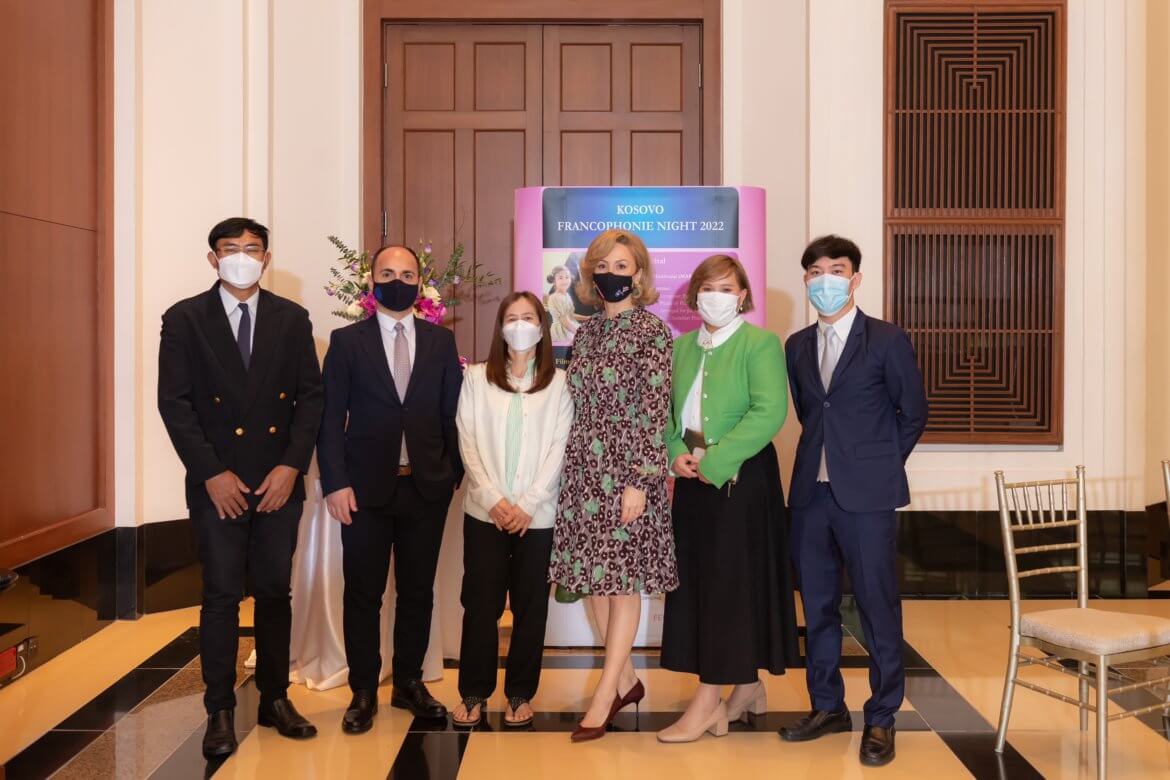
In the frame of “The Month of Francophonie” and commemorating “International Women’s Day”, the Embassy of Kosovo hosted on March 9th an evening of music, cinema, and cuisine at the Peninsula Hotel.

The audience was first delighted by an elegant welcome tea and conversation, followed by a piano recital with the works of French, Kosovar and Thai composers interpreted by the ten year old Thai prodigy Maria Ramida Montivalai (Maki). The ladies then watched “Hive”, a triple Sundance award winning and Kosovo’s Academy Awards submission. The movie is based on a true story and depicts the struggle of a community of widows in post-war Kosovo who, after waiting in vain for years for their missing husbands to reappear, band together to launch a business, against the men’s prejudices and without losing their virtue.

In the words of H.E. Ulpiana Lama, Chargé d’Affaires a.i, “We women, have everything to lose from war and everything to gain from peace. Let peace be the 2022 theme. Peace, this often underrated concept, cannot be taken for granted. Every wish we make should start with the call for peace. Today is an extension of March 8th, the International Women’s Day. A reminder of how much we can still achieve by leaning on each other.”

The event was attended by the Ambassador of Belgium – Sibille de Cartier, the Ambassador of Canada - Sarah Taylor, diplomats from Switzerland, Luxembourg, Malaysia, Maldives, Singapore, Morocco and others; representatives of major cultural and educational hubs such as “Alliance Française”, “River City Bangkok”, RBSO, academics, journalists, activists, and prominent expats.

H.E. Ulpiana Lama finally treated her guests with �?Ajvar’, a Kosovo pepper relish that features extensively in the film and made by the Chargé d’Affaires herself, a diplomat of passion and commitment, a soirée of energy and enjoyment.

0 comment
0 FacebookTwitterPinterestEmail

Story by Kathleen Pokrud

Photo by The Embassy of Malaysia and Tourism Malaysia

Foreword by Dato’ Jojie Samuel
Ambassador of Malaysia to Thailand

Once again, I would like to thank Ms. Kathleen for her initiative to help us to promote Malaysian culinary. Previously, an article about Peranakan food in Malaysia was published in Expat Life in Thailand. As a multiracial country, Malaysia’s colourful cultures are demonstrated through its food, including traditional and modern cuisines. 

Malaysian food is a mix of outstandingly delicious food and an affordable price tag to match, there is something for everyone. Eating out in Malaysia is a real gastronomic adventure. In Malaysia, eating is agreed to be a national passion for all Malaysians. Food has been a regular topic in conversation. I believe that there is no place that is more truly Asia than Malaysia, especially when it comes to food and travel. 

Needless to say, Malaysia is a beautiful and diverse country, which the food is a reflection of the many races that make up our country. From up north in Penang to down south in Malacca, you could explore the beautiful sights and even more delicious food at some of the best destinations Malaysia has to offer. Malaysia, Truly Asia indeed. 

Dear readers, I hope you enjoy reading this article. 

Malaysia is a country that celebrates its’ multiculturalism. This encourages the cultural diversity of Malaysian cuisine. Many culinary traditions coexist in Malaysia, such as Malay, Chinese and Indian. Similar to other countries, Malaysian food recipes are passed down through the generations and has evolved to suit modern day preferences and trends. The result is an array of enticing traditional favourites and modern offerings using a trove of local ingredients to suit multiracial palates. The term “Gastrodiplomacy” has been introduced to refer to how countries use their national cuisines to promote their countries. The Malaysian kitchen with their rich combination of spicy and flavourful cuisine is well placed to make Malaysia a food haven. I recently sat down with Datin Catherina Cherian Samuel, spouse of H.E. Dato’ Jojie Samuel, Malaysian Ambassador to the Kingdom of Thailand to learn how Malaysia is poised to be a gastronomical haven in Asia.

Malaysia as a country has brought together many different cultures. It is the heart of SE Asia. The food could be considered one of the most attractive and enjoyable experiences in Malaysia. I asked Datin Catherina what truly defines Malaysian Cuisine, “If there is one thing that unites all of us Malaysians; it is the love of good multicultural food that we have. Food has always been a vital part of the Malaysian identity. We pride ourselves on a variety of national dishes, which are consumed as a large portion of our regular diet. Malaysian cuisine includes Malay, Chinese and Indian food – a great mix of ingredients, techniques, and flavours. If you plan a trip to Malaysia, be sure to squeeze some time to explore the food. Also on the list of must try items are the food from East Malaysia which is located on the beautiful island of Borneo. The food there comprises of the bounties of the sea paired with locally grown grain, fruits and spices. Simple and fresh, the food in Borneo reflects the traditional knowledge of the natives of the land with influence from the Chinese and other immigrants who have called this mystical island their home for generations,

Catherina clarified further, “The food of Malaysia is known by the region they come from with each bearing its’ signature dish with unique taste and flavour. Some such favourites are satay with peanut sauce, asam pedas, kolok mee, nasi dagang, laksa and fish head curry. Rice and rice based noodles are the staples in Malaysian cuisine. As it is the norm in Asia, rice is usually eaten together with meat and vegetable dishes, curries and condiments. Malay food liberally incorporates aromatic spices such as cinnamon, coriander seeds, star anise, turmeric, nutmeg and candlenuts. Coconut is used in many dishes – rice, savouries and desserts. What gives the mouthwatering delicacies a distinct flavour is the skilful use of herbs such as lemongrass, ginger, galangal and leaves of turmeric, pandan and kaffir lime plants, In the northern states of Malaysia, the influence of Thai is evident in the preference for sticky rice, sweet desserts and mango incorporated in local dishes. In the east coastal states of Malaysia where fish is plentiful, keropok (fish snacks) are sought after by all.

On the subject on how Malaysian cuisine has evolved over the years, Datin Catherina explained, “The story of Malaysian food is part of the nation’s history, of course. From around the 12th century, the Straits of Malacca provided an important and busy travel route for merchants from China, India, the Middle East and Europe. They traded and exchanged their wares in the area that is now known as Melaka (Malacca) and Pulau Pinang (Penang). In the 15th century, Hang Li Po, a Chinese princess was sent to marry a Malaccan Sultan in an effort to strengthen relations between the two countries. The princess brought along an entourage of Chinese who settled in Malacca. These early Chinese settlers along with the Chinese merchants who plied that trade route ended up marrying local women and settling namely in Penang, Malacca and Singapore which later came to be known as the Straits Settlements. The Straits Settlements was the name given during the British rule from 1824 - 1957.

The British also attracted Chinese migrants to work in the tin mines of that era and to conduct business in the commodities such as rubber and spices. The early Chinese settlers contributed significantly to the prosperity and culture of these states. The food of the Chinese in the Straits Settlements is known as Peranakan food. They are delightful concoctions of Chinese food which include local spices and flavours, a testimony of how the early Chinese settlers had assimilated with the locals in the new country. Non Peranakan Chinese food has influenced Malaysian cooking through the wide use of garlic, ginger, rice wine, sesame oil and soy sauce.

As mentioned earlier, the fact that the fact that the Straits of Melaka was an important commercial route did not go unnoticed. In the 15th century, the Portugese invaded Melaka with the intention to monopolise the spice trade and spread Christianity. The Portugese too, influenced the food in Malaysia. There exists today the Portuguese settlement in Melaka which boasts of the food of their ancestors that has evolved to satisfy the tastebuds of their Malaysian descendants. Portugese devil curry, fish dishes and cakes are what we enjoy in Melaka. Following the Portuguese, the Dutch and the British colonial masters also influenced the food in Malaysia, namely in the Eurasian communities who make it a point to serve their traditional delicacies alongside rice and spicy curries!

Apart from the early Indian traders who settled in the Northern States of Penang and Kedah, the majority of the Indians and Sri Lankans currently residing in Malaysia are descendants of the people brought into the country by the British. A large number were brought in to work in the rubber plantations and the railways in the 19th century. A smaller group of educated Indians were later brought in to work in the local medical, educational and civil services established by the British. The Indians brought with them a noteworthy influence on local cuisine with curries, biryanis, roti’s and snacks such as murukku which are served at all festive occasions regardless of ethnicity.

Datin Catherina commented frankly, “I would say Malaysian cuisine deserves more global recognition than it currently has. It is not as well known as Thai, Korean and Japanese cuisine. Nonetheless, I believe that, real food enthusiasts will appreciate the true flavours and at the end of the day our cuisine always stand out among the �?foodies’. You have not truly experienced Malaysian cuisine until you thrill your taste buds with all the good food we have to offer.”

There are Malaysian restaurants in major countries around the world. One such popular restaurant is the Papparich restaurant that serves Malaysian favourites such as Nasi Lemak and Chicken Rice in Australia, Singapore, Brunei and in the US. In addition, we are proud of the Reunion Malaysian Café and Kitchen in Washington DC that has grown significantly since its opening, serving Nasi Lemak, Nyonya Laksa and durian crepes to homesick Malaysians and gourmet eaters in the US. In addition, we have Malaysians who are very passionate about introducing the world to the rich flavours of Malaysian cuisine. Food experts like Chef Wan, Malaysia’s celebrity chef and Ping Coombes, the past winner of MasterChef UK are prominent figures. We are very grateful to have them promoting Malaysia cuisine abroad. 

As it is with other countries, Malaysia’s food culture or trends must have changed quite significantly over time. Datin Catherina explained, “The Covid 19 pandemic has caused a drastic change in the lifestyles of Malaysians since early 2020, and this also meant a big change for the Malaysian diet too. It has  become quite obvious that Malaysians are increasingly driven by health concerns and want their food to contribute to strong and healthy bodies. We are seeing a trend towards healthier eating. Malaysians are  more conscious about their food consumption; hence healthy eating will continue to be a huge part of food trends.”

She elaborated further, “Given the fact that most urbanites have very little time to cook on a daily basis, the eateries offer pick-and-go food where such wraps, sandwiches or poke bowls on their way back from work or even during busy lunch hours. Malaysians are also known for their ”Mamak restaurant culture” and it is especially popular among the young adults. These are Indian Muslim eateries that offer fast service at reasonable prices. Best of all, they are open 24 hours a day,  making them an easy and convenient choice for people from all walks of life.

Preserving the traditional Malaysian cuisine and local favourites are important to us because they are part of our heritage, “With the new generation living a fast paced life and being more health conscious, traditional and laborious methods of preparing food need to be reconsidered. The challenges are to maintain the original taste of food whilst taking cognisance of the need to incorporate healthy cooking methods and minimising cooking time. As we are aware, food and tourism go hand in hand. Other than sightseeing, islands and beaches, the food offered has brought many visitors to our tropical paradise.

According to Datin Catherina, “The authorities such as Tourism Malaysia and Malaysian External Trade Development Corporation (MATRADE) have organised events around the world promoting traditional Malaysian food as an attraction to tourists. 

Nasi Lemak: National dish of Malaysia

In Malaysia, Nasi Lemak is what we would call comfort food. You can find Nasi Lemak in almost any eatery, be it at street vendors, restaurants and hotels. This humble dish comprising of coconut infused rice served with a spicy anchovies sauce has grown to include a long list of accompaniments. The most popular one is chicken and beef rendang. These chicken and beef dishes were, in the past, reserved for festive occasions. Comprising of meat slow cooked with aromatic herbs, spices and large quantities of coconut milk, it has found its way to the heart of locals and foreigners alike. 

As our interview draws to a close, I agree with Datin Catherina, “Malaysian food has similarities with those of its neighbouring countries such as Thailand, Indonesia, Brunei and Singapore as we use similar raw ingredients which are found abundantly in this region. However, in terms of tastes and flavours, cooking techniques and preparation methods our food differs. To the discriminating palate, Malaysia is a food haven not to be missed!

0 comment
0 FacebookTwitterPinterestEmail

In September last year, H.E. Mr. Jose Borges dos Santos Junior, Ambassador of the Embassy of Brazil to the Kingdom of Thailand arrived in Bangkok. Ambassador Jose presented his credentials to the King Maha Vajiralongkorn Phra Vajiraklaochaoyuhua in November 2021. In addition to Thailand, he is also Ambassador to Cambodia and Laos. At the beautiful residence, Expat Life sat down with Ambassador Jose to learn about his perspective on Thailand and discuss the bilateral relations between the two countries. 

Career diplomat 

Ambassador Jose is a veteran diplomat of 41 years since joining the Foreign Service in the 1980’s. Born in the northern part of Brazil, a remote city called “Boa Vista”. Ambassador Jose recalled, “I was groomed to be a diplomat at a very young age. My mother and grandmother sent me to study French in Alliance Francaise, hoping that I would become a diplomat. I am proud to be the first ambassador from my state.” 

Prior to moving here, Ambassador Jose was Ambassador in Switzerland with jurisdiction also for the Liechtenstein principality from 2016 to 2018. Other overseas postings include London, Canberra, San Francisco, Brussels, Bogota, Los Angeles, New York and Houston.” He further admitted, “This is my first posting in Asia, and I had a strong desire to be posted to Thailand.” 

Bilateral trade relations between Brazil and Thailand 

Thailand is the first posting in Asia for Ambassador Jose. He frankly admitted, “I had asked to be posted Thailand as I believe that there are great potentials in bilateral trade relations to grow between our two countries. Despite the pandemic situation last year, the volume of Brazilian exports to Thailand grew by 36%. The latest figures showed that our trade volumes have reached 5.1 billion USD. Thailand imports huge volumes of soybeans and related products from Brazil, and the volume has increased significantly to 85%. After China and US, Brazil is placed as the 3rd provider of soybeans sub products here. Other Brazilian imports include agricultural machinery, shoes and leather products. We have recently received permission to import Brazilian beef into Thailand. In return, Thailand exports auto parts, IT equipment, natural rubber and electrical devices to Brazil.”

The ambassador further commented, “Thailand is the centre of the Mekong region. I believe the country offers as a compelling market and gateway to China and the ASEAN regional partners.”

Views on similarities between Brazil and Thailand 

Expat Life asked Ambassador Jose on his views of Thailand, “I see that our two countries have many similarities. One good example is the temperament of our people. Brazilians are intrinsically friendly just like the Thais. Brazilian households are very family oriented like many Asian families. We like to joke that Brazilian children never grow up and leave home.” 

Ambassador Jose shared another observation, “I recognise the urban chaos in Thailand is just like we have in Brazil. Amid the high rise office buildings, we see street vendors selling stuffs and flea markets popping up around Bangkok.”

Goals and plans for Thailand

On his goals during the term in Thailand, “This year 2022, Brazil celebrates the 200th bicentennial Anniversary of our Independence. The embassy has plans to organise cultural events such as concerts and art exhibitions, providing the Covid situation allows. Aside from soccer, Brazilian music is popular and played globally around the world.”

“Given that Brazil is a big country of over 200 million in population, many Brazilian companies are satisfied with our own domestic market. On the other hand, I strongly believe that no country can afford to miss out to be integrated into the global production chain. One of my objectives is to promote more business delegations between our two countries, to attract more Thai companies into Brazil and vice versa. In certain areas such as bio-fuels, there is plenty of room for research cooperation. Thai companies who have expanded into Brazil include Charoen Pokphand Foods, PTTEP, Minor Group, Cal-Comp and Indorama Ventures. We have recently inaugurated our Honorary Consul in Chiang Mai.”

There are around 400 Brazilians living in Thailand, many are expatriates sent by multi-national companies and few are married to locals. Prior to Covid, there are students exchange programmes organised by Rotary International and the American Field Service. On the day of the interview, Madame Danielle Bayer hosted a gathering for Brazilian ladies currently residing in Bangkok at the residence.

Travel around Thailand

Due to the Covid situation, for the past few months, Ambassador Jose has not followed a strict routine of a typical working day. With his goal to promote further investment in Brazil from Thailand, he has aimed to set aside at least one day per week to meet with Thai businessmen who are interested in Brazil.

As Madame Danielle and the two twin children only arrived in Thailand at the beginning of this year, Ambassador Jose admitted that he has not travelled much around Thailand yet with the young family. “So far, I have visited only Chiang Mai. I am looking forward to have the opportunity to explore Thailand. I was invited to join the Loy Krathong Festival at IconSiam. I am very impressed with the Thai festivities atmosphere, and the Thai hospitality that I have experienced since my arrival.”

0 comment
1 FacebookTwitterPinterestEmail